
Aswan Travel Guide 2026
***Edited February 14, 2026
You navigate Aswan efficiently using clear steps, timing, and costs. This guide focuses on actions and practical decisions.
Getting there
From Cairo
- Domestic flights cost 90-140 USD one-way.
- Early morning departures reduce travel stress.
- Book online to lower the cost.
Train
- First-class sleeper: 80 to 120 USD one-way.
- Evening departures allow overnight travel.
Private car
- 150 to 200 USD one way.
- Flexible schedule.
Local transport
Taxis
- Negotiate the fare before entering.
- Rates 2 to 5 USD within the city.
Ride apps
- Price set in app.
- Safer than street taxis.
Local buses
- 0.25 to 0.50 USD per ride.
- Cover the main districts only.
Accommodation
Budget
- Hostels and guesthouses cost 15 to 30 USD per night.
- Shared rooms are common.
Mid range
- 3- to 4-star hotels, 50 to 90 USD per night.
- Breakfast included.
High comfort
- 4- to 5-star hotels, 120 to 250+ USD per night.
- Pools and extra services included.
Sightseeing
Philae Temple
- Entry 10 USD.
- Open 08:00 to 17:00.
- Take a boat from the Aswan Nile bank. → Every major Egyptian temple, ranked — where Philae stands
Unfinished Obelisk
- Entry 3 USD.
- Best visited early to avoid crowds.
Nubian Village
- Boat trip 15 USD.
- Observe local life and crafts.
Elephantine Island
- Entry 5 USD.
- Accessible by boat.
High Dam
- Entry 2 USD.
- Opens 08:00 to 17:00.
Abu Simbel temples
- Entry 20 USD.
- 3-hour drive south or morning flight.
- Guided visit reduces navigation errors.
Shopping
Souvenirs
- Nubian crafts near local markets.
- Inspect items for quality.
- Bargain 30 to 50 percent off the initial ask.
Spices, oils, textiles
- Local markets sell fresh produce.
- Compare prices between shops.
Jewelry
- Silver and gold shops near Central Square.
- Ask for karat and weight.
- Request a receipt for all purchases.
Food and drink
Local meals
- Street food costs 2 to 5 USD.
- Try falafel, grilled fish, and fresh juice.
Mid-range restaurants
- 8 to 15 USD per meal.
- Moderate portions.
Hotel restaurants
- 15 to 30 USD per meal.
- Room service adds cost.
Tours and guides
Private guide
- 50 to 80 USD per day.
- Reduces navigation errors and waiting time.
Day tour
- 70 to 120 USD excluding tickets.
- Covers temples, islands, and markets efficiently.
Multi-day tour
- 120 to 220 USD per day, including transport.
- Hotels and meals optional.
Tips
Drivers
- 3 to 5 USD per day.
Guides
- 5 to 10 USD per day.
Boat staff
- 2 to 5 USD per person.
Safety
Crowds
- Watch personal belongings.
- Avoid dense areas at peak hours.
Transport
- Use licensed taxis or ride apps.
- Confirm the route before entering.
Tourist scams
- Fake guides outside attractions.
- Overpriced services without receipts.
- Inspect souvenirs for authenticity.
Introduction
The ancient capital of the Kingdom of Kush, Aswan was situated on the lower Nile. It served as a buffer zone between Egypt and Nubia for over 3,000 years before being abandoned in the early Christian period. Aswan was an important cultural crossroads that has been continuously inhabited since antiquity.
History of Aswan
It was a critical economic and political border. The city was a major trading center and gateway for trade between Egypt (and other parts of Africa) and the rest of the world. The river north from Aswan might be navigable all the way to the Mediterranean Sea. Overland routes and caravans transporting elephants, camels, and other valuables from South Africa to Egypt were established here. They were loaded onto ships that sailed north to Egypt.
Aswan's history is strongly influenced by its geography. Aswan was formerly a transportation hub for Anglo-Egyptian troops marching south to quell rebellions in Sudan during Egypt's colonial era. Because of its pleasant winter temperatures, Aswan was a popular tourist destination at the end of the nineteenth century. European tourists seeking to avoid the cold at home were enticed by this attraction.
Aswan attractions
Aswan High Dam
The Aswan Dam or, more precisely, the Aswan High Dam (since the 1960s), is the largest embankment dam in the world. It was constructed across the Nile from Aswan, Egypt between 1960 and 1970. It was much more important than the Aswan Low Dam, which was built in 1902 downstream. The success of the Low Dam meant that construction of the High Dam was a priority of the government after the 1952 Egyptian Revolution. This dam's ability to control flooding, increase water storage, and generate hydroelectricity made it a crucial part of Egypt's plan for industrialization. The High Dam, like the previous implementation, has had a significant impact on Egypt's economy and culture.
Even with the High Dam in place, the Nile's annual flooding during the late summer continued unabated down the valley from the East African drainage basin. Floods that brought in high levels of water and natural nutrients, enriched the valley's fertile soil and created a delta. This predictability made the Nile valley a great place to farm since ancient times. This natural flooding was not always predictable. High-water years can destroy entire crops, and low-water years can cause widespread drought, which could lead to famine. These events have continued to happen periodically. With Egypt's growing population and technological advancements, there was a need and a way to control flooding. This would protect and sustain the cotton crop and help the farmers. The reservoir storage at the High Aswan Dam was greatly enhanced, making it possible to control floods and store the water for later release over many years.
Moscow-based Hydroproject Institute designed the Aswan Dam.
Philae Temple
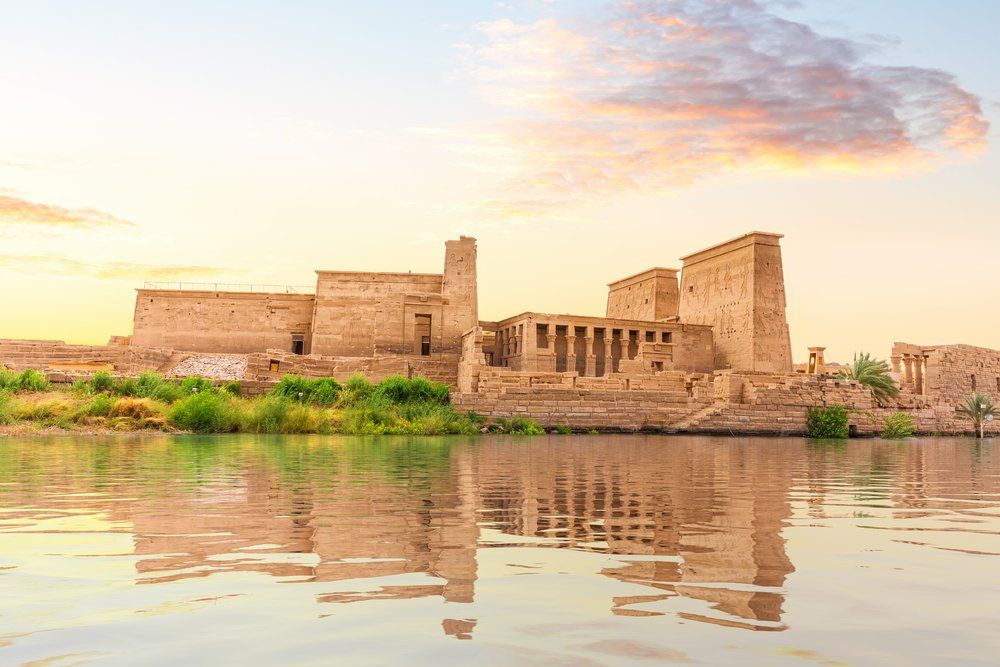
Philae was the center of Isis cult during the Ptolemaic Dynasty. This complex, which was one of the few places that the ancient religion was still alive after Christianity arrived in Egypt in 550 AD, was officially closed. The main temple was used by early Christians as a church.
This is why some figures of ancient gods were defaced. Christians tried to remove pagan imagery from newly claimed sanctuaries. While the Temple of Isis is the most prominent feature on the island, there are many other temples worth visiting.
Philae Temple has a sound and light display, as do all the other Egyptian ancient attractions. However, Philae's is often considered to be the most spectacular of these overblown spectacles. It is difficult to describe the atmosphere of the island's ruins lit by floodlights, but it is a great way to spend an evening.
Unfinished Obelisk
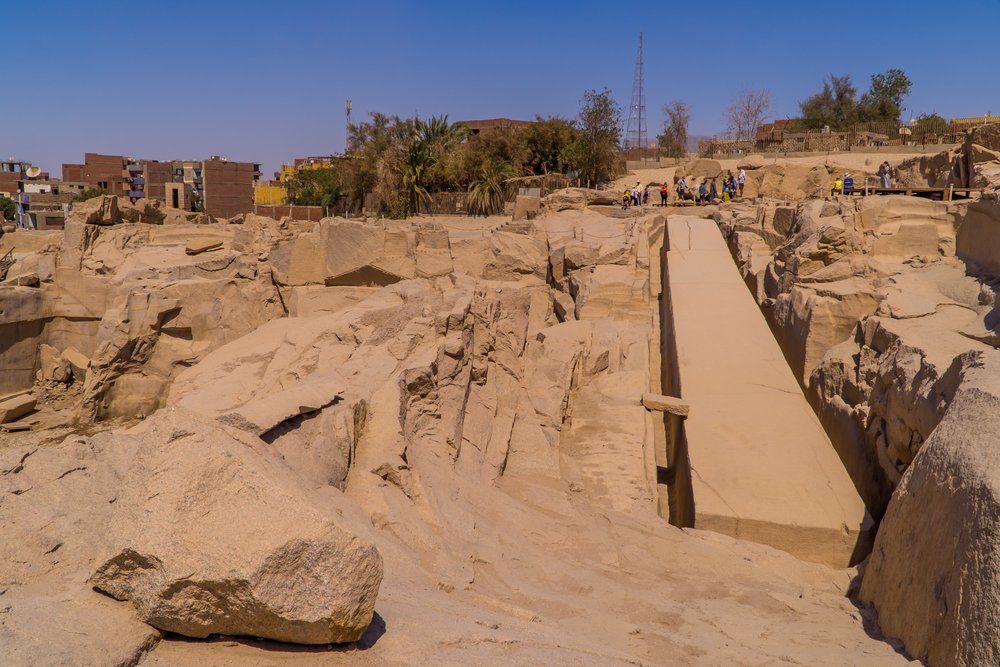
Hatshepsut (1458-1458 BC) ordered its creation. It would have been approximately 42m in length (138ft) and nearly 1,090 tons (1,200 short tonnes), which is roughly 200 African elephants.
Originally, the obelisk was made from bedrock. The creators had to abandon the obelisk after cracks in granite occurred.
This unfinished, unfinished obelisk provides unusual insight into ancient Egyptian stone-working methods. There are still marks left by workers and ochre-colored lines that indicate where they were working.
2005 saw the excavation of an unfinished and poorly-constructed obelisk foundation at Aswan's quarries.
Nubian Museum
Mahmoud al-Hakim designed the museum. He was able to create a museum that blends in with the natural setting of Aswan's shining sun, small mountains and huge rocks. It was inaugurated in 1997. The beautiful architecture of the new Nubian Museum is worth a visit. It is nestled in the Aswan hillside and covers 50,000 sqm. There are landscaped gardens and buildings that can be broken up into different sections.
Aswan Botanical Garden
Kitchener's Island is located to the west from Elephantine Island. It was given by Lord Horatio Kitchener, who was then commander of Egypt's army in the 1890s. Kitchener, who was passionate about beautiful palms and plants, transformed the entire island into Aswan Botanical Gardens. He imported plants from India, the Far East and other parts of Africa.
The gardens cover 6.8 hectares and are home to hundreds of species. Although it has lost some of its glory, the gardens' majestic trees still make a spectacular sight. This is especially true when the sun sets and sandalwood wafts in the air. Avoid Fridays when extended families picnicking with stereos invade the area. Come in the afternoon, when there are few people.
It is best to visit the island as part of a felucca trip. You can also take the Elephantine Island ferry and walk around the village to the opposite side. A few feluccas await at the western edge of the island to help you cross to the gardens.
Conclusion
Most people know Aswan as a city that offers some beautiful views on the Nile River and because of this they overlook Aswan other treasures, but please don't make this mistake.
Today, Aswan is a thriving city with plenty of attractions for tourists. The old town center has been renovated and offers an interesting insight into how life would have been in the past. One thing that hasn’t changed over time are the beautiful views from atop Abu Simbel Temple or across Lake Nasser to Philae Island. It doesn't matter if you're here on business or leisure - make sure you put these sites high up on your list of things not to miss!
Aswan Day Tours
Ashraf Fares