
Is Egypt Safe for Tourists? Truth vs Media Fear
The Question Every First-Time Traveler Asks
Before booking a trip to Egypt, almost everyone asks the same question:
**“Is Egypt safe for tourists?”**
It’s a reasonable concern.
But the way this question is usually answered creates more fear, not less.
Why Egypt Feels Unsafe *Before* You Arrive
Most safety fears don’t come from personal experience.
They come from:
* Sensational media headlines
* Outdated news stories
* Isolated incidents shared online
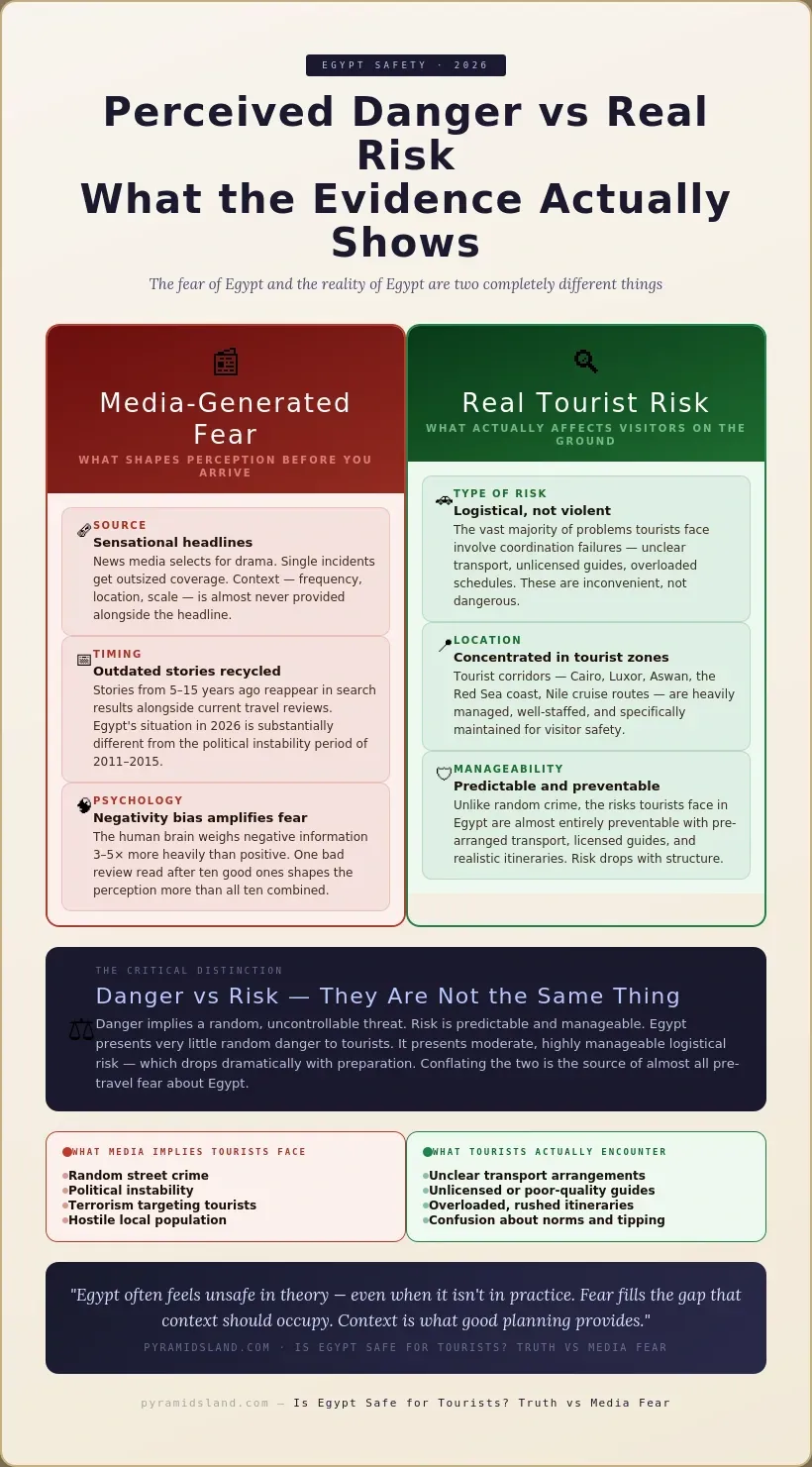
The human brain is wired to overweight negative information.
So when people lack context, fear fills the gap.
This is why Egypt often *feels* unsafe in theory — even when it isn’t in practice.
Perceived Danger vs Real Risk
There’s an important difference between **danger** and **risk**.
* Danger implies a random threat
* Risk is usually predictable and manageable
In Egypt, most risks tourists face are not violent or extreme.
They are **logistical**.
Examples include:
* Unclear transportation
* Unlicensed guides
* Poor coordination
* Overcrowded schedules
These issues feel unsafe because they remove control — not because they involve real harm.
What Actually Keeps Tourists Safe in Egypt
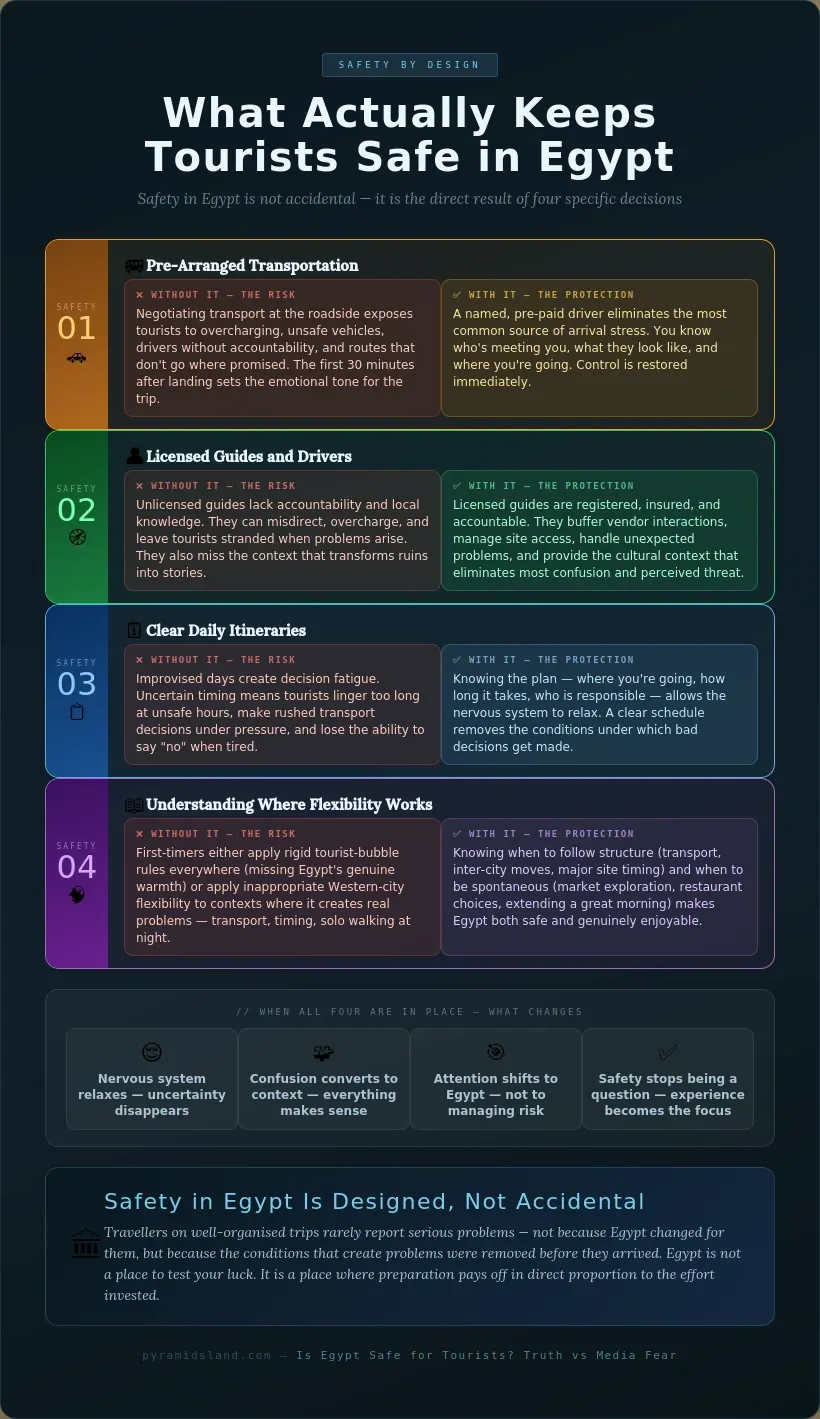
Safety in Egypt is not accidental.
It’s **designed**.
The most reliable safety factors are:
* Pre-arranged transportation
* Licensed guides and drivers - how local knowledge reduces risk
* Clear daily itineraries
* Understanding where flexibility works — and where it doesn’t
When these are in place, risk drops dramatically.
This is why travelers on well-organized trips rarely report serious problems.
Why First-Time Travelers Feel This More Strongly
Experienced travelers subconsciously manage uncertainty.
First-time visitors don’t yet know:
* What’s normal behavior
* What to ignore
* When to say no
Without that knowledge, everything feels high-stakes.
Planning replaces guesswork with certainty.
why structure matters for safety
The Role of Media in Shaping Fear
Media coverage rarely explains context.
It compresses complex realities into dramatic headlines.
What’s missing:
* Scale
* Frequency
* Location
A single incident does not define an entire country.
But without explanation, perception hardens into belief.
what first-time visitors worry about most
How Safety Improves With the Right Structure
When travelers know:
* Who is picking them up
* Where they are going
* How long things take
* Who is responsible
Their nervous system relaxes.
This isn’t about avoiding Egypt.
It’s about **understanding it**.
Final Thought
Egypt is not a place where you should test your luck.
It’s a place where preparation pays off.
When logistics are handled properly, safety stops being a question — and the experience becomes the focus.
**Fear fades when the system makes sense. This is how we reduce risk for first-time visitors.**
*Planning is the foundation of safe, enjoyable travel in Egypt.*
“If this is your first time, understanding structure early makes everything easier.”
Is Egypt safe for first-time visitors?
For tourists following standard travel advice and structured itinraries, Egypt is generally safe.
How does safety actually work on the ground?
Tourist areas are well-managed, and most risks relate to confusion or poor coordination rather than crime.
Does having a guide improve safety?
Yes, guides privide local context, manage logistics, and reduce uncertainty.
Ashraf Fares