Deir el-Medina: Private Specialist Tour

A private experience shaped around your time and interests.


⭐ 5.0 Rated | Licensed Egyptologist Guides | Free Cancellation | Hotel Pickup Included
Deir el-Medina: Private Specialist Tour

4 hours

Easy


The Valley of the Kings is famous for its pharaohs. Deir el-Medina is famous for the people who built their tombs.

For 400 years — from approximately 1550 to 1080 BC — a community of craftsmen, painters, and scribes lived in this village specifically to construct and decorate the royal burials. They were paid in grain, given medical care. They left a documentary record of their daily lives so complete that historians can reconstruct individual arguments, illnesses, and love affairs from 3,200 years ago.

This tour focuses entirely on that community — the most humanly accessible ancient Egyptians we have.

What Makes Deir el-Medina Extraordinary

The documentary record

The ostraca (limestone flakes and pottery fragments) found here in the 1920s contain everything: work attendance records, village court proceedings, private letters, medical prescriptions, love poetry, and what appears to be the first recorded labor strike in history. Your guide translates selected passages and explains what they reveal about ancient Egyptian daily life — not the pharaohs' lives, but the lives of ordinary people with skills, grievances, and relationships.

The workers' own tombs

The craftsmen who painted the royal tombs also built their own — smaller, privately funded, but in many cases spectacularly decorated. The Tomb of Sennedjem contains painted scenes of daily life and the afterlife in colors so vivid they appear freshly painted. Your guide explains how the workers used their professional knowledge to create a personal vision of the afterlife — different in tone and imagery from the royal tombs, and in many ways more affecting.

The village ruins

The actual village — 68 houses arranged in a single street, surrounded by a mud-brick wall — is partially excavated and walkable. Your guide reconstructs the physical experience of living here: the narrow lanes, the shared ovens, the proximity of the tombs the workers were building visible on the hillside above.

The Ptolemaic Temple

A small but beautifully preserved temple to Hathor built in the Ptolemaic period at the edge of the village. Less visited than the tombs, but worth 20 minutes of careful attention for its quality of detail.

✦ The Turin Papyrus 1880 — now in the Egyptian Museum of Turin — contains what scholars believe is the first recorded account of a workers' strike. It was written at Deir el-Medina around 1159 BC, during the reign of Ramesses III. The workers had not been paid their grain rations for two months. They left the village, sat outside the mortuary temple of Thutmose III, and refused to return until the rations were delivered. The scribe who recorded the event wrote: "We have come out because of hunger and thirst; we have no clothing, no oil, no fish, no vegetables. Send word to pharaoh, our good lord, about it, and send word to the vizier, our superior, so that provisions may be made for us." They succeeded. Your guide will stand you at the place where this happened and read the passage. It is from 1159 BC. It sounds like a conversation you could hear tomorrow.

Common Questions

Is this tour suitable for travelers who are not specialist Egyptology enthusiasts? 

Yes — the appeal of Deir el-Medina is precisely that it makes ancient Egyptians recognisably human. The workers' stories require no specialist knowledge to engage with. If anything, travelers who are not specialist Egyptologists often find this site more affecting than the Valley of the Kings, because the human scale is immediate. 

Can this be combined with the Valley of the Queens on the same day? 

Yes — Deir el-Medina is directly adjacent to the Valley of the Queens. Both sites together make a focused West Bank morning. Ask about the combined itinerary. 

Can the pacing or order be adjusted? 

Yes — all tours are private. The itinerary adapts to you, not the other way around. If you want more time at one site and less at another, tell your guide. 

Will there be pressure to buy anything? 

No. This is a private tour with no commission arrangements. Your guide will not redirect the itinerary for shopping stops.


What's included?
    • Private hotel pickup and drop-off in Cairo or Giza
    • Private, air-conditioned vehicle throughout
    • Licensed Egyptologist guide, full tour
    • Entrance fees to all listed sites
    • Bottled water


    Exclusions
      • Tips
      • Personal expenses
      Please note

        Pickup & Timing: Your guide contacts you the evening before your tour via WhatsApp to reconfirm the exact pickup time and your hotel details. Pickup is from the lobby of any hotel in Cairo or Giza (Luxor or Aswan for southern tours). If you're staying in an Airbnb or non-hotel accommodation, share your location pin when booking so your driver can find you easily.

        What You'll Pay On-Site: All entry fees listed in the itinerary are included. If you choose optional upgrades during the tour — such as entering the Tutankhamun tomb, the Seti I tomb, or the Great Pyramid interior — these are paid on-site by credit or debit card. Your guide will advise whether each upgrade is worthwhile before you decide. Cash is no longer accepted at most major archaeological sites in Egypt.

        Weather & Sun Egypt is hot and dry for most of the year. From October to March, daytime temperatures in Cairo are comfortable (18–25°C / 65–77°F), but mornings can be cool. From April to September, expect 35–45°C (95–113°F) at open-air sites. The Giza Plateau, Valley of the Kings, and Karnak have almost no shade. Your guide schedules site visits to avoid the worst midday heat, but sun protection is essential regardless of season.

        Dress Code: Dress comfortably and modestly. At mosques (Al-Hussein, Al-Azhar, Alabaster Mosque), shoulders and knees must be covered — this applies to all genders. At archaeological sites, there is no dress code, but lightweight long sleeves protect against the sun better than sunscreen alone. Comfortable closed-toe shoes with grip are essential — sites involve walking on sand, uneven stone, and rough terrain.

        Photography: Photography is permitted at most outdoor archaeological sites. Inside tombs (Valley of the Kings), photography is generally prohibited unless you purchase a separate photography ticket. Inside the Grand Egyptian Museum, photography rules vary by gallery — your guide advises on the day. Drone photography at all archaeological sites requires permits that are extremely difficult to obtain. Do not fly a drone without confirmed authorization.

        Payments & Currency Egypt's currency is the Egyptian Pound (EGP). Most tourist-facing businesses accept credit/debit cards and USD. Your guide and driver accept tips in EGP, USD, or EUR. ATMs are widely available in Cairo, Luxor, and Aswan. Recommended tipping: $5–10 per person for your guide on a half-day tour, $10–15 on a full day. $3–5 for your driver.

        Health & Safety: Drink only bottled water (provided on your tour). Tap water in Egypt is not safe for tourists. Carry any personal medications you need — pharmacies are available but may not stock specific brands. Apply sunscreen before departure, not on-site — you'll be in the sun within minutes of arriving at most sites. Travel insurance is required for all tours and is not provided by Pyramids Land.

        Cultural Notes: Egyptians are genuinely welcoming. "Shukran" (thank you) and "Salaam alaikum" (peace be upon you) go a long way. At tourist sites, you may be approached by local vendors or people offering unsolicited help (leading you to a viewpoint, taking your photo). A polite "la, shukran" (no, thank you) works. Your guide manages these interactions so you don't have to.

        What to bring
          • Comfortable closed-toe shoes with grip (sand, uneven stone, rough terrain at all sites)
          • Hat with a brim — essential at Giza, Saqqara, Valley of the Kings, Karnak, and all open-air sites
          • Sunscreen (apply before departure — you'll be in the sun immediately on arrival)
          • Sunglasses
          • Camera or smartphone (charged — there are no charging points at sites)
          • A light scarf or shawl for mosque visits (shoulders and knees covered)
          • Small daypack for water, camera, and sun protection
          • Any personal medications you need during the day

          We provide bottled water throughout the tour. You do not need to bring your own.

          Explore the tours above. Read the details. Ask questions if needed. Book only when it feels right.

          How pricing works

          Prices are based on:

          • Group size
          • Duration
          • Inclusions listed on the tour page

          You will always know what is included before booking. There are no surprise additions.
          What our clients say


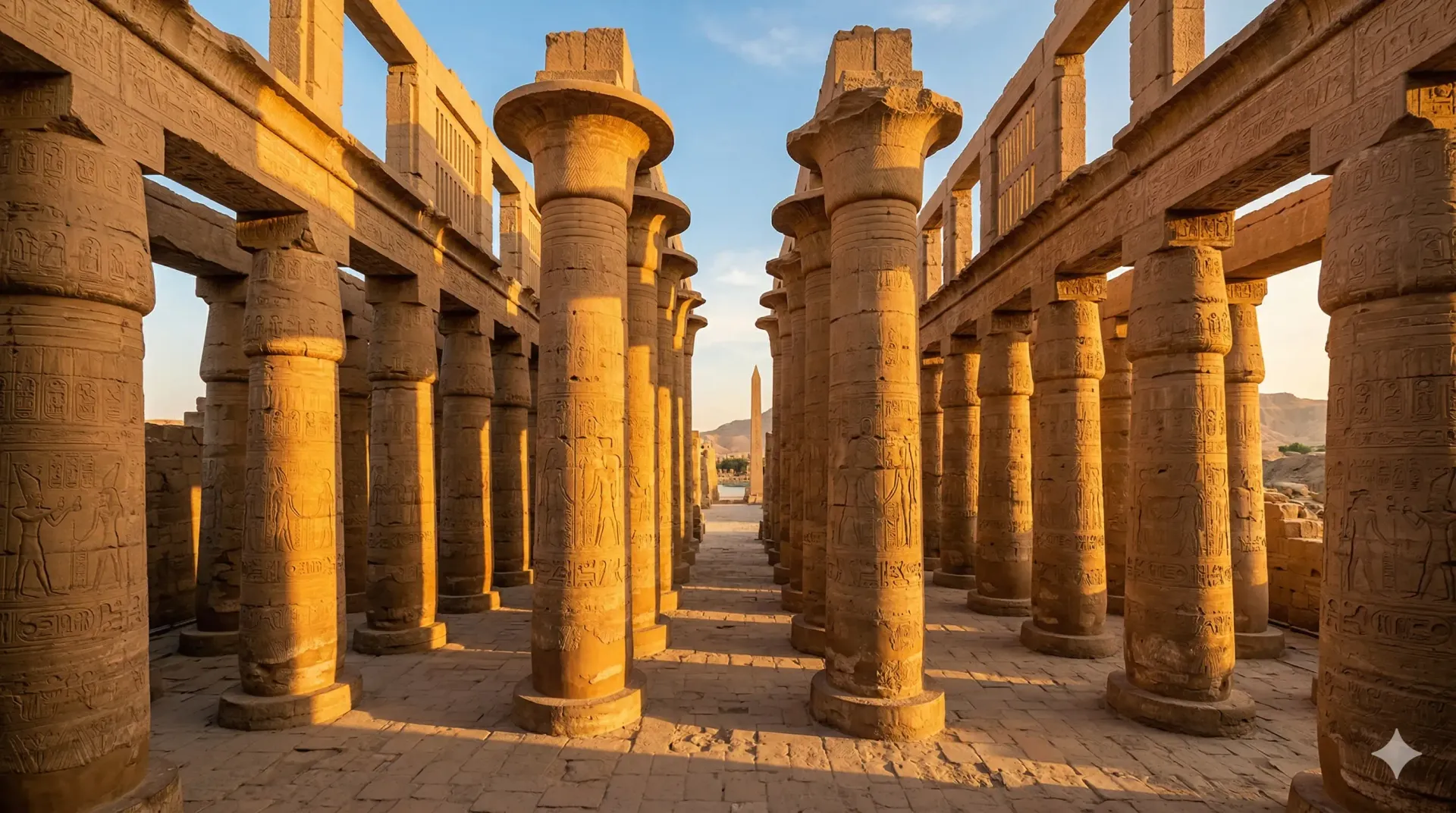
          A professional, wide-angle architectural photograph of the Great Hypostyle Hall at Karnak Temple dur
          By Ashraf Fares April 2, 2026
          Karnak is the largest religious structure ever built — and the most confusing without a guide. This is what you are looking at, why it matters, and how to visit.
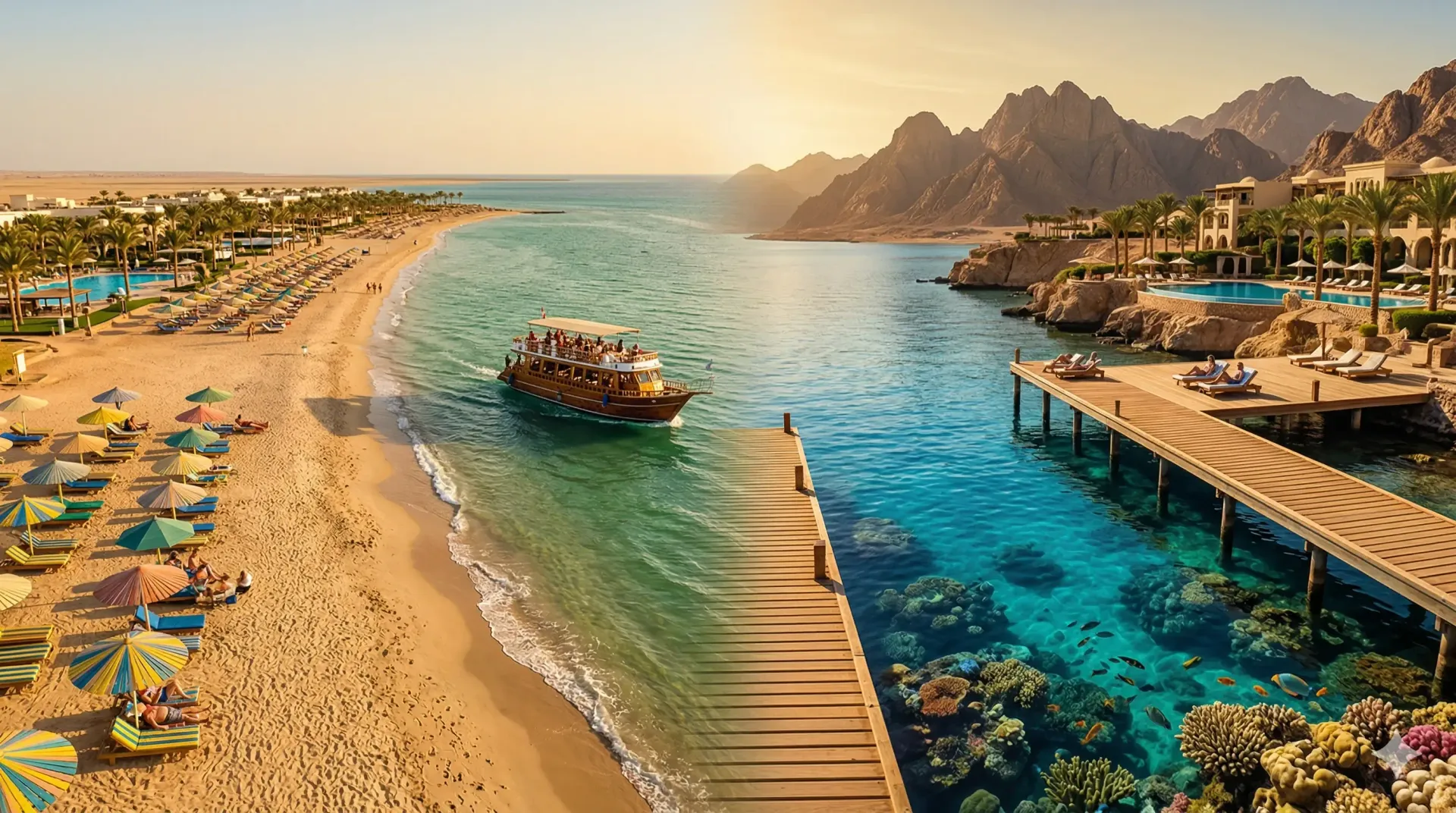
          Split view comparing Hurghada and Sharm El Sheikh — Hurghada side showing a wide sandy beach with co
          By Ashraf Fares March 28, 2026
          Hurghada or Sharm El Sheikh? Compare beaches, diving, costs, atmosphere, and logistics — and which fits better into your Egypt itinerary.
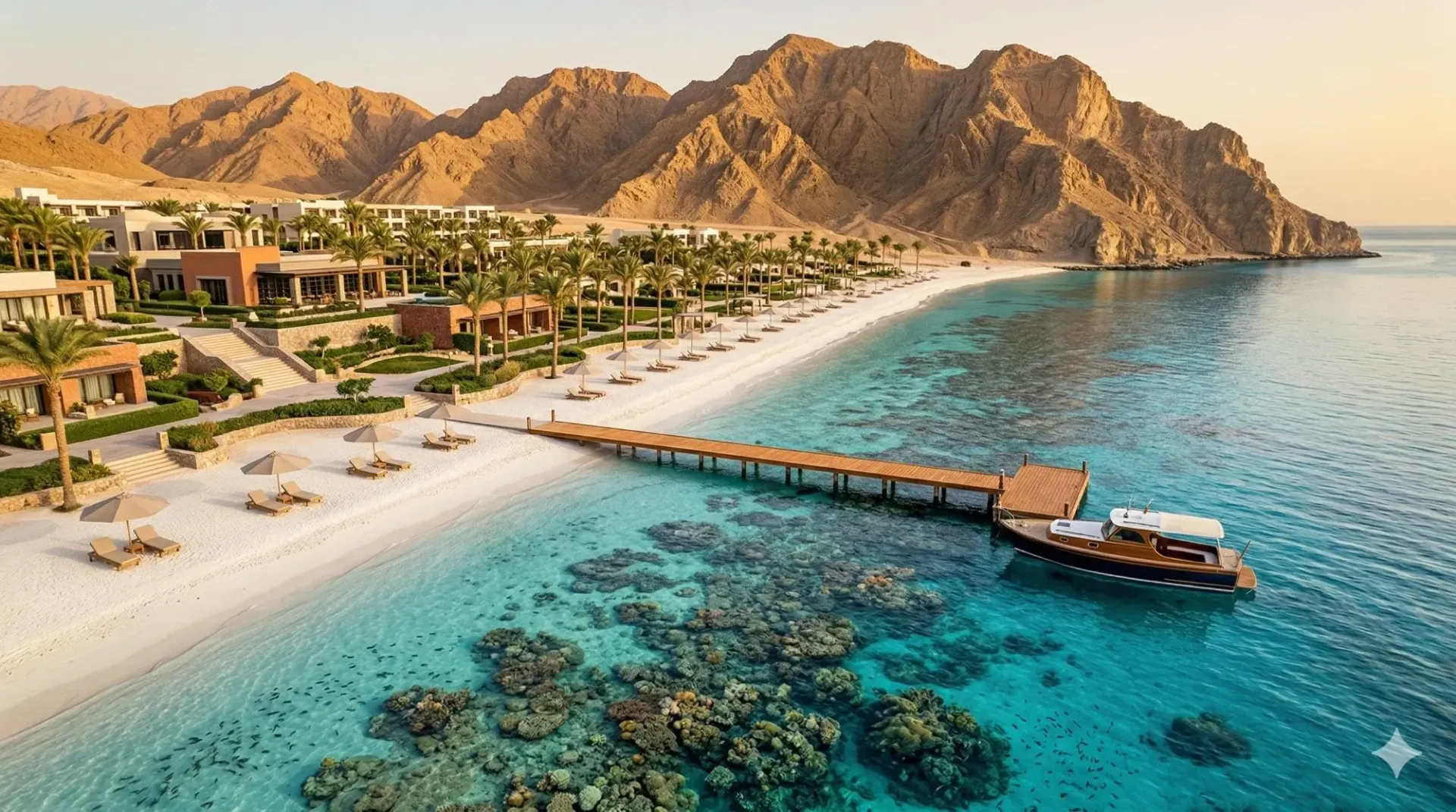
          Aerial view of a luxury Sharm El Sheikh resort on the Red Sea coast — crystal-clear turquoise water
          By Ashraf Fares March 26, 2026
          Everything you need for Sharm El Sheikh: the best reefs, resort options, costs, day trips to Ras Mohammed and Mount Sinai, and how to fit Sharm into an Egypt trip.
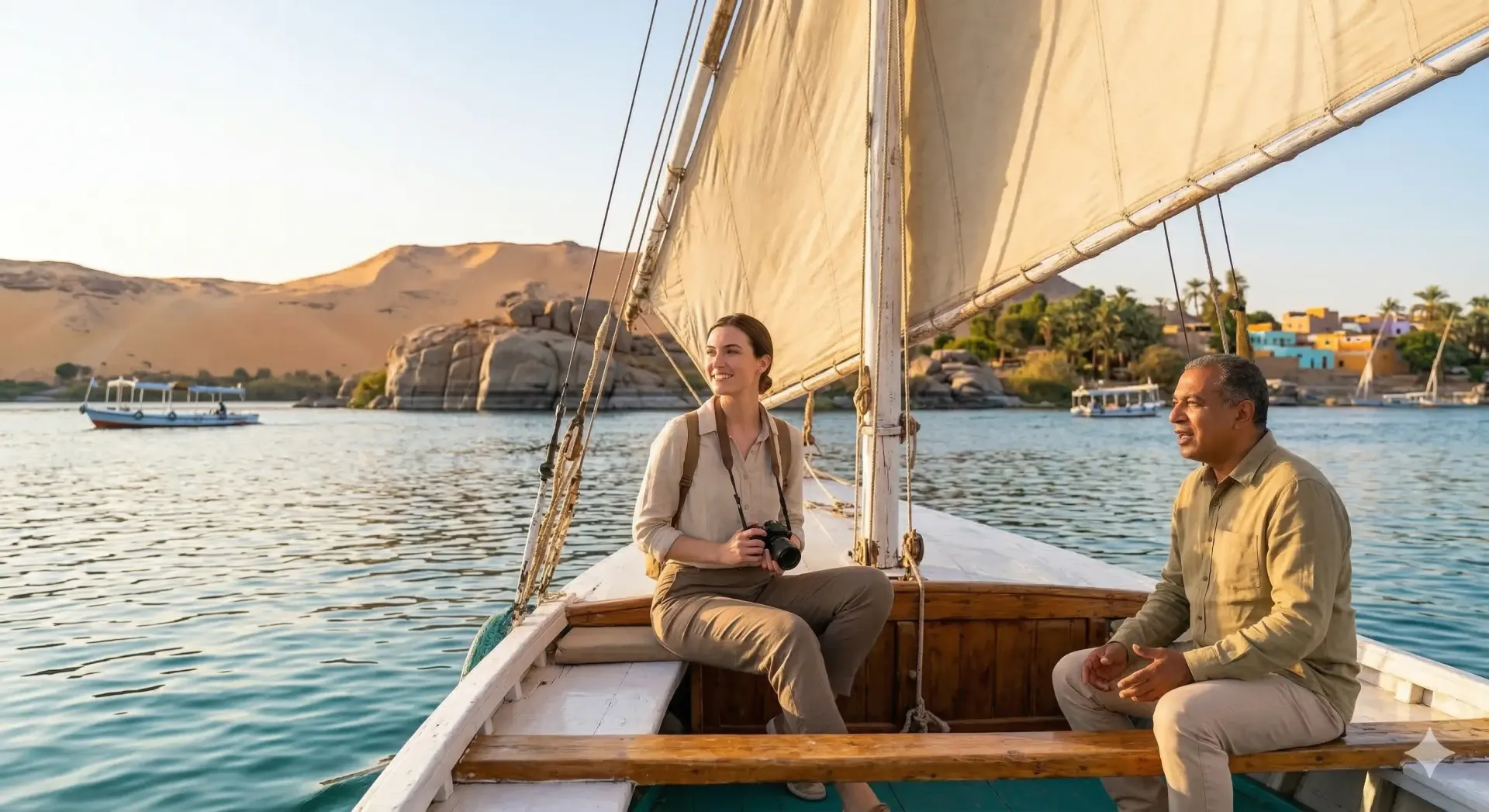
          A solo traveler and guide sailing on a traditional felucca near Aswan granite islands.
          By Ashraf Fares March 12, 2026
          Planning a solo trip to Egypt? 7-day itinerary, safety tips, how to travel alone comfortably, and why a private guide changes everything about solo Egypt.
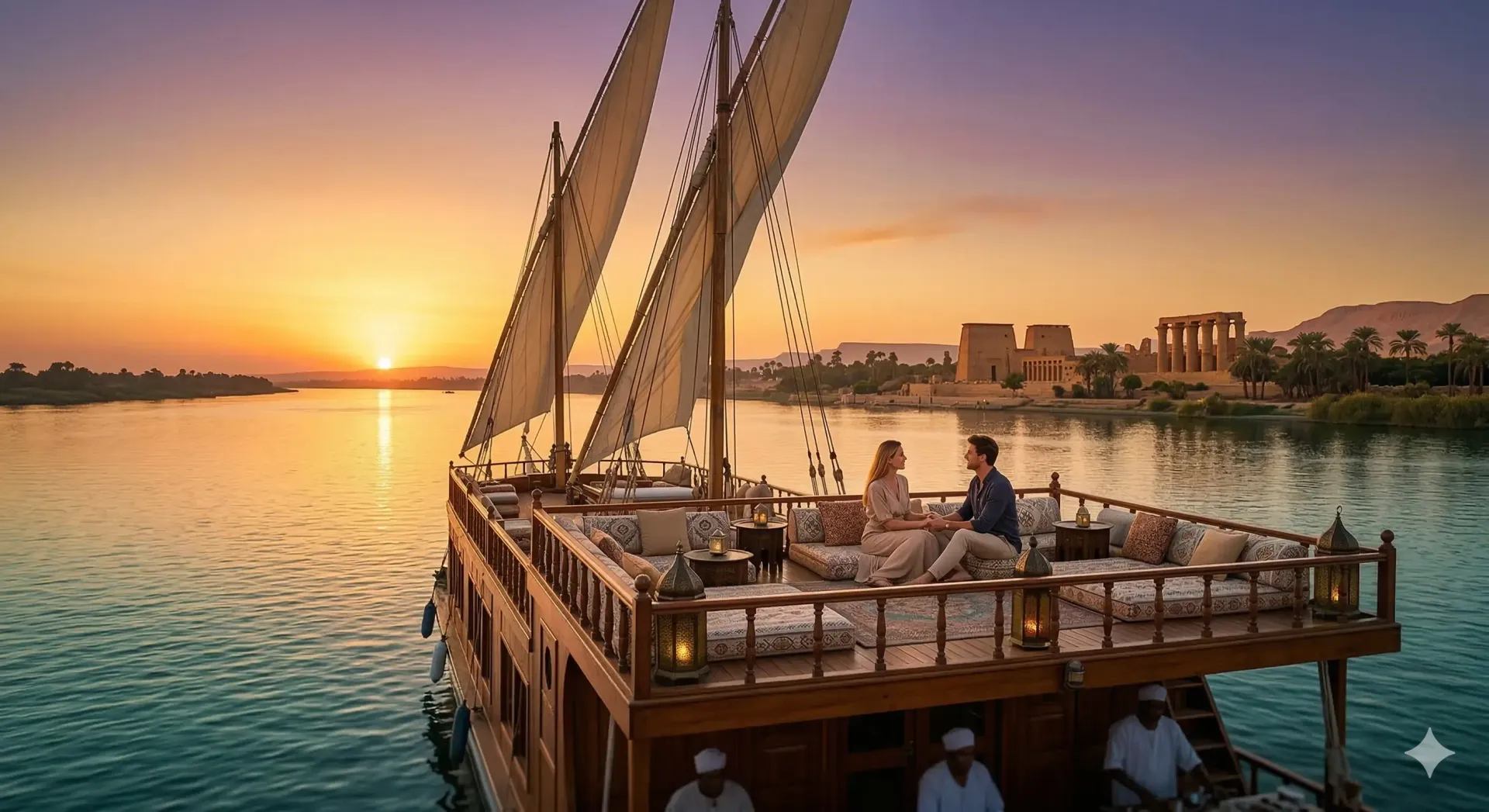
          Traditional dahabiya sailing on the Nile at sunset; a private honeymoon experience.
          By Ashraf Fares March 12, 2026
          The best Egypt honeymoon itinerary — pyramids at sunrise, a private dahabiya on the Nile, Aswan sunsets, and Abu Simbel. 8 days planned for two.
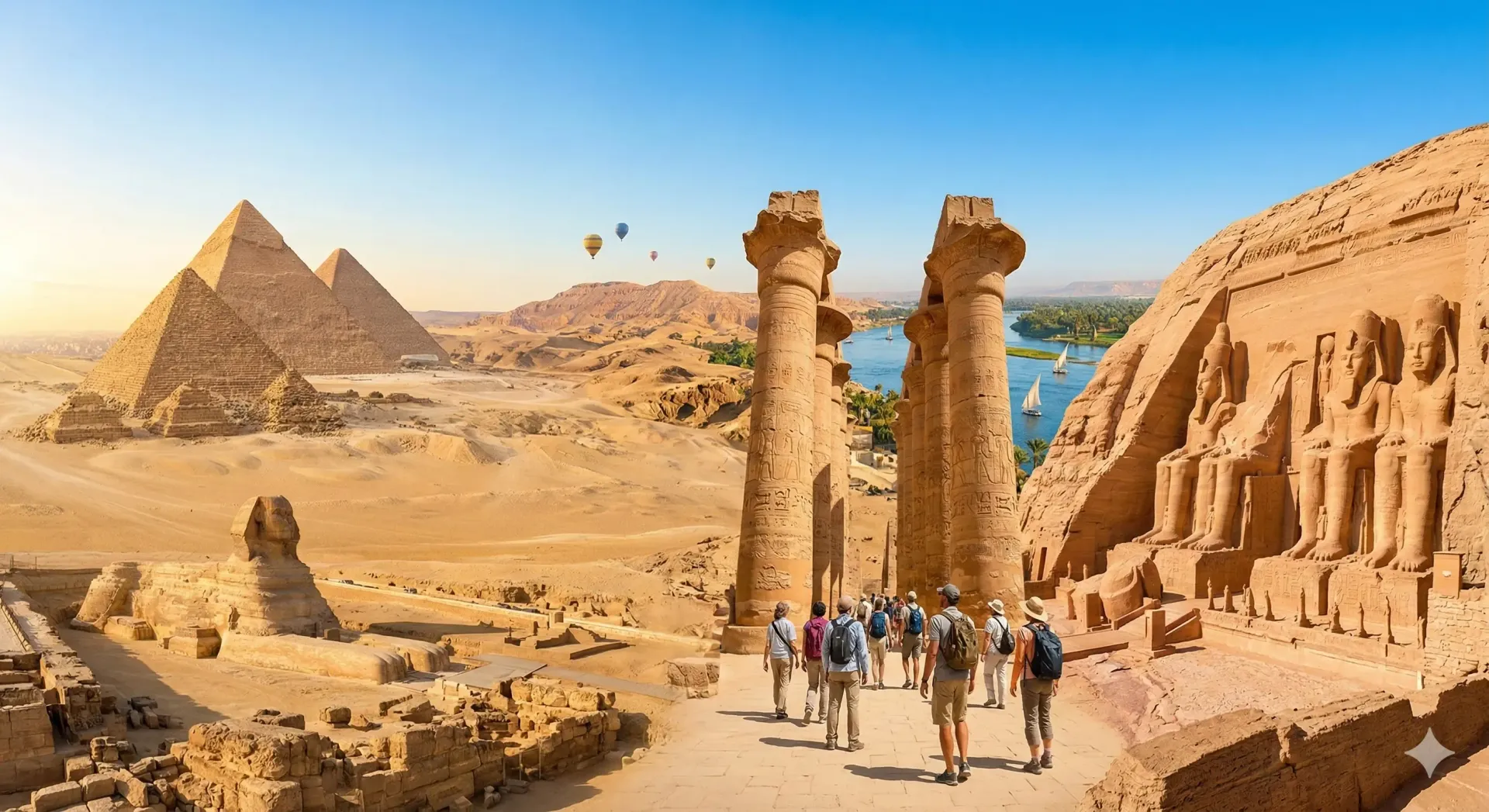
          Composite view of Egypt's pyramids, massive columns, and Abu Simbel statues with a tour group.
          By Ashraf Fares March 4, 2026
          Planning your first trip to Egypt? Where to start, how long to go, what to see first, and how to avoid the mistakes most first-time visitors make.
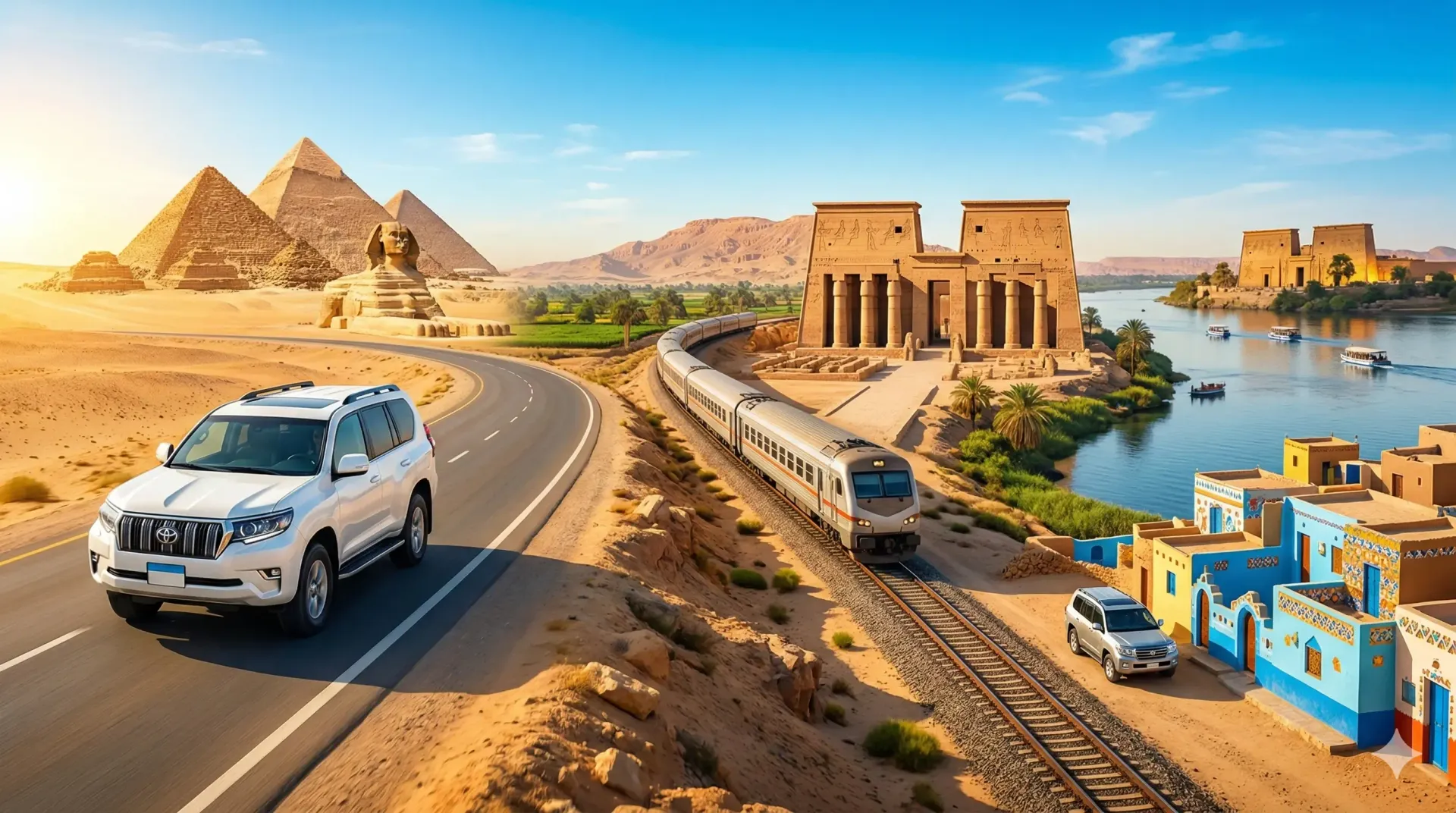
          SUV and train traveling past Giza Pyramids, Nile temples, and colorful Nubian houses.
          By Ashraf Fares March 4, 2026
          Not sure about a Nile cruise? Here's a complete Egypt itinerary using hotels throughout — what you gain, what you lose, and who the land-based option suits.
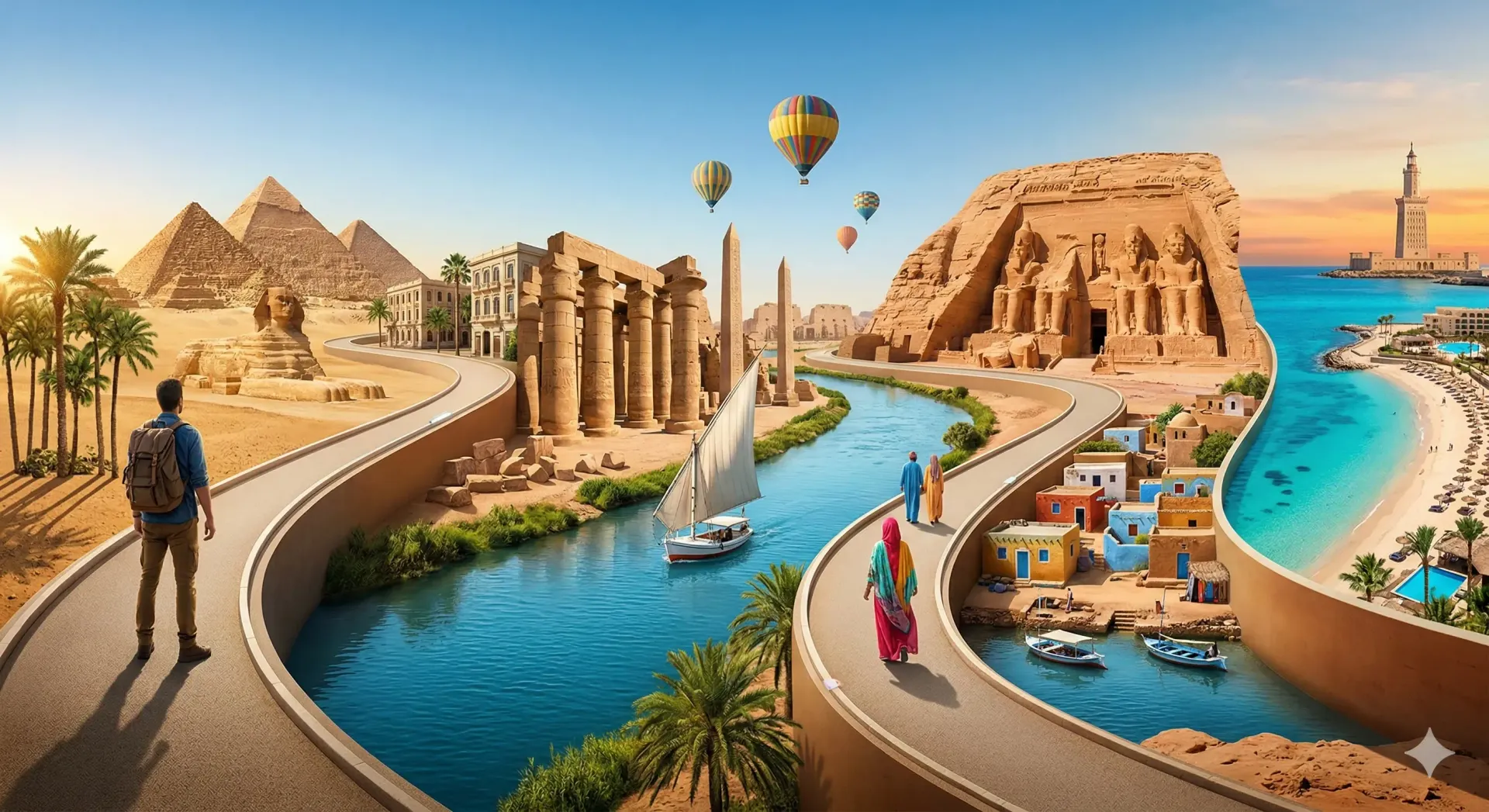
          Progressive timeline of Egyptian sites: Pyramids, Karnak Temple, hot air balloons, and Abu Simbel, s
          By Ashraf Fares March 4, 2026
          How long do you need in Egypt? 5, 7, 10 or 14 days — what each duration actually covers, what each one misses, and which is right for your trip.
          Karnak Temple with obelisks; Giza Pyramids at sunset.
          By Ashraf Fares March 4, 2026
          Should you start your Egypt trip in Cairo or Luxor? The honest answer, with the argument for both sides and the itinerary implications of each choice.
          Split view of Philae Temple in the Nile River and the massive statues of Abu Simbel.
          By Ashraf Fares March 4, 2026
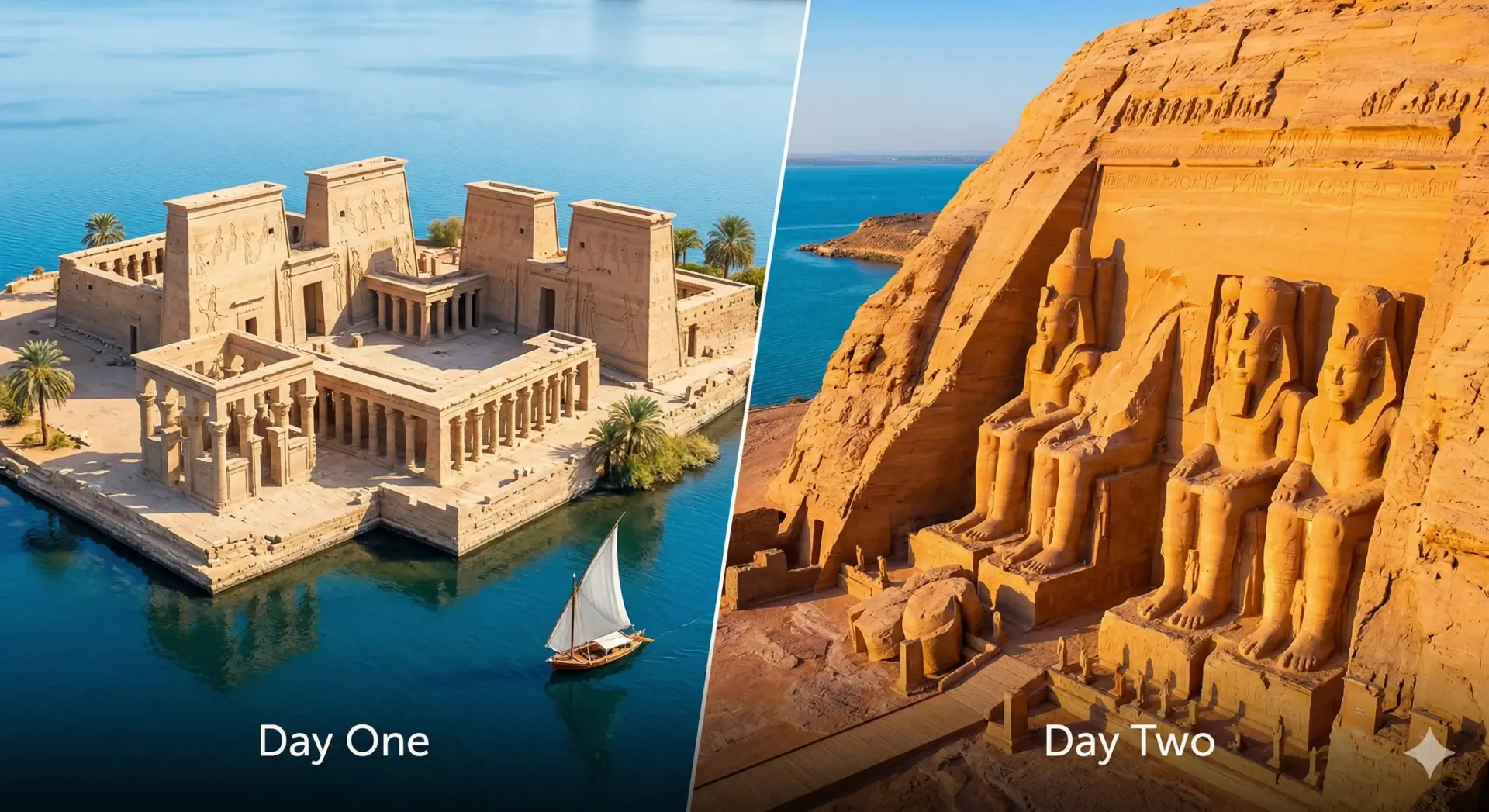
          2 days in Aswan — Day 1: Philae Temple, High Dam & the Nile. Day 2: Abu Simbel, the greatest temple in Nubia. Full itinerary with private guided tours.
          Show More