7 Days Egypt Luxury Holiday Package

A private experience shaped around your time and interests.


★ 4.9 · 2,678 reviews on TripAdvisor · Licensed since 2001 · Free Cancellation
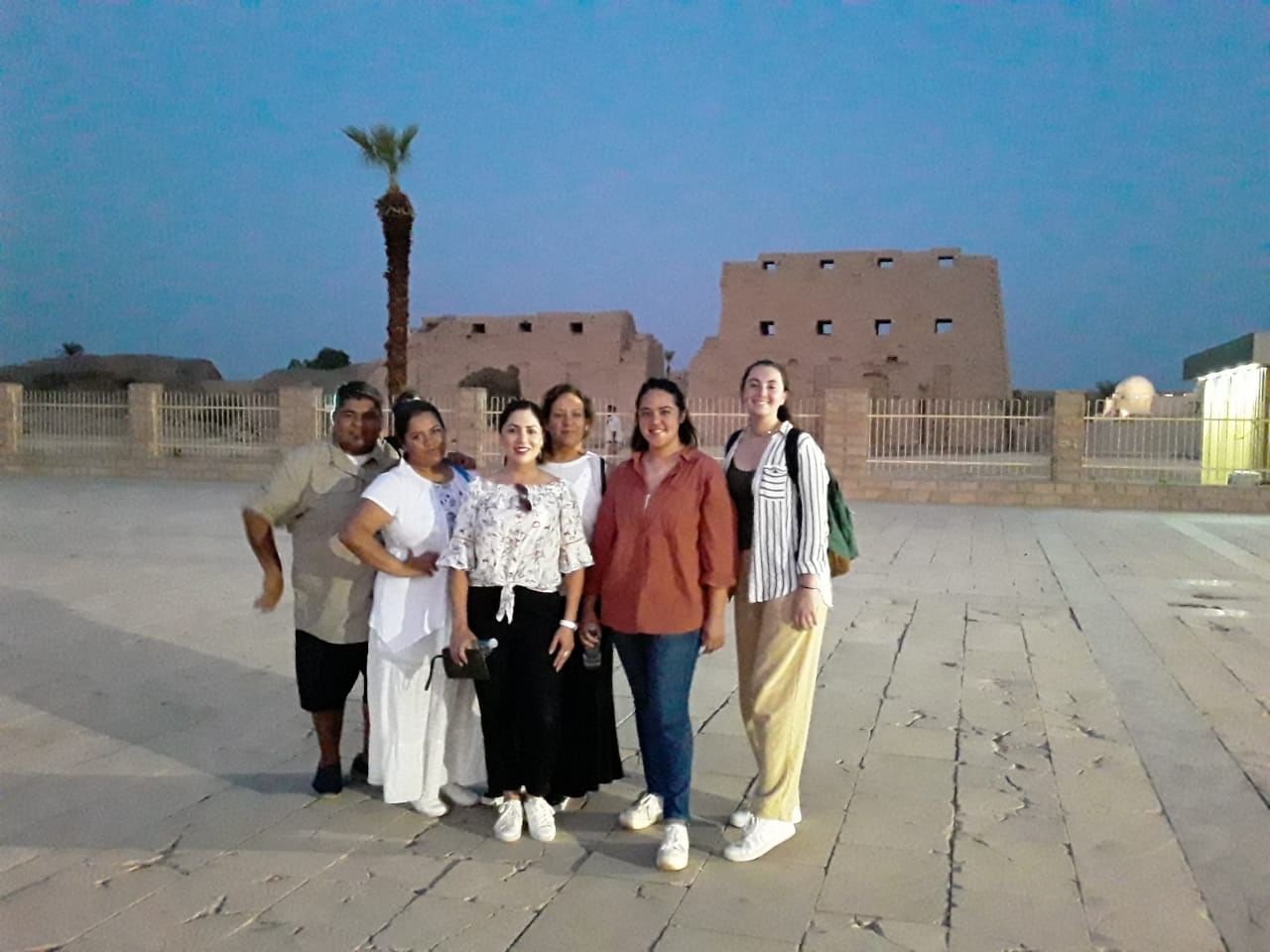
8-Hour Private Tour of the Pyramids, Sphinx, Grand Egyptian Museum

7 days

Moderate


Seven days. The way Egypt is meant to be experienced.

Most experienced travelers agree: the Nile cruise changes the trip. Waking up at Edfu Temple as the boat docks. Watching the Luxor West Bank cliffs change colour in the evening from the sundeck, and arriving at Kom Ombo by water.

This itinerary builds the cruise into the center of seven days that begin in Cairo and end in Aswan — structured so that neither Cairo nor the river is compressed.

Highlights

  • Grand Egyptian Museum — full morning with a private Egyptologist, Tutankhamun gallery in depth
  • Giza Plateau and Saqqara — from the world's most famous monuments to Egypt's oldest stone structures
  • Three nights on the Nile — private cabin, sailing from Luxor to Aswan past the landscape of Upper Egypt
  • Edfu Temple by horse-drawn carriage — the best-preserved temple in Egypt, dedicated to Horus
  • Kom Ombo dual temple and the crocodile mummy museum
  • Philae Temple on its island in the Aswan reservoir — the relocated sanctuary of Isis
  • Felucca on the Nile in Aswan

Who This Tour Is For

  • Travelers who want the Nile cruise experience without compromising on time in Cairo
  • Anyone visiting Egypt for the first time who wants the complete picture in one week.
  • Couples and small groups who want privacy at every stage

What Makes This Tour Different

  • The cruise is in the center — not bolted on at the end. Cairo gets two full days. The cruise gets three. Aswan gets a proper day. Nothing is borrowed from anything else.
  • You board the cruise ship in Luxor, having already seen the East Bank temples, so the West Bank day on the river is pure archaeology, not catch-up.
  • Edfu Temple at dawn — the boat docks overnight, and you walk to the Temple of Horus before most visitors have left their hotels. The best-preserved temple in Egypt, in the best possible light.
  • Same Egyptologist, start to finish — Cairo, domestic flight, Luxor, the cruise, Aswan. Not a series of strangers who know your itinerary on paper.

A Note on Itinerary Sequencing

Nile cruise ships operate on fixed embarkation and disembarkation schedules that are set by the cruise company and may change depending on your travel dates. This means the sequence of days shown above — specifically, which site is visited on which cruise day — may be adjusted to align with the ship's sailing schedule when we book your departure.

What does not change: all sites listed are covered. Every temple, every guided visit, and every day of the cruise is included, regardless of the sequence your particular departure follows. Your Egyptologist remains with you for every site visit, in whatever order the cruise runs

In practice, the common sequencing variations are:

  • Southbound (Luxor to Aswan): West Bank → Edfu → Kom Ombo → Aswan. This is the most common direction.
  • Northbound (Aswan to Luxor): Aswan → Kom Ombo → Edfu → West Bank. Less common but operated by some cruise lines.

We confirm the exact daily sequence with you before departure, once the cruise departure dates are set. If the direction or sequencing matters to you specifically, tell us when you enquire, and we will match you to the right cruise departure.

What You'll Experience

Day 1 — Arrive in Cairo · Afternoon: Old Cairo 

Private airport transfer to your hotel. After you settle in, your Egyptologist meets you in the afternoon for a walk through Old Cairo — the Hanging Church, Ben Ezra Synagogue, and the Roman fort foundations of Babylon. A measured first afternoon: two thousand years of history in one walkable neighbourhood, at a pace that doesn't demand anything from you yet. Evening at leisure. 

Day 2 — Cairo: Grand Egyptian Museum & Giza Plateau 

The Grand Egyptian Museum in the morning — the full Tutankhamun collection with your Egyptologist, who builds the session around what you'll encounter for the rest of the trip. The golden mask, the canopic jars, the burial furniture: four thousand objects from a single tomb. Two to three hours minimum. The Giza Plateau in the afternoon, before the midday heat has fully settled—the three pyramid complexes, the Sphinx from the south side, and the Solar Boat Museum. Your guide explains the construction logistics — not as a mystery, but as the engineering and logistics problem it actually was. Early evening return to your hotel. 

Day 3 — Fly to Luxor · East Bank · Embark Cruise 

Morning domestic flight to Luxor. Karnak Temple in the afternoon with your Egyptologist — 2,000 years of construction, thirty pharaohs, the largest religious complex ever built. Luxor Temple at dusk. Board your 5-star Nile cruise ship in the evening. Dinner on board as the boat prepares to move south. 

Day 4 — Luxor: West Bank · Sail South 

The Nile cruise ship is still docked in Luxor. Valley of the Kings in the morning — three tombs chosen by your Egyptologist based on what engaged you at the GEM. Hatshepsut's Temple at Deir el-Bahari: the colonnaded terrace cut into the cliff face, your guide explaining why her legacy was systematically erased after her death. The Colossi of Memnon on the return. Back on board and sailing south through the afternoon — the cruise is now moving toward Edfu. 

Day 5 — Edfu Temple

The boat docked overnight near Edfu. Morning visit to the Temple of Horus by horse-drawn carriage from the riverside — the best-preserved temple in Egypt, with its inner walls bearing the complete mythological cycle of Horus and Set, carved in extraordinary detail at eye level. Your Egyptologist explains the sanctuary sequence, the meaning of the reliefs on the naos, and why this is the site that most visitors describe as the one they weren't expecting to be so moved by. The hypostyle hall, 18 columns, leads to an inner sanctuary that has stood almost completely intact for over 2,000 years. Return to the boat and sail south toward Kom Ombo through the afternoon — upper deck, the Nile opening out into farmland between the desert cliffs on both sides.

Day 6 — Kom Ombo · Sail to Aswan 

Kom Ombo Temple in the morning, reached directly from the docked boat. The dual temple for Sobek and Horus — two deities, two sanctuaries, two complete ritual systems inside one symmetrical building. Every architectural element on the left mirrors the right. The crocodile mummy museum attached to the temple gives the crocodile cult a physical specificity that the wall reliefs alone don't achieve. Continue south toward Aswan through the afternoon. The Nile narrows, the desert approaches the water, and the first granite outcrops of Upper Egypt appear in and around the river. Dinner on board as the boat approaches Aswan and docks for the night.

Day 7 — Aswan: Philae · High Dam · Disembark · Departure

Final morning on the cruise. Philae Temple by motorboat from the boat's dock — the island sanctuary of Isis, relocated stone by stone to its current position before the Aswan reservoir rose in 1968. One of the most quietly beautiful sites in Egypt: human scale, a water setting, and an unusual architectural completeness. The High Dam in the late morning: your Egyptologist explains the engineering, the political context — the Soviet assistance, the Western withdrawal of funding — and the archaeological cost: 90,000 Nubian people were relocated, ancient temples were submerged, and the UNESCO operation that saved Abu Simbel and Philae was a direct consequence.

Frequently Asked Questions

What is the Nile cruise section actually like? 

Three nights on the river, sailing from Luxor to Aswan. Temple visits at Edfu and Kom Ombo during the day; the ship moves between stops at night. Meals are on board. Cabins have private bathrooms. The pace is slower than the city days — that's the point. Evenings on the upper deck watching the Nile landscape pass. 

Is the cruise ship private or shared? 

Your cabin and your touring schedule are entirely private — your Egyptologist accompanies you at all temple visits from the boat. The ship itself is shared with other passengers at mealtimes and in common areas. If you want an entirely private vessel, the Dahabiya charter is the appropriate option. 

Is Saqqara worth visiting alongside Giza? 

Consistently yes. Most travelers who expect a lesser version of Giza discover it's a qualitatively different site — older, quieter, more personal, with mastaba tomb paintings that are more vivid and immediate than the royal tombs in Luxor. The Step Pyramid of Djoser is the oldest stone structure in the world and is visited by a fraction of the visitors to Giza. 

What if I want to add Abu Simbel? 

Abu Simbel requires two additional nights in Aswan — it cannot be added to the 7-day trip without extending the trip. The 9-day Elite Luxury package includes Abu Simbel as standard.


What's included?
    • Meet and greet on arrival and at all domestic flight connections
    • 2 nights accommodation in a 5-star hotel in Cairo (breakfast included)
    • 4 nights on a 5-star deluxe Nile cruise (full board: breakfast, lunch, dinner)
    • Domestic flight: Cairo → Luxor (economy class standard; upgrade available)
    • Private licensed Egyptologist guide for all 7 days — same specialist, Cairo through Aswan
    • All entrance fees to every site listed in the itinerary
    • Breakfast daily; lunches on all Cairo touring days; all meals included on the cruise
    • All transfers by private air-conditioned vehicle with Wi-Fi
    • All service fees and taxes
    Exclusions
      • International Airfare
      • Egypt visa
      • Drinks and personal expenses
      • Optional tours
      • Tipping.
      Please note

        Before You Arrive We send your final itinerary — with confirmed hotel names, flight times, guide contact details, and daily schedule — at least 7 days before your trip. Review it and contact us with any questions via WhatsApp or email. Your guide's WhatsApp number is included — you can message them directly before arrival.

        Visa Most nationalities can obtain an Egypt entry visa on arrival at the airport ($25 USD, paid by card or cash). Eligible nationalities include the USA, Canada, the EU, the UK, Australia, and New Zealand. The process takes approximately 15–30 minutes. Your airport meet & greet assistant helps you through the visa queue on arrival. Check the requirements for your specific nationality before travel on the Egyptian e-Visa portal (visa2egypt.gov.eg) — some nationalities must apply in advance.

        Airport Arrival: Your driver meets you in the arrivals hall holding a sign with your name. They assist with luggage and escort you directly to your vehicle. If your flight is delayed, we track it — your driver adjusts. If you cannot find your driver, contact us on WhatsApp immediately (our support line is monitored 24/7 during your trip).

        Hotels You will stay in 5-star hotels throughout. Specific properties are confirmed in your final itinerary. If you have a preference for a particular hotel or hotel chain, tell us when booking, and we'll accommodate where possible. Check-in is typically from 2:00 PM; early check-in is arranged when available, but cannot be guaranteed for early-morning arrivals. We always arrange luggage storage if your room is not ready.

        Domestic Flights: All domestic flights listed in your itinerary are included and booked by us. You receive e-tickets in your final itinerary. Domestic flights in Egypt require a valid passport. Arrive at the domestic terminal approximately 90 minutes before departure — your driver handles the timing.

        What You'll Pay On-Site: All entry fees listed in the itinerary are included and handled by your guide. Optional upgrades — such as the Tutankhamun tomb ($15), the Seti I tomb ($45), the Great Pyramid interior ($31), or Sound & Light shows — are paid on-site by credit or debit card. Your guide advises whether each upgrade is worthwhile before you decide. Cash is no longer accepted at most major sites.

        Meals Breakfast is included daily at your hotel. Lunch is included on all touring days. Dinners are not included (except on Nile cruise nights — see ⛵ below). Your guide recommends restaurants each evening based on your preferences and location. Expect $15–30 per person for a good dinner in Cairo, Luxor, or Aswan.

        If your package includes a Nile cruise: All meals on board (breakfast, lunch, dinner) are included. Alcoholic beverages on the cruise are not included and are purchased separately from the ship's bar.

        Nile cruise specifics: Your cabin includes a private bathroom. All meals on board are included (breakfast, lunch, dinner). The ship moves between stops overnight — you wake up at each temple. Common areas (restaurant, sundeck) are shared with other passengers; your touring schedule and Egyptologist are entirely private.

        Weather & Sun Egypt is hot and dry for most of the year. Peak season (October–April) is the most comfortable: 18–28°C (65–82°F) during the day, cool evenings. Low season (May–September) brings intense heat: 35–45°C (95–113°F) at open-air sites. Aswan and Luxor are consistently hotter than Cairo. Your guide adjusts the timing to avoid the worst of the midday heat. Sun protection is essential year-round.

        Dress Code: Dress comfortably and modestly. At mosques, shoulders and knees must be covered (all genders). At archaeological sites, there is no formal dress code, but lightweight long sleeves and long trousers are practical for both sun protection and cultural respect. Comfortable closed-toe shoes with good grip are essential — you will walk on sand, uneven stone, and rough terrain across multiple sites.

        Photography: Photography is permitted at most outdoor sites. Inside tombs, photography is generally prohibited unless you purchase a photography ticket. Inside the Grand Egyptian Museum, rules vary by gallery. Drone photography requires permits that are extremely difficult to obtain — do not fly a drone without confirmed authorization.

        Payments & Currency Egypt's currency is the Egyptian Pound (EGP). Credit/debit cards are widely accepted at hotels, museums, and restaurants. ATMs are available in all cities on your itinerary. Your guide and driver accept tips in EGP, USD, or EUR. Recommended tipping: $10–15 per person per day for your guide, $5 per day for your driver.

        Health & Safety: Drink only bottled water (provided daily on your tour). Tap water is not safe for tourists. Bring any personal medications — pharmacies exist, but may not stock your specific brands. Sunscreen, a refillable water bottle, and a small daypack are your most useful daily items. Travel insurance is required and not provided by Pyramids Land — we recommend coverage for trip cancellation, medical emergencies, and evacuation.

        Communication: Your guide is reachable by WhatsApp throughout your trip. Our support line is monitored 24/7 during your travel dates. Wi-Fi is available at all hotels and on Nile cruise ships. If you need a local SIM card or eSIM, your guide can help you arrange one on arrival — Egyptian eSIMs cost approximately $10–15 for a week of data.

        Cultural Notes: Egyptians are genuinely welcoming. Basic Arabic — "Shukran" (thank you), "Salaam alaikum" (peace be upon you) — is appreciated. At tourist sites, you may be approached by vendors or people offering unsolicited assistance. Your guide manages these interactions. Bargaining is expected at markets (Khan el-Khalili, Aswan souk) but not at shops with fixed prices. Your guide advises.

        What to bring

          Daily essentials (carry with you each touring day):

          • Comfortable closed-toe shoes with good grip — you will walk on sand, stone, and uneven surfaces daily
          • Hat with a brim
          • Sunscreen (SPF 30+ minimum — reapply every 2 hours at outdoor sites)
          • Sunglasses
          • Camera or smartphone (plus charger — charge every night at your hotel)
          • Light scarf or shawl for mosque visits
          • Small daypack for water, camera, sunscreen, and a light layer
          • Any personal medications

          For the trip:

          • Passport (valid for at least 6 months from entry date) — required for domestic flights, hotel check-ins, and visa on arrival
          • Travel insurance documents (digital or printed)
          • Comfortable evening clothes for dinners (smart casual — no dress code at most Egyptian restaurants)
          • A light jacket or sweater for air-conditioned vehicles, hotels, and cool evenings (October–March)
          • Layers for early morning departures (Abu Simbel at 3 AM can be cold even in Egypt)
          • Swimwear if your package includes Hurghada, Sharm, or a Nile cruise with a sundeck pool
          • Power adapter — Egypt uses Type C (European 2-pin) outlets, 220V. Most hotels have universal outlets, but carry an adapter as backup.

          We provide bottled water daily throughout your trip. You do not need to bring your own.

          Explore the tours above. Read the details. Ask questions if needed. Book only when it feels right.

          How pricing works

          Prices are based on:

          • Group size
          • Duration
          • Inclusions listed on the tour page

          You will always know what is included before booking. There are no surprise additions.
          What our clients say


          Scuba diver beside a vibrant coral wall with barracuda schooling in the deep blue Red Sea
          By Ashraf Fares April 6, 2026
          The complete guide to diving Egypt's Red Sea. Ras Mohammed, Thistlegorm, Elphinstone, Blue Hole — where to go, what level you need, and what to budget.
          `Snorkeler and sea turtle above a coral reef in Marsa Alam with Egypt's desert coastline in the back
          By Ashraf Fares April 5, 2026
          Marsa Alam is the Red Sea without the crowds. Dolphin encounters, dugong sightings, pristine reefs, eco-resorts, and the most untouched coastline in Egypt.
          `Valley of the Kings at sunrise  limestone cliffs, tomb entrances, winding pathways, and the pyrami
          By Ashraf Fares April 5, 2026
          Complete guide to the Valley of the Kings: which tombs to choose, ticket tiers, Seti I vs Tutankhamun, best time to arrive, and how to structure your West Bank morning.
          Egyptian papyrus artisan at work in a sunlit shop.
          By Ashraf Fares April 2, 2026
          How to buy real papyrus in Egypt and avoid banana leaf fakes. 5 authenticity tests — bend, fiber, texture, weight, residue. Fair prices, certified workshops, scam guide.
          A professional, wide-angle architectural photograph of the Great Hypostyle Hall at Karnak Temple dur
          By Ashraf Fares April 2, 2026
          Karnak is the largest religious structure ever built — and the most confusing without a guide. This is what you are looking at, why it matters, and how to visit.
          Split view comparing Hurghada and Sharm El Sheikh — Hurghada side showing a wide sandy beach with co
          By Ashraf Fares March 28, 2026
          Hurghada or Sharm El Sheikh? Compare beaches, diving, costs, atmosphere, and logistics — and which fits better into your Egypt itinerary.
          Aerial view of a luxury Sharm El Sheikh resort on the Red Sea coast — crystal-clear turquoise water
          By Ashraf Fares March 26, 2026
          Everything you need for Sharm El Sheikh: the best reefs, resort options, costs, day trips to Ras Mohammed and Mount Sinai, and how to fit Sharm into an Egypt trip.
          A solo traveler and guide sailing on a traditional felucca near Aswan granite islands.
          By Ashraf Fares March 12, 2026
          Planning a solo trip to Egypt? 7-day itinerary, safety tips, how to travel alone comfortably, and why a private guide changes everything about solo Egypt.
          Traditional dahabiya sailing on the Nile at sunset; a private honeymoon experience.
          By Ashraf Fares March 12, 2026
          The best Egypt honeymoon itinerary — pyramids at sunrise, a private dahabiya on the Nile, Aswan sunsets, and Abu Simbel. 8 days planned for two.
          Composite view of Egypt's pyramids, massive columns, and Abu Simbel statues with a tour group.
          By Ashraf Fares March 4, 2026
          Planning your first trip to Egypt? How long to go, where to start, what to see, what to skip, and the practical tips nobody tells you. From a Cairo-based guide.
          Show More