5-Day Dahabiya Nile Cruise | Luxor to Aswan

A private experience shaped around your time and interests.


★ 4.9 · 2,678 reviews on TripAdvisor · Licensed since 2001 · Free Cancellation
8-Hour Private Tour of the Pyramids, Sphinx, Grand Egyptian Museum

5 days

Moderate


Five days on the Nile, the way it was designed to be sailed.

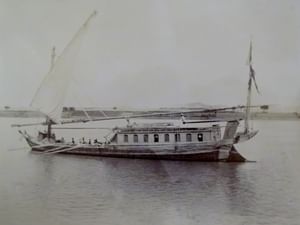
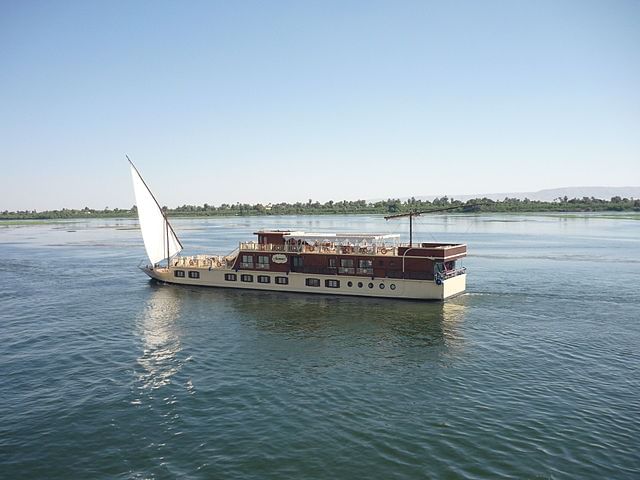
A Dahabiya is a traditional Egyptian wooden sailing vessel — flat-bottomed, two-masted, built for the shallow upper Nile. The design has changed little since the 19th century, when European travelers and Egyptian royalty first used these boats to travel between Luxor and Aswan. It moves slowly and quietly, powered by sail when the wind allows. The river experience on a Dahabiya is different in kind from a standard cruise ship: smaller scale, closer to the water, and genuinely sailing rather than motoring.

This package books you a private cabin on a Dahabiya vessel with a private licensed Egyptologist for all site visits. The vessel carries other passengers in separate cabins. If you want the entire boat exclusively for your group, see our Exclusive Dahabiya Charter.

Highlights

  • Valley of the Kings — private Egyptologist, three royal tombs, painted chambers in full context
  • Esna Temple and the Esna Lock — a working river lock navigated by the Dahabiya, a detail large cruise ships bypass
  • Edfu Temple — the best-preserved temple in Egypt, arrived at by horse-drawn carriage from the riverside dock
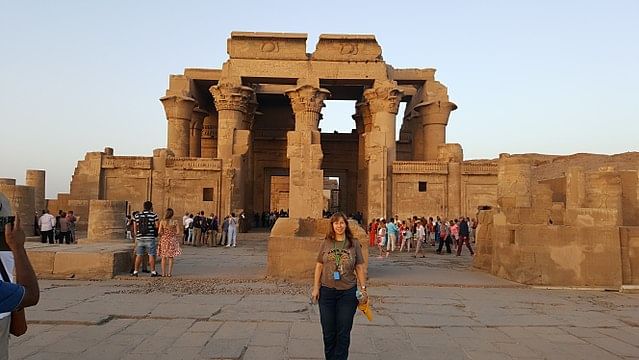
  • Kom Ombo — the dual temple for Sobek and Horus, visible from the water as you approach
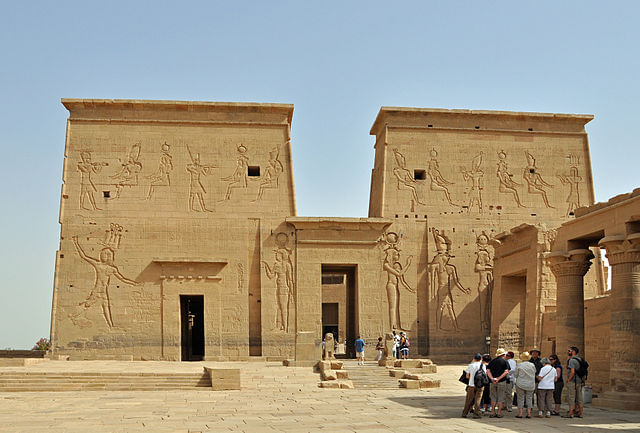
  • Philae Temple — the island sanctuary of Isis, relocated stone by stone before the Aswan reservoir rose
  • 5 days on the Nile at sailing pace — not the motorized transit of a large cruise ship

Who This Tour Is For

  • Travelers who want the authentic Dahabiya sailing experience without chartering the entire vessel
  • Those who prefer the smaller scale and slower pace of traditional Nile sailing over a large cruise ship
  • Couples and solo travelers who want a private cabin and private guiding within a shared vessel environment
  • Return visitors to Egypt who have done the standard cruise and want something qualitatively different

What Makes This Tour Different

  • Dahabiya scale — typically 8–16 passengers, compared to 40–150 on a standard Nile cruise ship. Fewer people means shorter queues at sites, more space on deck, and a quieter dining experience.
  • Esna Temple and the Lock — most standard cruise ships skip or rush Esna. The Dahabiya navigates the working Esna Lock, which gives you a close, unhurried look at a rarely-seen moment of the Nile in operation. Esna Temple's ceiling is one of the most decoratively intact in Egypt.
  • Private Egyptologist — your guide accompanies you from site to site for the full five days. This is not the ship's group tour; your Egyptologist is assigned exclusively to your group.
  • Sailing rhythm — the Dahabiya moves primarily at night, arriving at each temple in the morning before the day-tour crowds. The days are spent at sites; the evenings belong to the river.

What You'll Experience

Day 1 — Arrive Luxor · Board Dahabiya · Karnak Temple 

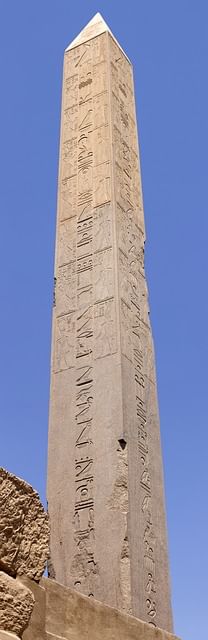
Private transfer from Luxor Airport to the Dahabiya dock. Board your vessel, meet the captain and crew, and settle into your cabin. Afternoon visit to Karnak Temple with your private Egyptologist: the largest religious complex ever built, added to by thirty successive pharaohs over 2,000 years. The hypostyle hall — 134 columns, the tallest reaching 23 meters — is the single most visually overwhelming interior in ancient Egypt. Return to the Dahabiya for dinner as the boat prepares to sail.

Day 2 — Luxor West Bank · Sail to Esna 

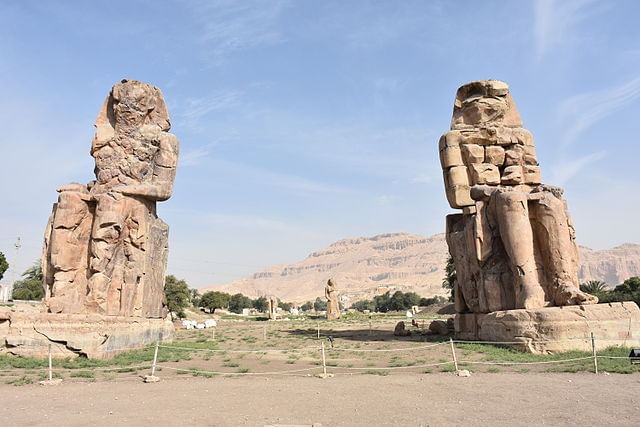
The Dahabiya is still docked in Luxor this morning. Valley of the Kings with your Egyptologist: three tombs selected based on your interests and the historical context built at Karnak the day before. Hatshepsut's Temple at Deir el-Bahari — the colonnaded terrace cut into the cliff, and the story of her erasure from the official record. The Colossi of Memnon on the return. The boat sails south after lunch. The Esna Lock in the late afternoon — a working river lock that the Dahabiya navigates slowly while you watch from deck level. The lock gates, the water level change, the other vessels waiting: a piece of the living Nile that large cruise passengers rarely see this closely. For travelers staying in Luxor before boarding, see our 2-Day in Luxor itinerary.

Day 3 — Esna Temple · Sail to Edfu 

Esna Temple in the morning — a Ptolemaic temple with one of the most intact decorated ceilings in Egypt. The astronomical calendar carved into the ceiling was used to calculate festival dates; your Egyptologist traces the imagery in sequence. Less visited than Edfu or Karnak, and worth the time. The boat sails south through the afternoon toward Edfu — upper deck, the Nile opening out, the desert approaching the water on both sides.

Day 4 — Edfu Temple · Kom Ombo 

Edfu Temple in the morning, arrived at by horse-drawn carriage from the riverside dock — the best-preserved religious building in Egypt. Completed during the Ptolemaic period in a style deliberately reproducing ancient Egyptian architectural forms, its inner sanctuary walls carry the complete mythological cycle of Horus and Set in extraordinary carved detail. Your Egyptologist reads the reliefs in sequence in the inner sanctuary; this is one of the most legible temple interiors in the country.

Kom Ombo Temple in the afternoon: the dual temple for Sobek, the crocodile god, and Horus, built symmetrically so that every architectural element on one side is mirrored exactly on the other. The crocodile mummy museum is attached to the site. The boat continues south toward Aswan overnight.

Day 5 — Aswan: Philae Temple · Disembark 

Philae Temple by motorboat from the Dahabiya dock — the island sanctuary of Isis, relocated stone by stone to its current island before the Aswan reservoir rose. One of the most beautiful sites in Egypt: human scale, a water setting, and an unusual architectural completeness. Your Egyptologist explains the UNESCO operation that saved it.

Disembarkation after Philae. Private transfer to Aswan Airport for departure, or to your Aswan hotel if you are extending the trip.

Abu Simbel: can be added as a Day 6 morning flight from Aswan before departure. Confirm when booking.

Considering a different format?

Frequently Asked Questions

Is this the exclusive charter or a shared vessel? T

This is a shared vessel — you book a private cabin, and other passengers may occupy the remaining cabins on the boat. Your Egyptologist is private (assigned exclusively to your group), your cabin is private, but you share the common areas (deck, dining room) with other passengers. For a completely private vessel with no other guests, see our Exclusive Dahabiya Charter.

How is a Dahabiya different from a standard Nile cruise ship? 

Scale and pace. A Dahabiya carries 8–16 guests compared to 40–150 on a standard ship. It moves primarily under sail, arriving more slowly at each site in the morning. The deck is intimate rather than crowded. The overall experience is closer to private sailing than to cruise ship tourism. The sites visited are the same as a standard cruise, but the journey between them is qualitatively different.

Can I combine this with a Cairo tour? 

Yes. The standard structure is: Cairo (2–3 days) → domestic flight to Luxor → Dahabiya → disembark in Aswan → return to Cairo or depart from Aswan.  → . Contact us with your travel dates, and we will build the combined itinerary.


What's included?
    • 4 nights in a private cabin on the Dahabiya (full board — all breakfasts, lunches, dinners on board)
    • Private licensed Egyptologist for all site visits throughout the 5 days
    • All entrance fees to sites listed in the itinerary
    • All transfers: Luxor Airport to boat, Philae motorboat, Edfu horse carriage, Aswan disembarkation transfer


    Exclusions
      • International and domestic flights to Luxor and from Aswan
      • Cairo touring (can be added as a pre-cruise package — ask us)
      • Tips for crew and guide
      • Alcoholic beverages and personal expenses
      Please note

        Before You Board, we send your cruise confirmation — with the vessel name, dock location, boarding time, guide contact, and daily schedule — at least 7 days before departure. Your guide's WhatsApp number is included for direct communication.

        Getting to the Dock: We arrange pickup from your hotel or the airport to the cruise dock. Nile cruise ships dock on the river corniche in Luxor or Aswan (your driver knows the exact location). Lake Nasser cruise vessels dock at the marina south of the Aswan High Dam — a different location from Nile cruise docks. Your driver handles all navigation.

        The Ship: Your vessel is a 5-star cruise ship (Nile) or a smaller specialist vessel (Lake Nasser, 20–65 passengers). Your cabin is private with an en-suite bathroom, air conditioning, and Nile/lake-view window. Sundeck with pool, restaurant, and lounge are shared with other passengers. The ship is shared; your guide time is private.

        Your Guide vs. the Ship's Guide The cruise ship provides an on-board guide for group lectures and group excursions at each temple stop. Your private Egyptologist guide is separate — they meet you at each site for a private visit at your pace. You have access to both. Use yours for the serious temple visits; the ship's guide provides general orientation on board.

        What You'll Pay On-Site: All entry fees for sites listed in the itinerary are included. Optional premium tomb tickets (Tutankhamun, Seti I, Nefertari) are paid on-site by credit or debit card. Your guide advises on the day. Alcoholic beverages on the ship are not included and are purchased from the ship's bar.

        Meals All meals on board are included: breakfast, lunch, and dinner daily. Meals are served at set times in the ship's restaurant. The cuisine is a mix of Egyptian and international dishes. Special dietary requirements (vegetarian, gluten-free, halal, allergies) can be accommodated — tell us when booking so we can inform the ship in advance.

        Weather & Sun The Nile Valley (Luxor and Aswan) is hotter than Cairo year-round. Peak season (October–April): 22–32°C (72–90°F). Low season (May–September): 38–47°C (100–117°F). Temple visits are scheduled for the early morning to avoid the worst of the heat. The sundeck is exposed — bring sunscreen even in winter. Lake Nasser is hotter and drier than the Nile corridor — no shade at remote temple sites.

        Dress Code: Casual and comfortable on board. At temple sites, lightweight, modest clothing is practical for sun protection and cultural respect. Comfortable closed-toe shoes are essential for every temple visit — stone surfaces are uneven and sometimes sandy. Bring a light layer for air-conditioned interiors on the ship and for cool desert mornings (especially the Abu Simbel early departure).

        Photography: Photography is permitted at all outdoor temple sites. Inside tombs (Valley of the Kings), photography is generally prohibited without a separate ticket. Lake Nasser temple sites have no restrictions on photography. Drone photography is not permitted at any archaeological site.

        Payments on Board: Most ships accept credit/debit cards for bar tabs and on-board purchases. Some smaller Lake Nasser vessels are cash-only for on-board extras — your confirmation will specify. Tips for the ship crew are typically collected separately at the end of the cruise (recommended: $5–10 per person per day for the crew pool, separate from your guide tip).

        Health & Safety: Bottled water is provided daily. Tap water on the ship is not safe to drink. The ship's movement is minimal — Nile cruise vessels are wide and flat-bottomed, and most passengers feel no motion. If you're prone to motion sickness, the effect is far milder than ocean cruises. Bring personal medications and sunscreen. Travel insurance is required and not provided by Pyramids Land.

        Communication: Your guide is reachable by WhatsApp throughout. Wi-Fi is available on most Nile cruise ships (quality varies). Lake Nasser has limited mobile coverage between temple stops — expect periods without signal. This is part of the experience, not a technical failure.

        Abu Simbel Day (if included) The Abu Simbel excursion departs very early — approximately 3:00 AM from Aswan. The drive is 3 hours each way through the Nubian desert. The ship arranges a packed breakfast or an early breakfast on board. Dress warmly for the pre-dawn departure; it warms up quickly after sunrise. The early start is universally described as worth it.

        What to bring

          Daily essentials (carry to every temple visit):

          • Comfortable closed-toe shoes with good grip — every temple involves walking on stone and sand
          • Hat with a brim
          • Sunscreen (SPF 30+ — reapply every 2 hours; the sundeck sun is stronger than it feels)
          • Sunglasses
          • Camera or smartphone (plus charger — cabins have outlets)
          • Small daypack for water and sun protection on temple excursions
          • Any personal medications

          For the cruise:

          • Passport — keep accessible for any security checkpoints or domestic travel
          • Travel insurance documents
          • Light casual clothes for on-board days (the sundeck dress code is relaxed)
          • A light jacket or sweater for air-conditioned ship interiors and early-morning departures
          • Warm layer for the Abu Simbel 3 AM departure (if included) — desert mornings are cold
          • Swimwear for the sundeck pool
          • One slightly nicer outfit for the farewell dinner (optional — most ships are casual, but some passengers dress up for the final evening)
          • Power adapter — Type C (European 2-pin), 220V. Most cabin outlets accommodate international plugs, but bring an adapter.
          • A book — the free sailing day on longer cruises is best spent reading on the sundeck

          We provide bottled water daily. The ship provides towels for the pool and cabin.

          Explore the tours above. Read the details. Ask questions if needed. Book only when it feels right.

          How pricing works

          Prices are based on:

          • Group size
          • Duration
          • Inclusions listed on the tour page

          You will always know what is included before booking. There are no surprise additions.
          What our clients say


          Scuba diver beside a vibrant coral wall with barracuda schooling in the deep blue Red Sea
          By Ashraf Fares April 6, 2026
          The complete guide to diving Egypt's Red Sea. Ras Mohammed, Thistlegorm, Elphinstone, Blue Hole — where to go, what level you need, and what to budget.
          `Snorkeler and sea turtle above a coral reef in Marsa Alam with Egypt's desert coastline in the back
          By Ashraf Fares April 5, 2026
          Marsa Alam is the Red Sea without the crowds. Dolphin encounters, dugong sightings, pristine reefs, eco-resorts, and the most untouched coastline in Egypt.
          `Valley of the Kings at sunrise  limestone cliffs, tomb entrances, winding pathways, and the pyrami
          By Ashraf Fares April 5, 2026
          Complete guide to the Valley of the Kings: which tombs to choose, ticket tiers, Seti I vs Tutankhamun, best time to arrive, and how to structure your West Bank morning.
          Egyptian papyrus artisan at work in a sunlit shop.
          By Ashraf Fares April 2, 2026
          How to buy real papyrus in Egypt and avoid banana leaf fakes. 5 authenticity tests — bend, fiber, texture, weight, residue. Fair prices, certified workshops, scam guide.
          A professional, wide-angle architectural photograph of the Great Hypostyle Hall at Karnak Temple dur
          By Ashraf Fares April 2, 2026
          Karnak is the largest religious structure ever built — and the most confusing without a guide. This is what you are looking at, why it matters, and how to visit.
          Split view comparing Hurghada and Sharm El Sheikh — Hurghada side showing a wide sandy beach with co
          By Ashraf Fares March 28, 2026
          Hurghada or Sharm El Sheikh? Compare beaches, diving, costs, atmosphere, and logistics — and which fits better into your Egypt itinerary.
          Aerial view of a luxury Sharm El Sheikh resort on the Red Sea coast — crystal-clear turquoise water
          By Ashraf Fares March 26, 2026
          Everything you need for Sharm El Sheikh: the best reefs, resort options, costs, day trips to Ras Mohammed and Mount Sinai, and how to fit Sharm into an Egypt trip.
          A solo traveler and guide sailing on a traditional felucca near Aswan granite islands.
          By Ashraf Fares March 12, 2026
          Planning a solo trip to Egypt? 7-day itinerary, safety tips, how to travel alone comfortably, and why a private guide changes everything about solo Egypt.
          Traditional dahabiya sailing on the Nile at sunset; a private honeymoon experience.
          By Ashraf Fares March 12, 2026
          The best Egypt honeymoon itinerary — pyramids at sunrise, a private dahabiya on the Nile, Aswan sunsets, and Abu Simbel. 8 days planned for two.
          Composite view of Egypt's pyramids, massive columns, and Abu Simbel statues with a tour group.
          By Ashraf Fares March 4, 2026
          Planning your first trip to Egypt? How long to go, where to start, what to see, what to skip, and the practical tips nobody tells you. From a Cairo-based guide.
          Show More