
Ancient Egyptian Pyramids
***Edited February 14, 2026
Meaning, History, and Why They Still Matter Today
The ancient Egyptian pyramids are more than massive stone monuments.
They are physical expressions of belief, power, and the ancient Egyptian understanding of life and death.
Built over 4,500 years ago, these structures were designed to guarantee eternity for kings and stability for the world itself. Today, they remain Egypt’s most recognizable landmarks and the starting point for understanding ancient Egyptian civilization.
Why the Pyramids Were Built
The pyramids were built as
royal tombs.
But their purpose went far beyond burial.
Ancient Egyptians believed that life continued after death. The survival of the soul depended on:
- The preservation of the body
- Proper burial rituals
- A monumental tomb that reflected divine order
This belief system is explained in detail in Ancient Egyptian Religion, which serves as the foundation for pyramid construction and design.
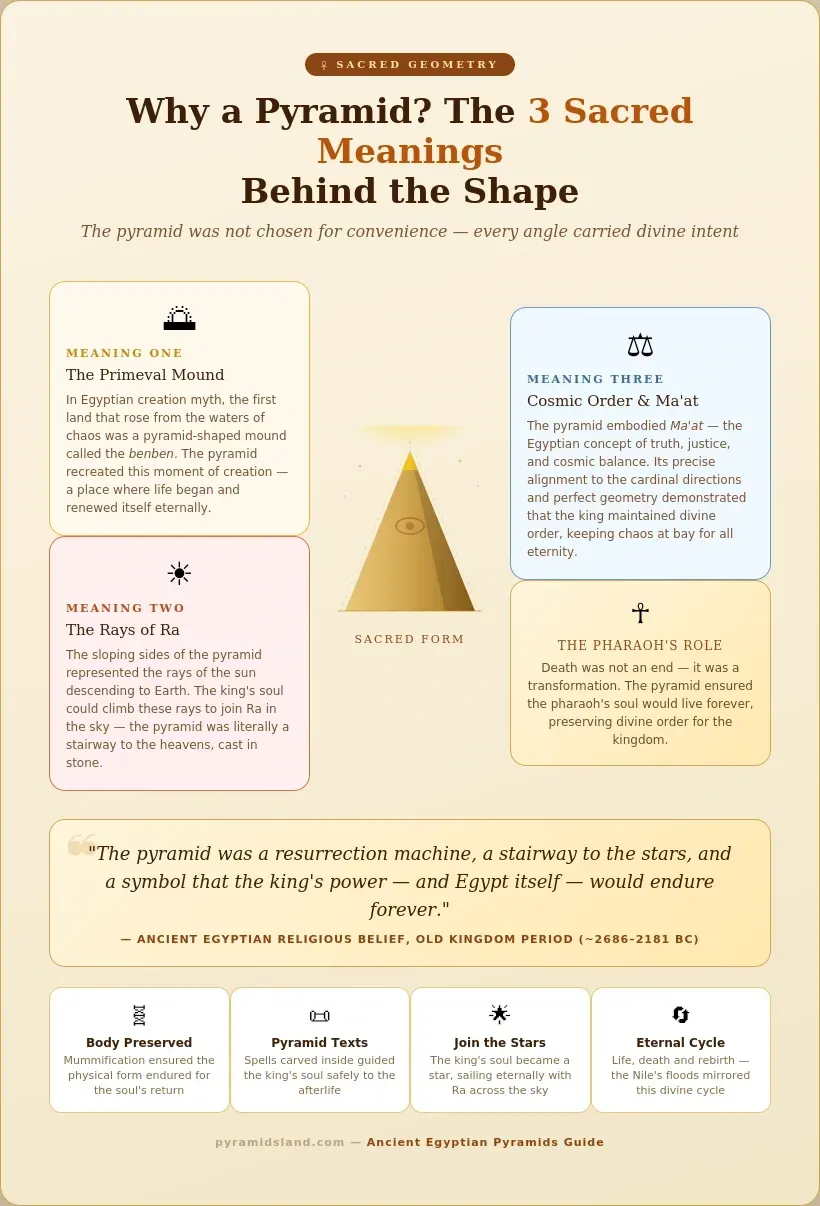
The pyramid shape symbolized:
- The primeval mound from which creation began
- The sun’s rays, linking the king to the sun god Ra
- Stability, permanence, and cosmic order
The Religious Meaning of the Pyramids
In ancient Egyptian belief, the pharaoh was not just a ruler.
He was a divine being whose death threatened the balance of the universe.
The pyramid served as:
- A resurrection machine
- A stairway to the heavens
- A symbol of eternal life
Symbols like the ankh, the ancient Egyptian symbol for life, appear frequently in pyramid texts and reliefs, reinforcing the idea that death was a transformation, not an end.
This connection between pyramids, religion, and symbols is explored further in:
- Ancient Egyptian Religion
- Egyptian symbols and meanings
Who Built the Pyramids
The pyramids were built during the Old Kingdom, mainly under powerful pharaohs such as:
- Khufu
- Khafre
- Menkaure
Contrary to popular myths, the pyramids were not built by slaves.
They were constructed by skilled Egyptian workers who lived near the pyramid sites and were supported by the state.
Each pyramid project required:
- Centralized government
- Advanced engineering
- Religious authority
- Massive logistical planning
The role of pharaohs in pyramid construction is explained in depth in Pharaohs of Ancient Egypt.
How the Pyramids Were Built
The construction of the pyramids remains one of history’s greatest engineering achievements.
Key facts:
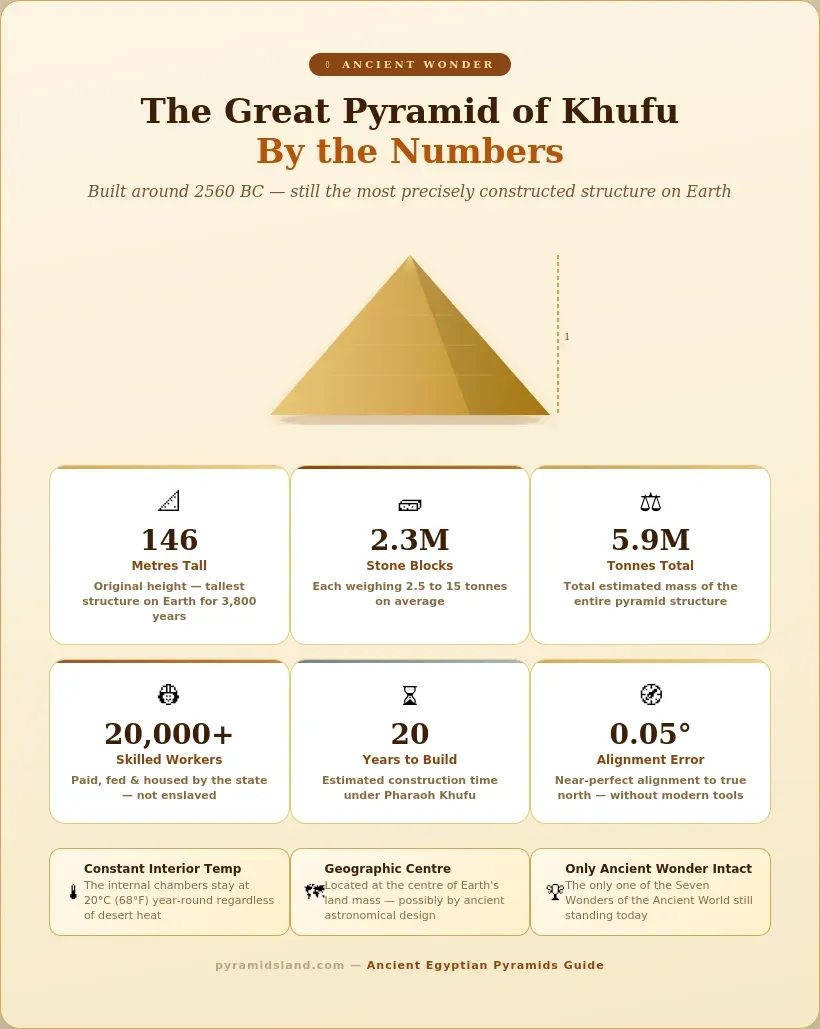
- Limestone blocks weighing several tons
- Precise alignment with cardinal directions
- Complex internal chambers
While the exact techniques are still debated, evidence shows the use of:
- Ramps
- Levers
- Highly organized labor teams
A detailed explanation is available in How the Pyramids Were Built, which explores theories supported by archaeology.
Where the Most Famous Pyramids Are Located
Although pyramids exist across Egypt, the most famous are located at Giza, near modern Cairo.
The Giza plateau contains:
- The Great Pyramid of Khufu
- The Pyramid of Khafre
- The Pyramid of Menkaure
- The Great Sphinx
These monuments are covered in practical detail in the Giza Pyramids Guide, which explains how to visit them today.
Visiting the Pyramids Today
Seeing the pyramids in person transforms abstract history into reality.
Visitors can:
- Walk around the pyramid complexes
- Enter selected pyramid interiors
- Combine the visit with the Egyptian Museum in Cairo
Before visiting, travelers should understand:
- Entry rules
- Best visiting times
- Cultural context
This is explained step by step in Visiting the Pyramids of Giza and the Egypt Travel Guide.
The Pyramids in the Modern World
The pyramids are not relics of a forgotten past.
They continue to shape Egypt’s identity and global imagination.
They represent:
- Human ambition
- Spiritual belief
- Architectural mastery
For many travelers, visiting the pyramids becomes the emotional highlight of their journey through Egypt.
Experiencing the Pyramids with Expert Guidance
Understanding the pyramids deeply requires context.
Guided experiences help visitors:
- Interpret symbols and structures
- Understand religious meaning
- Avoid common misconceptions
Many travelers choose guided tours of the pyramids to connect history, culture, and place in a meaningful way.
See the Full Pyramid Evolution in Sequence
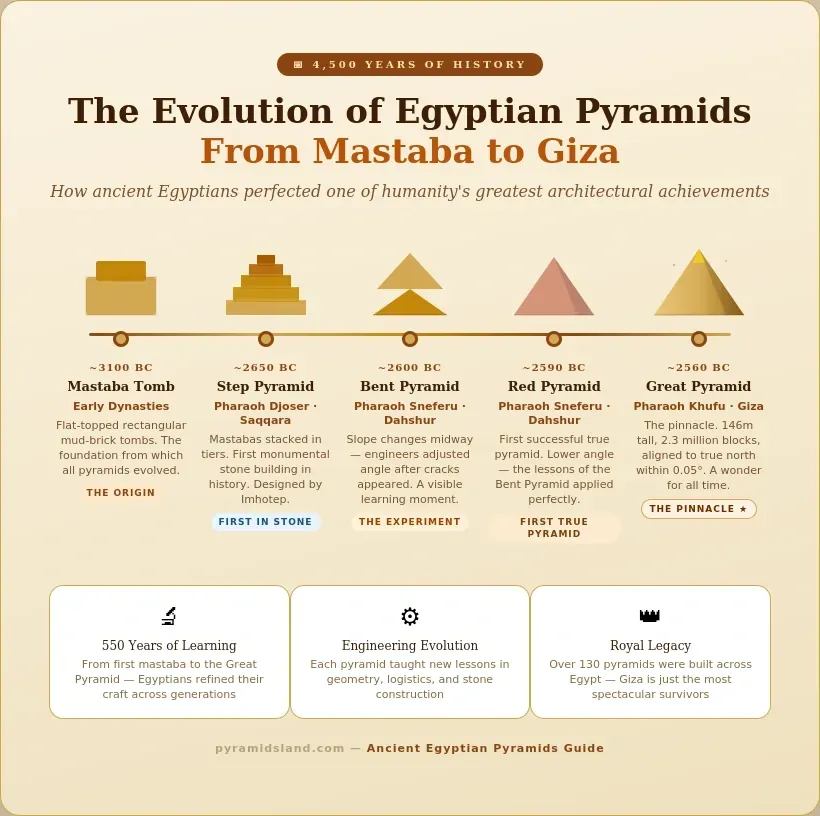
Giza, Saqqara, and Dahshur together in one day — from the Step Pyramid of Djoser (2650 BC) to the Great Pyramid of Khufu. The full story of how pyramid building evolved over 200 years.
Book the Full Day: Giza, Saqqara & Dahshur Tour →

Ashraf Fares