
Temple of Kom Ombo
***Edited February 11, 2026
Kom Ombo is one of Egypt’s most unique temples: built on the Nile, with double temples dedicated to two gods, and stunning river views.
Many travelers pass by without knowing how to visit efficiently or what makes it special — let’s fix that. → Where Kom Ombo ranks among Egypt's temples — the full guide
Who Kom Ombo Is For
Perfect for travelers who:
- Are doing a Nile cruise between Luxor and Aswan
- Love ancient Egyptian temples and hieroglyphs
- Enjoy smaller, less crowded sites
Not ideal if you:
- Have very limited time in Egypt
- Prefer large, more famous temples (like Karnak)
How to Visit Kom Ombo (Practical)
Location & Access:
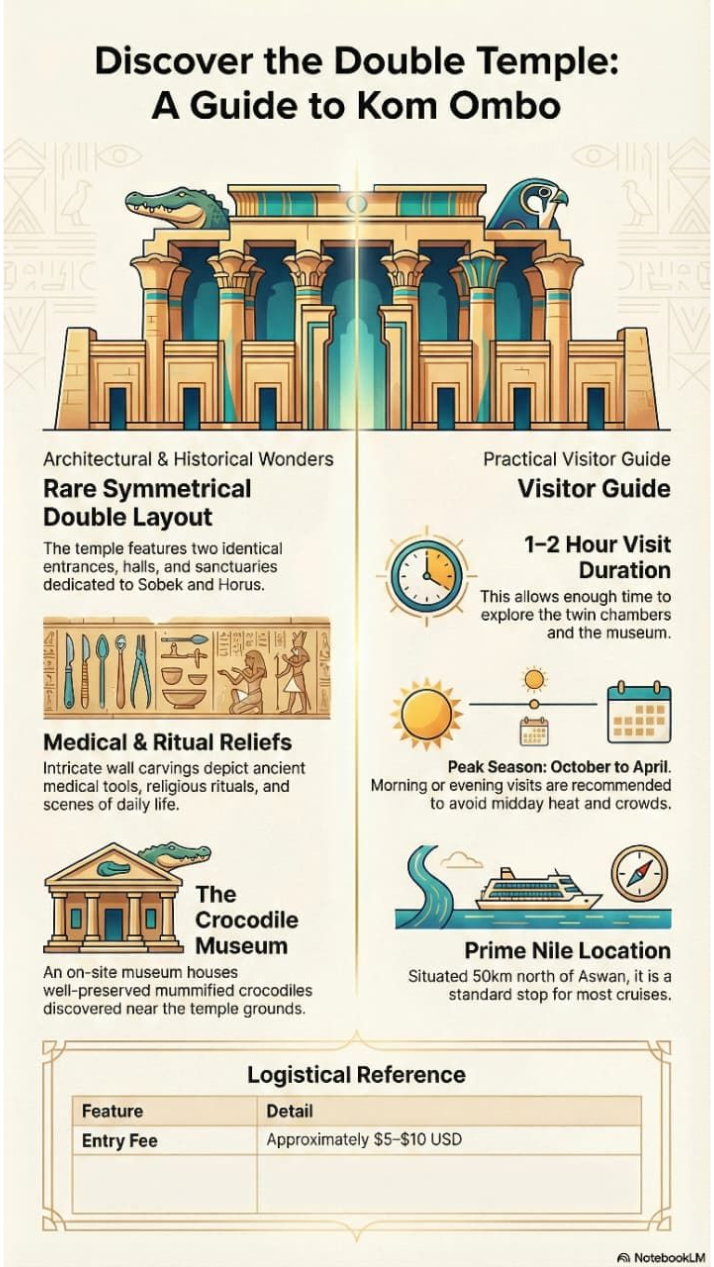
- ~50 km north of Aswan
- Often visited as part of Nile cruises or day trips by private car
Best Time to Visit:
- October–April for comfortable temperatures
- Morning visits avoid crowds and midday heat
Entry Fees & Timing:
- Entry: ~$5–10 (ticket price can change)
- Visit length: 1–2 hours
The Double Temple
- Unusual layout with two symmetrical temples for Sobek (crocodile god) and Haroeris (Horus)
- Great photo opportunities
2. Hieroglyphs & Reliefs
- Depict medical tools, rituals, and daily life
- Don’t miss the crocodile mummies in the small on-site museum
3. Nile Views
- Temple sits right on the riverbank
- Perfect for sunset or early morning reflections
Common Visitor Mistakes
- Rushing through in under 30 minutes
- Visiting midday in hot months
- Missing crocodile museum and relief details
- Not combining the visit with nearby sites (Edfu, Aswan) efficiently
How Kom Ombo Fits Into Your Trip
- Ideal stop on a 3–4 day Nile cruise
- Can be combined with Edfu (next south stop) or a private Aswan day trip
- Works for photographers and cultural travelers alike
Introduction: Discovering the Wonders of Egypt's Ancient History - The Temple of Kom Ombo
Have you ever wondered what it was like to live in ancient Egypt? One of the best places to explore this is the Temple of Kom Ombo, a stunning pharaonic monument that stands as a testament to the greatness of Egypt's past. Located on the banks of the Nile River, this temple offers visitors an opportunity to get up close and personal with some of Egypt's most impressive ruins. With its hieroglyphic inscriptions and intricate carvings, the Temple of Kom Ombo is sure to take your breath away. Come explore this incredible site and discover why it has captivated historians for centuries!
Assumptions vs Facts
Assumption: Kom Ombo Temple is architecturally repetitive
Fact: Its symmetrical design is intentional and rare in Eypt architecture.
Assumption: Sobek worship was primitive or fearful
Fact: Sobek represented protection, fertility, and control over chaos.
History & Mythology Behind the Temple of Kom Ombo
The Temple of Kom Ombo is a magnificent structure that stands proudly in the city of Kom Ombo, Egypt. It is considered one of the most important religious sites in the country and has a long history and mythology behind it.
The temple was built to honor two gods - Sobek, the crocodile god, and Haroeris, the falcon god - who were part of a triad divine temple. Ancient Egyptians believed that these gods had special powers and could provide protection from evil forces.
The temple has been around since ancient times and is still revered today by many people who visit it to pay their respects to these gods. Every year, thousands of tourists come to Kom Ombo to learn more about its history and mythology.
Architecture & Layout of the Temple of Kom Ombo
The Temple of Kom Ombo is an ancient Egyptian temple located in the city of Aswan. It was built during the Ptolemaic period and is known for its unique architecture and layout. The temple has two entrances, one for each of its two chambers, which is a feature that was uncommon in ancient Egyptian temples. Inside the chambers, you can find a variety of hieroglyphs, statues and carvings from the time period. This makes it an interesting place to explore and learn more about the culture and history of Egypt.
Exploring the Interior Chambers and Wall Paintings in The Temple Of Kom Ombo
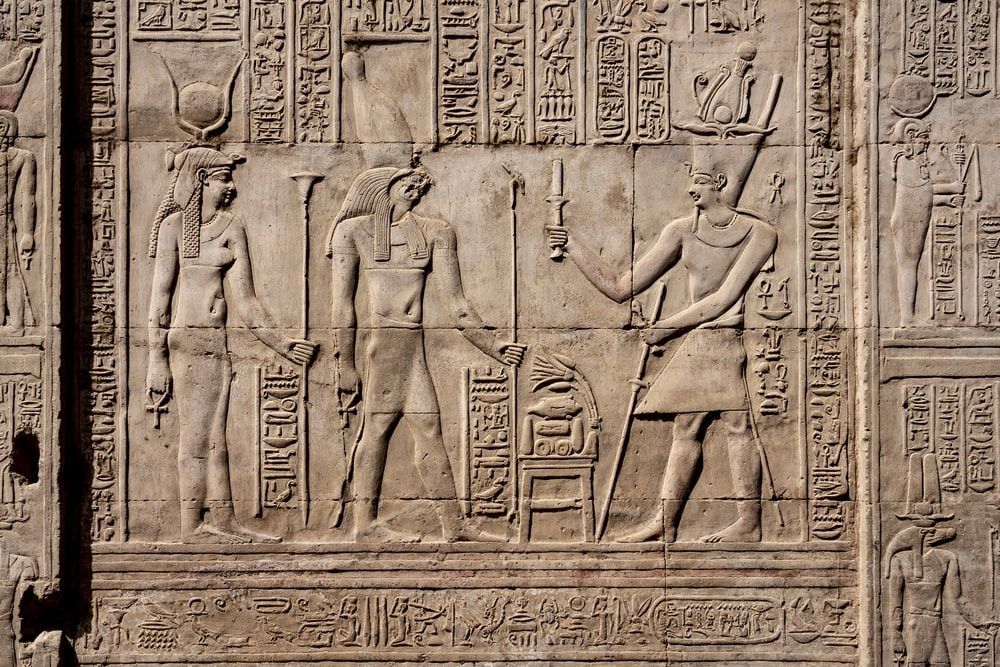
The Temple of Kom Ombo is a fascinating archaeological site in Egypt that is home to some of the most exquisite wall paintings and decorations. It is a temple complex built during the Ptolemaic period and features hypostyle hall decorations, hieroglyphic wall inscriptions, and other archaeological artifacts.
Visitors to the Temple of Kom Ombo can explore the interior chambers and wall paintings to learn more about the history and culture of ancient Egypt. From hieroglyphic inscriptions that tell stories from mythology to stunningly detailed wall paintings depicting gods and goddesses, there is something for everyone at this remarkable site.
Why is Kom Ombo Temple unique among Egyptian temples?
It is a double temple dedicated to two gods simultaneously.
Which gods were worshipped at Kom Ombo?
Sobek (the crocodile god) and Horus the Elder.
Is Kom Ombo worth visiting at night?
Yes. Evening visits enhance the atmosphere and highlight relif details.
What is the crocodile museum at Kom Ombo?
A small museum displayingmummified crocodiles linked to Sobek worship.

Ashraf Fares