
13-Day Egypt Tour | Cairo, 7-Night Nile Cruise, Abydos & Abu Simbel'
A private experience shaped around your time and interests.
★ 4.9 · 2,678 reviews on TripAdvisor · Licensed since 2001 · Free Cancellation
Thirteen days, seven nights on the Nile.
The standard Nile cruise is four nights. This tour runs seven days, with three additional nights that allow the cruise to reach Abydos and Dendera, two sites almost always omitted from shorter itineraries because they require a dedicated full-day departure northward from Luxor. On a four-night cruise, there is no time for them. On a seven-night cruise, Day 6 of the cruise is theirs entirely.
The Temple of Seti I at Abydos contains the finest painted reliefs in Egypt — figures in colours that have survived 3,300 years, a sanctuary built with a precision and care that the larger Karnak complex does not match in quality, and the Abydos King List carved across one of the hall walls: a register naming every pharaoh from Menes to Seti I, the most complete dynastic record cut in stone. The Temple of Hathor at Dendera, on the road back to Luxor, has the original Egyptian Zodiac ceiling in its inner sanctuary — the version in the Louvre is a plaster cast; this is the original.
Cairo gets three days: the Grand Egyptian Museum, Giza, and Saqqara — each given a full day rather than compressed into two. Abu Simbel closes the tour on Day 11 from Aswan before the return to Cairo for international departure.
Highlights
- Grand Egyptian Museum — full Tutankhamun collection, Royal Mummies, Old Kingdom halls with a private Egyptologist
- Giza Plateau — three pyramids and the Sphinx, dedicated a full day to the morning light
- Saqqara — the Step Pyramid of Djoser (the world's first monumental stone structure) and the painted Old Kingdom mastaba tombs
- Karnak Temple — the largest religious complex ever built, with two thousand years of construction by thirty pharaohs
- Valley of the Kings — royal tomb paintings with full Egyptologist context built across days of prior visits
- Tomb of Nefertari (Valley of the Queens) — the most beautifully painted tomb in Egypt, requiring special entry permission
- Abydos: Temple of Seti I — finest painted reliefs in Egypt · the Abydos King List in the hall
- Dendera: Temple of Hathor — the original Egyptian Zodiac ceiling, in near-perfect condition
- 7-night Nile cruise — Edfu, Kom Ombo, Philae, Aswan — all site visits privately guided
- Abu Simbel — Day 11 — both rock-cut temples, early morning, full Egyptologist context, including the 1968 UNESCO relocation
Who This Tour Is For
- Travelers who have read about Abydos and Dendera and want to actually go. These are not accessible on a standard 4-night cruise; this itinerary was designed around including them.
- Those who want the Nile cruise as a genuine experience — seven nights rather than four. The difference is between the cruise as a mode of transit and the cruise as the trip itself.
- Anyone who has done a shorter Egypt itinerary before and knows what they missed. This is the itinerary for the second trip, or for someone who researches destinations thoroughly before the first.
- History-focused travelers who want the full chronological arc: Old Kingdom at Giza and Saqqara, New Kingdom at Luxor, the transition period at Abydos, Ptolemaic at Dendera — all in one journey.
- Those for whom the same Egyptologist for 13 consecutive days is a meaningful difference. Context accumulated across days changes what you understand at each site.
What Makes This Tour Different
- Seven nights on the Nile, not four — the standard Nile cruise runs Luxor to Aswan in four nights, covering Edfu and Kom Ombo. Three additional nights northward allow the cruise to reach Abydos and Dendera before turning south. Most travelers who visit these sites do so as exhausting day trips from Cairo or Luxor. On this tour, they have a full cruise day, arriving comfortably and unhurried.
- Nefertari's Tomb as a standard inclusion — the tomb of Queen Nefertari in the Valley of the Queens has the most technically accomplished painted walls in ancient Egypt; Egyptologists regularly describe it as the Sistine Chapel of the ancient world. Entry requires a separate permit with limited daily visitor numbers. It is included in this itinerary, not listed as an expensive optional extra.
- The Abydos King List — a carved register in the Temple of Seti I at Abydos names every pharaoh in sequence from the legendary Menes to Seti I himself. Standing in front of it with an Egyptologist who can read hieroglyphs and explain the political decisions about which names were included and which were deliberately omitted (Akhenaten, Hatshepsut, Tutankhamun — all excluded) is one of the most historically specific moments an Egypt trip can offer. It requires being at Abydos, which requires seven nights on the Nile.
- Three full Cairo days — most Egypt packages give Cairo two days and a rushed morning. Three days give the Grand Egyptian Museum its own full day, Giza its own full day, and Saqqara its own full day. None of the three is shortchanged by sharing a day with another.
- Abu Simbel as a proper close — the two rock-cut temples of Ramesses II at Abu Simbel are the most dramatic monuments in Egypt outside Cairo. They close this tour on Day 11, with your private Egyptologist at the site for three to four hours — not the rushed 45-minute group visit that characterises most Abu Simbel day trips.
A Note on Itinerary Sequencing
Nile cruise ships operate on fixed embarkation and disembarkation schedules that are set by the cruise company and may change depending on your travel dates. This means the sequence of days shown above — specifically, which site is visited on which cruise day — may be adjusted to align with the ship's sailing schedule when we book your departure.
What does not change: all sites listed are covered. Every temple, every guided visit, and every day of the cruise is included, regardless of the sequence your particular departure follows. Your Egyptologist remains with you for every site visit, in whatever order the cruise runs
In practice, the common sequencing variations are:
- Southbound (Luxor to Aswan): West Bank → Edfu → Kom Ombo → Aswan. This is the most common direction.
- Northbound (Aswan to Luxor): Aswan → Kom Ombo → Edfu → West Bank. Less common but operated by some cruise lines.
We confirm the exact daily sequence with you before departure, once the cruise departure dates are set. If the direction or sequencing matters to you specifically, tell us when you enquire, and we will match you to the right cruise departure.
What You'll Experience
Day 1 — Arrive Cairo
Private airport transfer to your 5-star hotel. Luggage handled, check-in smooth. Your Egyptologist contacts you to confirm Day 2 arrangements and brief you on the itinerary sequence. Dinner recommendation provided. No obligations tonight.
Day 2 — Cairo: Grand Egyptian Museum
The Grand Egyptian Museum occupies the full morning — this is a large institution, and it rewards time. Your Egyptologist structures the session around the Tutankhamun collection: four thousand objects from a single tomb, the golden death mask, the gilded shrine, the canopic chest. This is the interpretive foundation for everything you will see for the next eleven days. The Royal Mummies Hall in the afternoon: nineteen pharaohs, including Ramesses II, Seti I, and Hatshepsut. The face of the man who built Abu Simbel is in a glass case. Return to the hotel. Evening at leisure.
Day 3 — Cairo: Giza Plateau
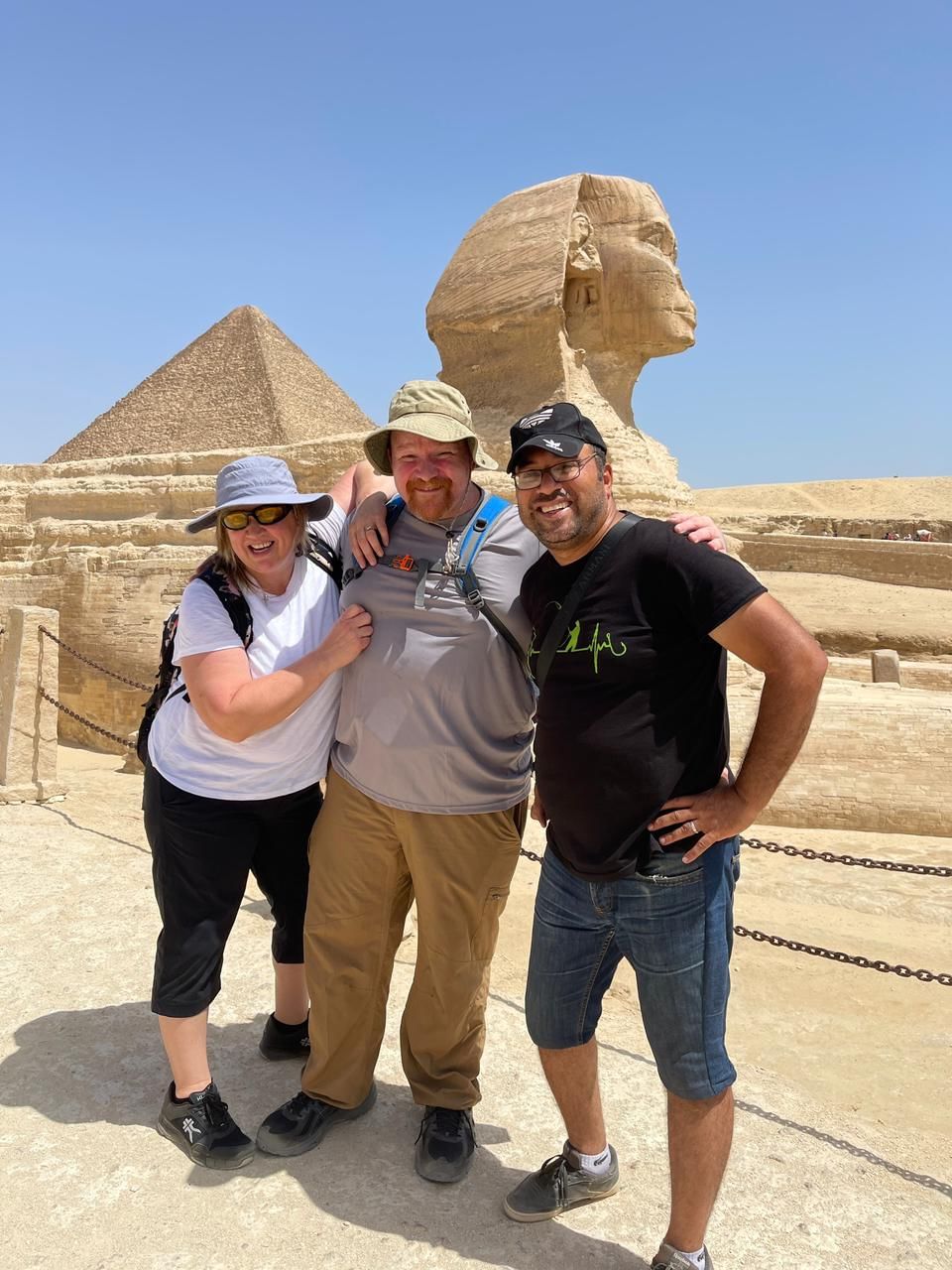
Early start at Giza before the day-tour buses arrive. The three pyramid complexes — Khufu, Khafre, Menkaure — your Egyptologist explains the construction as a logistics problem: 20,000 workers, the quarrying and transport of 2.3 million stones, and twenty years. The Sphinx from the south angle — the position that most visitors miss. The Valley Temple of Khafre, one of the best-preserved Old Kingdom buildings in Egypt, has walls of Aswan granite and alabaster floors. The Solar Boat Museum is where you can see a 4,500-year-old cedar boat reassembled in its entirety.
Day 4 — Cairo: Saqqara
Saqqara in full. The Step Pyramid of Djoser — the first monumental stone structure in history, designed by Imhotep around 2650 BCE, predating Giza by several decades. The Imhotep Museum at the site entrance: small and excellent, explaining the evolution of pyramid architecture from the mastaba form to the step pyramid to the true pyramid you saw yesterday at Giza. The painted mastaba tombs of the Old Kingdom viziers: Mereruka, Ti, Kagemni. The wall reliefs in these tombs record daily life — fishing, hunting, agricultural work, music — with a warmth and specificity that the larger temples do not match. Saqqara is almost always described by repeat Egypt visitors as the site they most wish they'd given more time on their first trip.
Day 5 — Fly to Luxor · Karnak Temple · Board Cruise
Morning domestic flight from Cairo to Luxor. Private transfer to Karnak Temple: the largest religious complex ever built, added to by thirty successive pharaohs across 2,000 years. Your Egyptologist explains the sequence — who built which pylon and why — turning the bewildering accumulation of columns into a legible political document. The Great Hypostyle Hall: 134 columns, the tallest reaching 23 metres, every surface carved with hieroglyphs. The Sacred Lake. Luxor Temple at dusk — the sandstone turns amber in the last light. Board your 5-star Nile cruise ship at the Luxor dock in the evening. Welcome on board, cabin assignment, dinner on the river. Tonight is the first of seven nights on the Nile.
Day 6 — Luxor West Bank from Cruise · Nefertari's Tomb
The cruise ship is docked in Luxor this morning. Private vehicle from the dock to the West Bank. Valley of the Kings: three tombs selected by your Egyptologist. The painted chamber walls are a continuation of the iconography built at the GEM on Day 2 — the religious logic is now legible, not abstract. Valley of the Queens: the Tomb of Nefertari — the most beautifully painted royal tomb in Egypt. The walls are covered floor to ceiling with scenes from the Book of the Dead, executed in a palette and with a technical precision that Egyptologists consistently place at the summit of ancient Egyptian painting. Entry is limited to 150 visitors per day; your permit is pre-arranged. Your Egyptologist reads the scenes in sequence: the nocturnal journey, the weighing of the heart, the fields of Aaru. Hatshepsut's Temple at Deir el-Bahari on the return. The Colossi of Memnon. Back to the cruise for lunch. The ship sails north toward Abydos and Dendera through the afternoon.
Day 7 — Dendera Temple & Abydos
The Temple of Hathor at Dendera in the morning — a Ptolemaic temple in a state of preservation that most older Egyptian structures do not approach. The inner sanctuary ceiling carries the original Egyptian Zodiac: a circular map of the sky as the ancient Egyptians understood it, carved in sunk relief, with the figures of the twelve zodiacal constellations and the decans of the Egyptian calendar mapped in a single image. The Louvre has a cast of this ceiling; this is the original, in place, in the temple it was designed for. The roof, which preserves the best light, allows a close view.
The Temple of Seti I at Abydos in the afternoon. Drive from Dendera to Abydos (approximately 70 kilometres). Seti I ruled from 1294–1279 BCE — this temple was his devotional project. The inner sanctuary walls carry painted reliefs in colours that have survived with almost no degradation: the figures are rendered with a precision and delicacy that the larger and more famous Karnak complex does not match. The Osiris chapel. The Abydos King List in the second hypostyle hall: a carved register naming every pharaoh from the legendary Menes to Seti I himself, with conspicuous omissions that your Egyptologist explains—Akhenaten, Hatshepsut, and Tutankhamun —excluded for political reasons. Return to the cruise for dinner. Sail south.
Day 8 — Edfu Temple
The boat docked overnight near Edfu. Morning visit to the Temple of Horus by horse-drawn carriage from the riverside dock — the best-preserved religious building in Egypt. Completed in 57 BCE, its inner sanctuary walls depict the complete mythological cycle of Horus and Set in extraordinary carved detail: the conflict, the resolution, and the coronation of Horus as the rightful heir. Your Egyptologist reads the reliefs in sequence through the hypostyle hall into the inner sanctuary. The falcon statue in the vestibule. The sacred bark chapel. This is one of the most legible temple interiors in Egypt — the narrative is intact and easy to follow. Return to the cruise and sail south through the afternoon.
Day 9 — Kom Ombo · Sail to Aswan
Kom Ombo Temple in the morning — the dual temple for Sobek, the crocodile god, and Horus the Elder, built symmetrically so that every architectural element on one side is precisely mirrored on the other. The crocodile mummy museum attached to the site: dozens of mummified crocodiles from the sacred crocodile pool that the temple once maintained. The wall reliefs include some of the most unusual imagery in Egyptian architecture — surgical instruments, a medical calendar, scenes that have been interpreted as among the earliest depictions of medical instruments in history.
The cruise continues south toward Aswan through the afternoon. The granite outcrops of Upper Egypt appear in the Nile — the landscape changes character here, the desert closer to the water, the river narrower and faster through the cataract region. Dinner on board as Aswan comes into view.
Day 10 — Aswan: Philae Temple · High Dam · Unfinished Obelisk
Philae Temple by motorboat from the Aswan dock — the island sanctuary of Isis, relocated stone by stone from its original island site before the Aswan reservoir rose in the 1970s. The UNESCO operation that saved it (and Abu Simbel and several other Nubian temples) is one of the largest archaeological rescue operations in history; your Egyptologist explains it in detail. The temple itself is dedicated to Isis and bears some of the latest known hieroglyphic inscriptions — the last dated hieroglyph in Egypt, 394 CE, is at Philae.
The High Dam in the afternoon: the engineering, the political backstory (Nasser, the withdrawal of US/UK funding, the Soviet construction), the communities displaced, and the archaeological rescue operation it made necessary. The Unfinished Obelisk in the quarry at Aswan — a single piece of granite, 42 metres long if it had been completed, still attached to the bedrock where it was abandoned when a crack appeared. The best evidence anywhere for how ancient Egyptian obelisks were quarried. Check in to your Aswan hotel. Dinner by the Nile.
Day 11 — Abu Simbel · Return North on Cruise
Early morning departure for Abu Simbel — by vehicle (depart 04:30, arrive at the site by 07:30 before the day-tour groups arrive) or by charter aircraft (45-minute flight, approximately USD 150– 300 per person). The two rock-cut temples of Ramesses II, carved into a sandstone cliff face in Nubia around 1264 BCE: the Great Temple fronted by four seated colossi each 20 metres high, and the smaller Temple of Nefertari, the only Egyptian temple built to honour a living queen.
Your Egyptologist provides the full context: the political significance of temples at the southern edge of empire (Abu Simbel sits at the border of ancient Nubia, 280 kilometres from Aswan), the astronomical alignment of the Great Temple's inner sanctuary (twice a year, on February 22nd and October 22nd, sunlight penetrates the sanctuary and illuminates three of the four statues at the back wall — Ramesses himself, Amun-Ra, and Ra-Horakhty, while the fourth statue of Ptah, god of darkness, remains in shadow), and the 1968 UNESCO operation that dismantled both temples into 1,036 numbered blocks and reassembled them 65 metres uphill, above the waterline of the rising Aswan reservoir.
Return to Aswan and the cruise by late morning. The ship sails north — back toward Luxor. This is the final night on board. Dinner on the Nile as the river reverses direction and the Upper Egypt landscape unfolds again in the opposite direction.
Day 12 — Disembark Luxor · Fly Luxor–Cairo
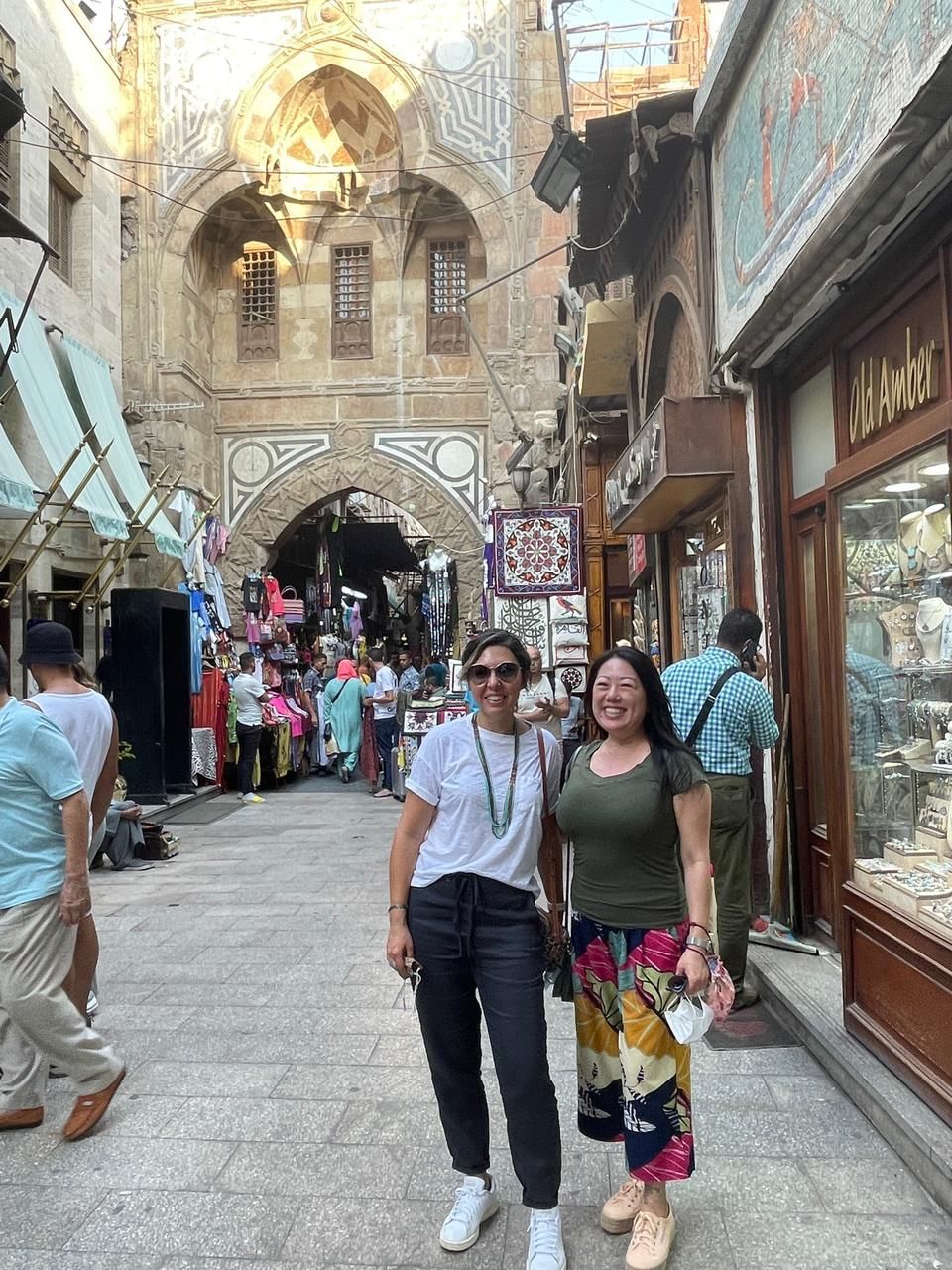
Disembarkation in Luxor after breakfast. Private transfer to Luxor Airport. Domestic flight to Cairo. Your Egyptologist is not with you today — this is a free afternoon and evening in Cairo before international departure. The Islamic Cairo districts reward unguided walking if you have energy. Khan el-Khalili. Or simply the hotel.
Day 13 — International Departure from Cairo
Private transfer to Cairo International Airport for your international departure. If your flight is late in the day, luggage storage at the hotel is arranged; the day is yours until transfer time.
Frequently Asked Questions
What is the difference between this tour and a standard Nile cruise package?
The standard Nile cruise package runs 4 nights from Luxor to Aswan, covering Karnak, the West Bank, Edfu, Kom Ombo, Philae, and Aswan. This 13-day tour runs 7 nights, with the additional 3 nights used to reach Abydos and Dendera northward from Luxor before turning south. Those two sites are the primary reason this tour exists at this length — they are extraordinary and almost always omitted from shorter itineraries because there is no time to reach them.
Is Nefertari's Tomb really that different from the other royal tombs?
Yes, without qualification. The other tombs in the Valley of the Kings and Valley of the Queens are painted, but the Tomb of Nefertari is painted at a level of technical execution that Egyptologists consistently describe as the peak of ancient Egyptian painting. The colour palette is fuller, the proportions more precise, and the coverage more complete — floor to ceiling in the burial chamber. Entry is limited to 150 visitors per day because the CO2 and humidity from visitors' breath damage the pigments; the Egyptian Ministry of Antiquities carefully controls access. The permit is included in this package and arranged in advance.
How long does the Abydos + Dendera day take?
Day 7 of the cruise begins at Dendera (approximately 65 kilometres north of Luxor) and continues to Abydos (approximately 130 kilometres north of Luxor). The cruise moves northward overnight after the West Bank day to position near Dendera. Dendera takes 2–3 hours, including the roof and crypts. The drive to Abydos takes approximately 45 minutes. Abydos takes 2–3 hours. You return to the cruise by early evening. It is a full day and a rewarding one — these are genuinely quiet sites compared to Karnak or Giza.
Can we extend the tour with additional days in Aswan or a Western Desert addon?
Yes. The natural extension from Aswan is the Western Desert: Bahariya Oasis and the Black and White Deserts are accessible by vehicle from Cairo (approximately 4 hours), or a dedicated day trip from Aswan can reach Wadi el-Sebua (the lake Nasser temples submerged by the Aswan reservoir, now accessible by boat). Either can be added as a pre-tour or post-tour extension. Contact us with your travel dates, and we will build the combined itinerary with transparent pricing.
Is this tour suitable for first-time visitors to Egypt?
Yes, and in some ways, it is the best structure for a first-time visitor with 13 days. The 3-day Cairo sequence (GEM, Giza, Saqqara, each given a dedicated day) builds the knowledge base that makes every subsequent site more legible. By the time you arrive at Abydos on Day 7, you have the GEM context, the Saqqara architectural history, the Karnak scale reference, and the Valley of the Kings religious framework. Abydos is where all of those threads connect. First-time visitors consistently describe the Abydos day as the most memorable of the tour.
How physically demanding is this itinerary?
Moderate. The most demanding single day is Day 7 (Dendera and Abydos) — a long day of walking at two large temple sites with driving between them. The Valley of the Kings on Day 6 involves walking on uneven stone and descending into tombs with narrow passages. On Day 11, Abu Simbel requires walking over compacted desert terrain to reach the temple entrance. All other days are spent walking at a manageable pace with breaks. We schedule early starts throughout to avoid peak-day heat. If you or anyone in your group has specific mobility requirements, tell us when you enquire — we adjust which tombs and which areas of sites to prioritise.
Explore the tours above. Read the details. Ask questions if needed. Book only when it feels right.
How pricing works
Prices are based on:
- Group size
- Duration
- Inclusions listed on the tour page
You will always know what is included before booking. There are no surprise additions.