
4-Night Lake Nasser Cruise with Private Guide | Abu Simbel Included
A private experience shaped around your time and interests.
★ 4.9 · 2,678 reviews on TripAdvisor · Licensed since 2001 · Free Cancellation
Overview
Lake Nasser is the reservoir created by the Aswan High Dam. It stretches 550 kilometers south from Aswan into Sudan and covers what was once the Nubian homeland — villages, farmland, and temples submerged when the dam was built in the 1960s.
Before the flooding, an international UNESCO rescue operation relocated 24 ancient Nubian temples to higher ground. Most of these temples now sit on the lake's shores, accessible only by boat. The Lake Nasser cruise visits them.
These are not the temples that appear on postcards. Kalabsha, Wadi es-Sebua, Amada, Derr — most travelers have never heard of them, and most Egyptologists consider them essential. They were built by the same pharaohs who built Karnak and the Valley of the Kings, but they stand in silence on the edge of a desert lake, visited by almost no one.
This is the least visited Egypt cruise and the most distinctive. The temples are remote, the lake is vast and silent, and you will share many sites with no other tourists at all.
✦ At Amada, your guide will stop in the sanctuary at the back of the temple — a small room, lit only by the light that enters through the door. On the north wall, a stela records an event from the reign of Amenhotep II, its hieroglyphs still sharp after 3,400 years. The stela describes the pharaoh's military campaigns in Syria and Canaan. It also records, as a side note, the hanging of seven Asiatic princes from the prow of his ship after a battle — a casual record of violence so normalized in its tone that your guide will read it carefully before commenting. The ancient world is genuinely different from ours. Amada's remoteness makes that difference available in a way that more visited sites rarely achieve.
Highlights
Highlights
- Abu Simbel from the water — approached by a cruise vessel, not by road. The colossal façade emerges from the shoreline as the ship rounds the final bend — a perspective the 3 AM road trip does not provide
- Temple of Kalabsha — the largest free-standing temple of Nubia, relocated to its current site during the UNESCO rescue
- Wadi el-Seboua — the "Valley of the Lions," a temple avenue leading to a structure that was converted to a Christian church, with pharaonic reliefs partially plastered over by Coptic paintings
- Temple of Amada — the oldest surviving temple on Lake Nasser, with the sharpest hieroglyphs on any Nubian site. The sanctuary stela recording Amenhotep II's military campaigns is readable after 3,400 years
- Qasr Ibrim — the only Nubian site not relocated, still on its original clifftop (viewed from the water, not accessible on foot)
- Silence — you will share many of these sites with no other tourists at all
Who Is This Tour For
- Return visitors to Egypt who have done the standard Nile cruise and want something they have never seen
- Temple and archaeology specialists who want the rescued Nubian monuments — sites that most Egypt visitors never reach
- Travelers who value remoteness and silence over amenities and crowds
- Anyone who wants to see Abu Simbel from the water rather than the road
What Makes This Tour Different
- This is not the Nile. Lake Nasser is the reservoir created by the Aswan High Dam — vast, silent, and visually unlike the green Nile corridor. The temples along its shores were rescued from the rising water by a UNESCO operation in the 1960s and 70s. Most are accessible only by boat. You cannot visit these sites by road.
- Abu Simbel from the lake, not the road. Every other Abu Simbel visit in Egypt begins with a 3 AM drive through the desert. On the Lake Nasser cruise, you approach the temples from the water — watching the four colossi emerge from the shoreline as the ship rounds the bend. It is a fundamentally different arrival.
- Sites you will have to yourself. The Lake Nasser cruise is the least-booked cruise format in Egypt. At Amada, at Wadi el-Seboua, at Kalabsha, you may be the only visitors for the entire morning. The temples are not roped off or managed for crowds. They are simply there.
Day-by-Day Itinerary
Day 1 — Board in Aswan · Kalabsha & Beit el-Wali
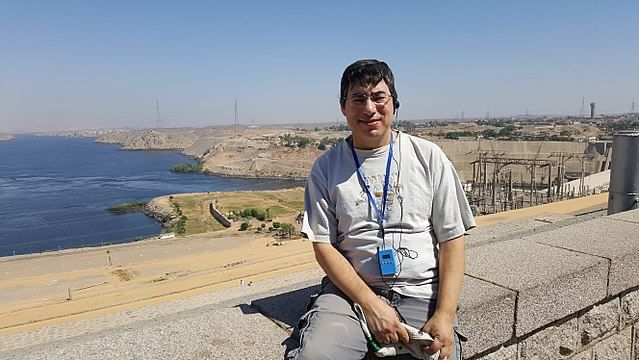
Pickup from your Aswan hotel or Aswan Airport. Transfer to the High Dam marina where the Lake Nasser vessels dock (south side of the dam — different from the Nile cruise docks).
Board your vessel and settle into your cabin. Lunch on board.
Afternoon: the ship sails a short distance to the first temple stop.
Kalabsha Temple — the largest freestanding temple in Nubian Egypt, originally built by Augustus Caesar and dedicated to the Nubian sun god Mandulis. Relocated block by block to its current position near the dam. Your guide explains the Roman-Nubian hybrid style — Egyptian temple architecture adapted for a Nubian deity.
Beit el-Wali — a small rock-cut temple of Ramesses II, just steps from Kalabsha. The battle reliefs inside are vivid and well-preserved — depicting Ramesses' campaigns in Nubia, Libya, and Syria. The colors on the interior walls are among the best-surviving painted reliefs in southern Egypt.
Return to the ship. First sunset on Lake Nasser — the scale of the water is immediately apparent. No riverbanks. No villages. Desert on both sides meets the horizon.
Meals: Lunch, dinner on cruise. Key sites: Kalabsha Temple, Beit el-Wali. Overnight: Lake Nasser cruise vessel
Day 2 — Wadi es-Sebua, Dakka & Maharraka
The ship sails south through the morning. The lake narrows in places and widens in others — the landscape alternates between sandstone cliffs, desert plateaus, and open water stretching to the horizon.
Wadi es-Sebua (Valley of the Lions) — a New Kingdom temple built by Ramesses II, approached through an avenue of sphinx statues (partially buried in sand). The temple was converted to a Coptic church in the early Christian period — your guide shows you where pharaonic reliefs were plastered over with images of saints, creating a strange palimpsest of Egyptian and Christian art on the same wall.
Temple of Dakka — a Ptolemaic temple dedicated to Thoth, the god of writing and wisdom. Small, elegant, and standing alone on the lakeshore. Originally located 40 kilometers north — relocated here during the UNESCO rescue.
Temple of Maharraka — the smallest of the three, with a unique spiral staircase inside (the only one known in ancient Egyptian architecture). Often passed quickly, but your guide will take you up the stairs if conditions allow.
Return to the ship. Afternoon sailing south. The remoteness deepens — this stretch of lake is vast and empty.
Meals: Breakfast, lunch, dinner on cruise Key sites: Wadi es-Sebua, Temple of Dakka, Temple of Maharraka Overnight: Lake Nasser cruise vessel
Day 3 — Amada, Derr & Qasr Ibrim
The ship continues south into the heart of Nubian Egypt.
Temple of Amada — the oldest temple on Lake Nasser, built by Thutmose III and Amenhotep II (approximately 1450 BC). The interior preserves some of the finest painted reliefs in all of Egypt — sharp, colorful, and untouched by restoration. In the sanctuary at the back, the stela of Amenhotep II records his military campaigns with a specificity and casual brutality that your guide will translate carefully. This temple is the reason many Egyptologists consider the Lake Nasser cruise essential.
Temple of Derr — a rock-cut temple of Ramesses II, originally carved into a cliff on the east bank (now relocated). The interior is dark and atmospheric, with Osiride pillars and battle reliefs similar to Abu Simbel but smaller and more intimate.
Qasr Ibrim — viewed from the ship as it passes. The ancient fortress sits on its original cliff, now an island. Layers of pharaonic, Roman, Christian, and Ottoman construction are visible in the walls. Your guide explains the site's 3,000-year occupation history from the deck. Disembarkation is not permitted — it remains an active archaeological site.
Afternoon sailing toward Abu Simbel. The anticipation builds — tomorrow is the climax.
Meals: Breakfast, lunch, dinner on cruise Key sites: Temple of Amada, Temple of Derr, Qasr Ibrim (viewed from ship) Overnight: Lake Nasser cruise vessel
Day 4 — Abu Simbel
The ship arrives at Abu Simbel early morning. The colossal facades of Ramesses II become visible across the water as you approach — four 20-meter seated figures carved into the cliff face, growing larger with every minute. This is how the temple was meant to be seen: from the water, at a distance, then gradually closer until the scale overwhelms.
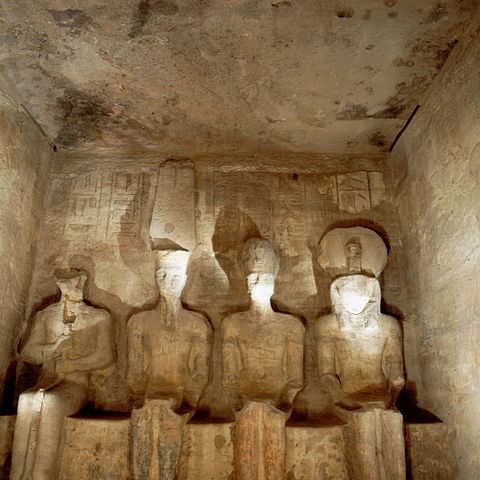
Great Temple of Ramesses II — your guide takes you inside the rock-cut interior: the hypostyle hall with eight Osiride pillars of Ramesses, the battle reliefs of Kadesh covering the walls, and the inner sanctuary where four seated gods wait in darkness. Twice a year, on February 22 and October 22, the rising sun penetrates 60 meters into the mountain and illuminates three of the four statues. Your guide explains the astronomical alignment and the controversy about whether the relocated temple preserves it perfectly.
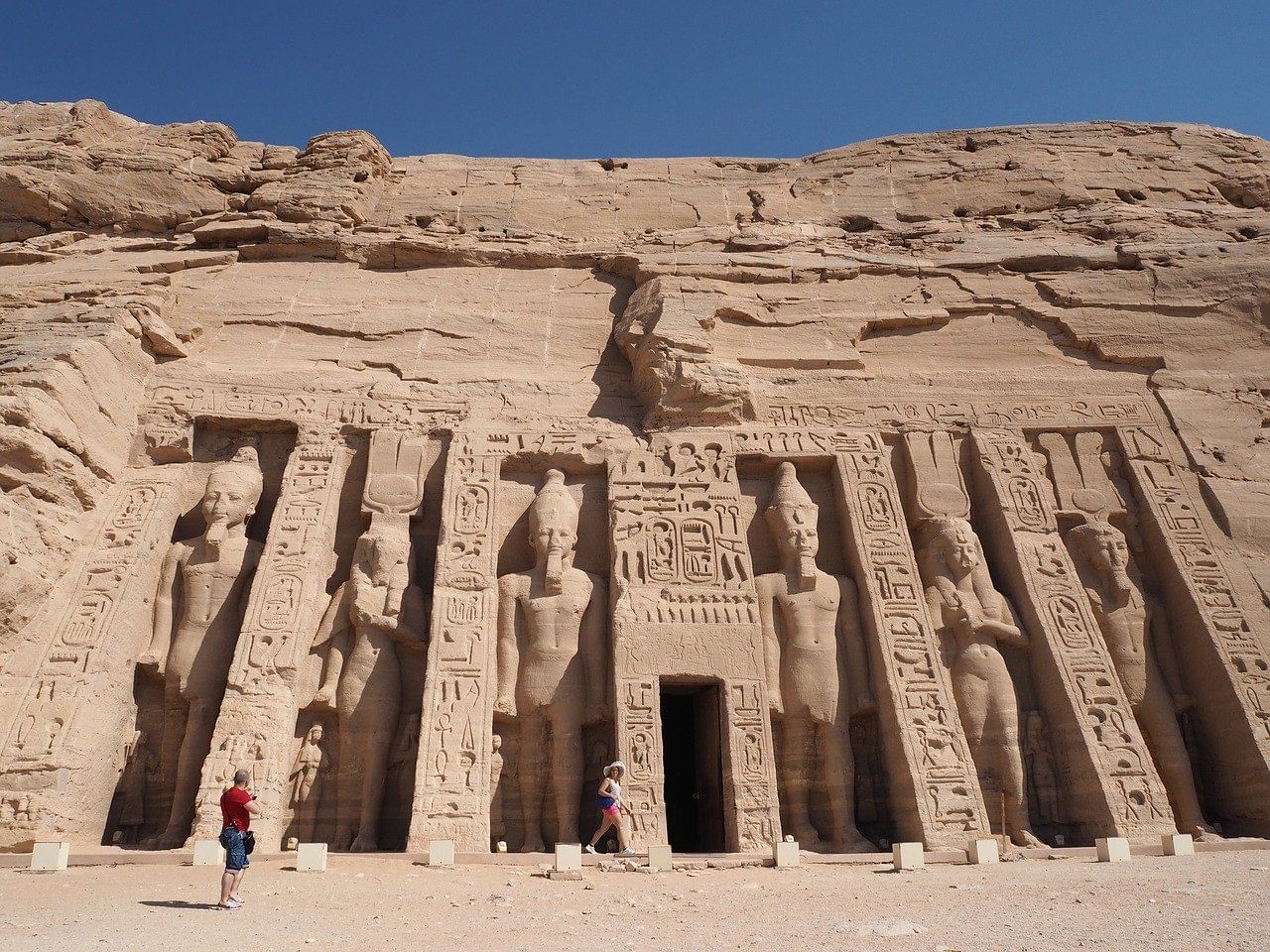
Temple of Nefertari — the smaller temple beside it, dedicated by Ramesses to his wife. The facade shows Ramesses and Nefertari as equals in scale — an extraordinary statement. Your guide explains the inscription above the entrance: "He for whom the sun shines, has made this for the great royal wife Nefertari, beloved of Mut."
Your guide also explains the UNESCO relocation — how the entire complex was cut into 1,036 blocks, each weighing 20–30 tons, and reassembled 65 meters higher and 200 meters back from the original site. The artificial dome above conceals the engineering. The seams are visible if you know where to look.
You have hours at Abu Simbel, not the 90 minutes that day-trippers get.
Afternoon free on the ship. Final evening on the lake. Farewell dinner.
Meals: Breakfast, lunch, dinner on cruise Key sites: Great Temple of Ramesses II, Temple of Nefertari (Abu Simbel) Overnight: Lake Nasser cruise vessel (Abu Simbel dock)
Day 5 — Disembark
Breakfast on board. Disembark at Abu Simbel.
Option A: Transfer to Abu Simbel airport for your domestic flight to Aswan or Cairo (seasonal — check availability).
Option B: Private vehicle transfer back to Aswan (~3 hours). From Aswan, connect to your flight home, continue to a Nile cruise, or add further travel.
Meals: Breakfast on the cruise
Frequently Asked Questions
How does the Lake Nasser cruise compare to a standard Nile cruise?
They are completely different experiences. The Nile cruise runs between Luxor and Aswan through the fertile Nile Valley — green banks, farming villages, and the major pharaonic temples. The Lake Nasser cruise runs between Aswan and Abu Simbel through open desert and water — remote Nubian temples, vast silence, and almost no other tourists. The Nile cruise is essential for first-timers. The Lake Nasser cruise is for travelers who want to go deeper.
Are the vessels as luxurious as Nile cruise ships?
Lake Nasser vessels are smaller (20–65 passengers vs. 100–150 on the Nile) and more intimate. They offer full-board dining, sundeck with pool, and private cabins with lake views. The atmosphere is quieter and less resort-like than large Nile ships. Think boutique hotel, not floating resort. The emphasis is on the temples and the setting, not on-board entertainment.
Can I combine this with a Nile cruise?
Yes — this is the most common combination for experienced Egypt travelers. A typical itinerary: fly to Luxor, take a 3–4 night Nile cruise to Aswan, then board the Lake Nasser cruise from Aswan to Abu Simbel. Total: 7–8 nights on the water covering every temple from Karnak to Ramesses' southern frontier. We build combined packages — ask us for pricing.
Is Abu Simbel really different when you arrive by boat?
Yes. Day-trippers arrive by bus after a 3 AM drive, have 90 minutes, and leave. You arrive by water over four days of context-building, see the facades appear across the lake as the ship approaches, and have hours to explore. Every traveler who has done both says the boat approach is incomparably better.
How do I get to Aswan to board?
Most travelers fly from Cairo (1.5 hours) or arrive from Luxor via a Nile cruise. We can arrange domestic flights or build a Cairo or Nile cruise pre-extension.
What if my flight departs from Cairo, not Abu Simbel?
Most travelers transfer by road from Abu Simbel back to Aswan (~3 hours) on Day 5, then fly from Aswan to Cairo. This is the most common routing and is included in the package. Abu Simbel has a small airport with seasonal flights — check availability.
Is this cruise suitable for children?
For older children (approximately 10+) with a genuine interest in history, yes. The pace is relaxed, but the temples are remote and the content is more specialized than Luxor or Giza. Younger children may find the long sailing stretches and the archaeological focus less engaging.
How does Lake Nasser compare to a Nile cruise?
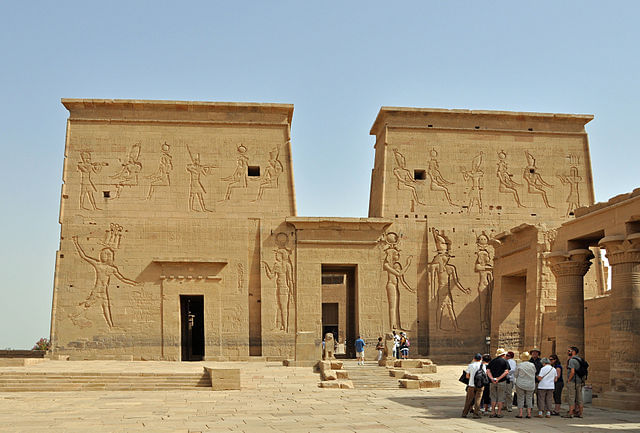
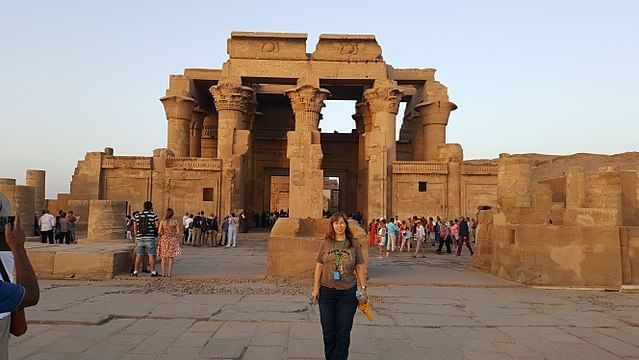
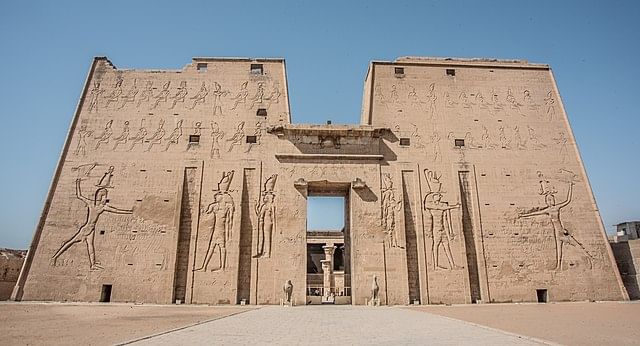
Different body of water, different temples, different experience. The Nile cruise covers Luxor-to-Aswan temples (Karnak, Valley of the Kings, Edfu, Kom Ombo, Philae). The Lake Nasser cruise covers the rescued Nubian temples south of the High Dam (Kalabsha, Wadi el-Seboua, Amada, Abu Simbel). There is no overlap. Travelers with time often do both — the Nile cruise first, then Lake Nasser as a deeper cut.
Is the ship the same as a Nile cruise ship?
No. Lake Nasser vessels are typically smaller (20–65 passengers) and more expedition-oriented. The emphasis is on access and remoteness rather than on-board luxury. Cabins are comfortable with en-suite bathrooms and air conditioning, but the overall feel is simpler than a 5-star Nile cruise ship.
Is there mobile phone coverage?
Limited. Between temple stops, expect periods without signal. This is part of the experience, not a technical failure. Wi-Fi varies by vessel.
What's the cancellation policy?
- 60+ days before travel: Full refund minus $100 admin fee
- 30–59 days: 50% refund
- 15–29 days: 25% refund
- Less than 15 days: Non-refundable
- Modifications: Free changes 45+ days before travel; $100 change fee within 45 days
Note: Lake Nasser cruise cancellation fees are higher than standard tours due to limited vessel availability.
How do I book?
Send us a message on WhatsApp or email info@pyramidsland.com with your preferred dates. Lake Nasser cruises operate on fixed schedules (typically departing Aswan on Mondays, Abu Simbel on Fridays). We confirm vessel availability and secure your booking with a 30% deposit. Balance due 45 days before travel.
Explore the tours above. Read the details. Ask questions if needed. Book only when it feels right.
How pricing works
Prices are based on:
- Group size
- Duration
- Inclusions listed on the tour page
You will always know what is included before booking. There are no surprise additions.