An Exciting 5 Days Abu Simbel Nile Cruise Tour Package

A private experience shaped around your time and interests.


★ 4.9 · 2,678 reviews on TripAdvisor · Licensed since 2001 · Free Cancellation
8-Hour Private Tour of the Pyramids, Sphinx, Grand Egyptian Museum

5 days

Moderate


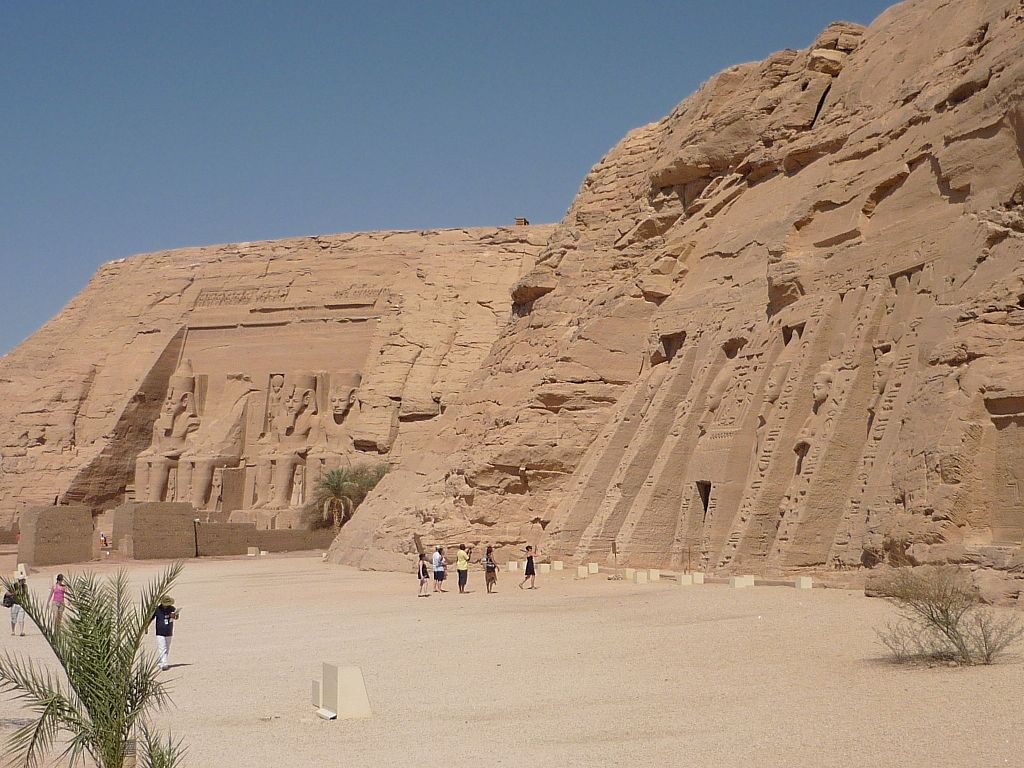
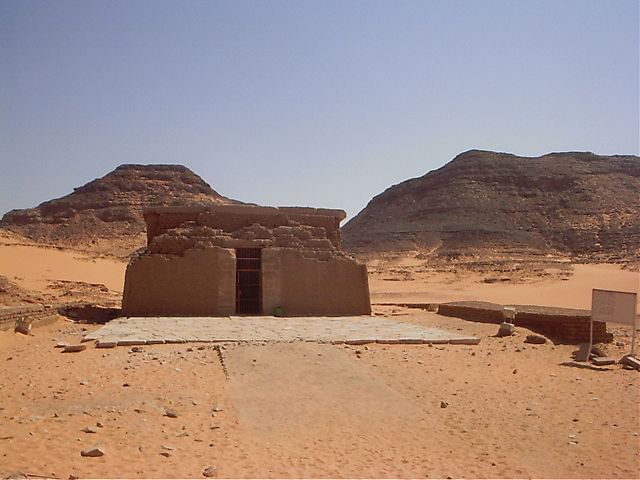
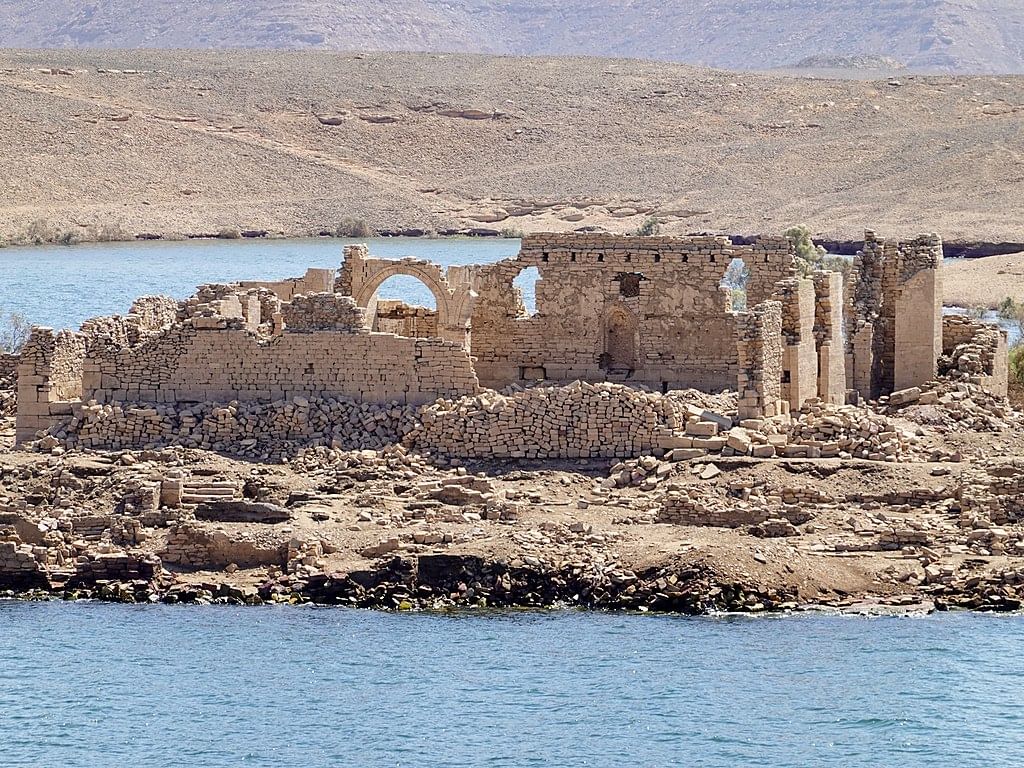
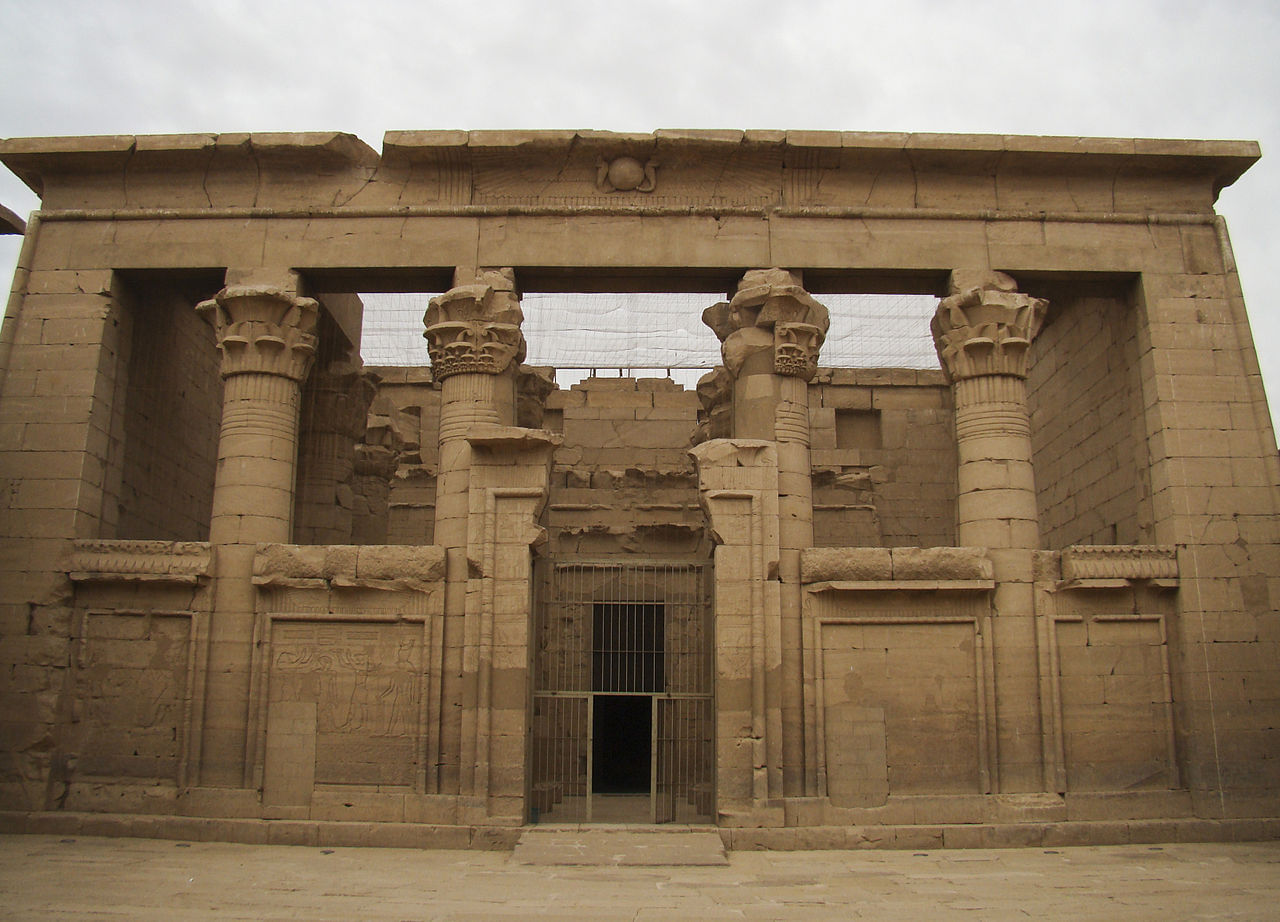
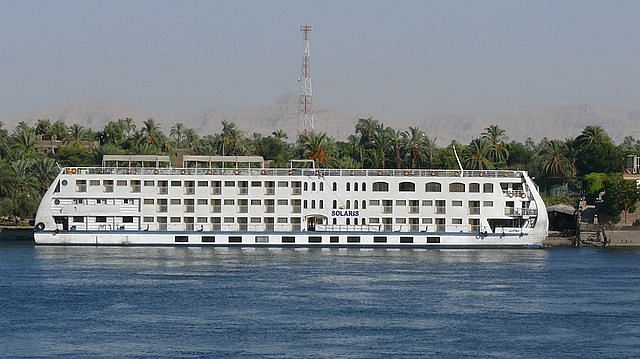
It’s time to make your holidays more thrilling and exciting. Make use of the fabulous opportunity to visit and explore ancient Egyptian beauty and legacy. A personal Egyptologist will guide the 5 days and 4 nights Abu Simbel Nile Cruise trip in upper Egypt . You also visit the world’s most famous archaeological sites like Abu Simbel temple, followed by Amada, Wali El Seboua, and Kalabhsa. Don’t wait; book your tickets now!


What's included?
    •  Travel arrangements are taken care of from Aswan to Abu Simbel.
    • All transportation in a modern a/c vehicle.
    • The 4 nights stay during the trip will be in 5-star luxury Nile Cruise on Full Board basis.
    • Entrance fees are a part of the journey for the mentioned sites in the itinerary.
    • To ensure proper guidance, Egyptologist tour guide will be part of your trip.
    • The details of various cuisines will be provided.
    • All the services, taxes and charges required on the trip will be included.
    Exclusions
      • The additional personal (optional) tours are excluded from the trip package.
      • Private expenses.
      • The additional expenses such as tipping.
      Please note

        Before You Board, we send your cruise confirmation — with the vessel name, dock location, boarding time, guide contact, and daily schedule — at least 7 days before departure. Your guide's WhatsApp number is included for direct communication.

        Getting to the Dock: We arrange pickup from your hotel or the airport to the cruise dock. Nile cruise ships dock on the river corniche in Luxor or Aswan (your driver knows the exact location). Lake Nasser cruise vessels dock at the marina south of the Aswan High Dam — a different location from Nile cruise docks. Your driver handles all navigation.

        The Ship: Your vessel is a 5-star cruise ship (Nile) or a smaller specialist vessel (Lake Nasser, 20–65 passengers). Your cabin is private with an en-suite bathroom, air conditioning, and Nile/lake-view window. Sundeck with pool, restaurant, and lounge are shared with other passengers. The ship is shared; your guide time is private.

        Your Guide vs. the Ship's Guide The cruise ship provides an on-board guide for group lectures and group excursions at each temple stop. Your private Egyptologist guide is separate — they meet you at each site for a private visit at your pace. You have access to both. Use yours for the serious temple visits; the ship's guide provides general orientation on board.

        What You'll Pay On-Site: All entry fees for sites listed in the itinerary are included. Optional premium tomb tickets (Tutankhamun, Seti I, Nefertari) are paid on-site by credit or debit card. Your guide advises on the day. Alcoholic beverages on the ship are not included and are purchased from the ship's bar.

        Meals All meals on board are included: breakfast, lunch, and dinner daily. Meals are served at set times in the ship's restaurant. The cuisine is a mix of Egyptian and international dishes. Special dietary requirements (vegetarian, gluten-free, halal, allergies) can be accommodated — tell us when booking so we can inform the ship in advance.

        Weather & Sun The Nile Valley (Luxor and Aswan) is hotter than Cairo year-round. Peak season (October–April): 22–32°C (72–90°F). Low season (May–September): 38–47°C (100–117°F). Temple visits are scheduled for the early morning to avoid the worst of the heat. The sundeck is exposed — bring sunscreen even in winter. Lake Nasser is hotter and drier than the Nile corridor — no shade at remote temple sites.

        Dress Code: Casual and comfortable on board. At temple sites, lightweight, modest clothing is practical for sun protection and cultural respect. Comfortable closed-toe shoes are essential for every temple visit — stone surfaces are uneven and sometimes sandy. Bring a light layer for air-conditioned interiors on the ship and for cool desert mornings (especially the Abu Simbel early departure).

        Photography: Photography is permitted at all outdoor temple sites. Inside tombs (Valley of the Kings), photography is generally prohibited without a separate ticket. Lake Nasser temple sites have no restrictions on photography. Drone photography is not permitted at any archaeological site.

        Payments on Board: Most ships accept credit/debit cards for bar tabs and on-board purchases. Some smaller Lake Nasser vessels are cash-only for on-board extras — your confirmation will specify. Tips for the ship crew are typically collected separately at the end of the cruise (recommended: $5–10 per person per day for the crew pool, separate from your guide tip).

        Health & Safety: Bottled water is provided daily. Tap water on the ship is not safe to drink. The ship's movement is minimal — Nile cruise vessels are wide and flat-bottomed, and most passengers feel no motion. If you're prone to motion sickness, the effect is far milder than ocean cruises. Bring personal medications and sunscreen. Travel insurance is required and not provided by Pyramids Land.

        Communication: Your guide is reachable by WhatsApp throughout. Wi-Fi is available on most Nile cruise ships (quality varies). Lake Nasser has limited mobile coverage between temple stops — expect periods without signal. This is part of the experience, not a technical failure.

        Abu Simbel Day (if included) The Abu Simbel excursion departs very early — approximately 3:00 AM from Aswan. The drive is 3 hours each way through the Nubian desert. The ship arranges a packed breakfast or an early breakfast on board. Dress warmly for the pre-dawn departure; it warms up quickly after sunrise. The early start is universally described as worth it.

        What to bring

          Daily essentials (carry to every temple visit):

          • Comfortable closed-toe shoes with good grip — every temple involves walking on stone and sand
          • Hat with a brim
          • Sunscreen (SPF 30+ — reapply every 2 hours; the sundeck sun is stronger than it feels)
          • Sunglasses
          • Camera or smartphone (plus charger — cabins have outlets)
          • Small daypack for water and sun protection on temple excursions
          • Any personal medications

          For the cruise:

          • Passport — keep accessible for any security checkpoints or domestic travel
          • Travel insurance documents
          • Light casual clothes for on-board days (the sundeck dress code is relaxed)
          • A light jacket or sweater for air-conditioned ship interiors and early-morning departures
          • Warm layer for the Abu Simbel 3 AM departure (if included) — desert mornings are cold
          • Swimwear for the sundeck pool
          • One slightly nicer outfit for the farewell dinner (optional — most ships are casual, but some passengers dress up for the final evening)
          • Power adapter — Type C (European 2-pin), 220V. Most cabin outlets accommodate international plugs, but bring an adapter.
          • A book — the free sailing day on longer cruises is best spent reading on the sundeck

          We provide bottled water daily. The ship provides towels for the pool and cabin.

          Explore the tours above. Read the details. Ask questions if needed. Book only when it feels right.

          How pricing works

          Prices are based on:

          • Group size
          • Duration
          • Inclusions listed on the tour page

          You will always know what is included before booking. There are no surprise additions.
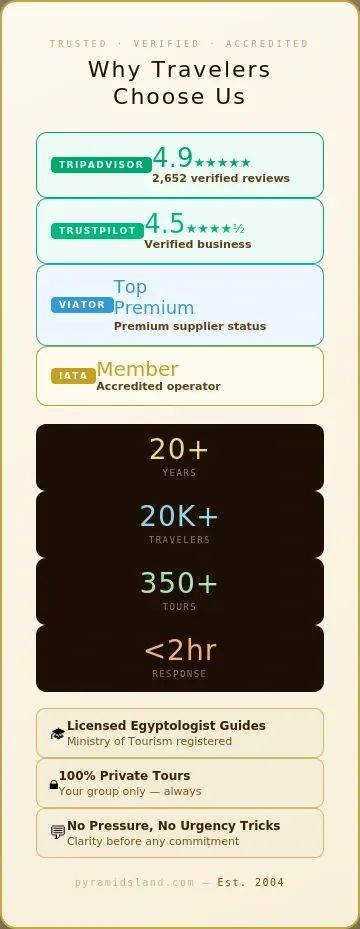
          Pyramids Land Tours trust signals — TripAdvisor 4.9 stars with 2,652 verified reviews, Trustpilot 4.5 Trusted Business

          What our clients say


          Gold ancient Egyptian sistrum on deep navy — Pyramids Land Tours.
          By Ashraf Fares July 23, 2026
          An Egyptologist explains the sistrum — Hathor's sacred rattle: its two forms, the menat, why women played it, and the sound still heard in Coptic churches today.
          Ancient Egyptian gold uraeus cobra on deep navy — Pyramids Land Tours.
          By Ashraf Fares July 20, 2026
          An Egyptologist explains the uraeus — the rearing cobra on the pharaoh's crown: the goddess Wadjet, the Two Ladies, the Eye of Ra, and Tut's mask at the GEM.

          Pyramids skyline at dusk with gold sun — Egypt travel seasons guide
          By Ashraf Fares July 16, 2026
          The best time to visit Egypt is October–April; Feb–Mar and Oct–Nov are the sweet spots. Month-by-month weather, crowds & prices from a Cairo operator.
          Gold ancient Egyptian djed pillar on deep navy — Pyramids Land Tours.
          By Ashraf Fares July 13, 2026
          An Egyptologist explains the djed pillar: its meaning of stability, why it's the backbone of Osiris, the Raising of the Djed, and where to see it at Abydos.
          Gold ancient Egyptian crook and flail on deep navy — Pyramids Land Tours.
          By Ashraf Fares July 10, 2026
          An Egyptologist explains the crook and flail — the king as shepherd, why Osiris holds them, and where to see Tutankhamun's own pair at the GEM.
          Gold ancient Egyptian was scepter hieroglyph over a rising sun on a deep navy background
          By Ashraf Fares July 6, 2026
          An Egyptologist explains the was scepter — its meaning of power and dominion, the Set-animal head, the ankh-djed-was triad, and where to see it in Egypt.
          Gold ancient Egyptian cartouche name-ring hieroglyph over a rising sun on deep navy — Pyramids Land
          By Ashraf Fares July 4, 2026
          An Egyptologist explains the Egyptian cartouche: what it meant, the royal names inside, how it cracked hieroglyphs, and how to get your name in one.
          Gold ancient Egyptian scarab beetle hieroglyph over a rising sun on a deep navy background
          By Ashraf Fares July 2, 2026
          An Egyptologist explains the Egyptian scarab beetle — Khepri, the rising sun and rebirth, heart scarabs, and where to see the giant scarab at Karnak.
          Eye of Horus (wedjat) carved into weathered sandstone, traces of ancient blue and ochre pigment, lit
          By Ashraf Fares June 30, 2026
          The Eye of Horus explained: the wedjat myth, its meaning for healing and protection, how it differs from the Eye of Ra, and where to see it in Egypt.
          Sunrise from the summit of Mount Sinai in Egypt with travelers watching golden light strike the gran
          By Ashraf Fares June 21, 2026
          Three zones most guides treat as one. Red Sea diving, Bedouin desert camps, Mount Sinai at dawn. Costs, free visa stamp, and how Sinai fits your Egypt trip.
          Show More