
The Crook and Flail: The Pharaoh's Symbols of Power
The short answer: The crook and flail are the two most important symbols of Egyptian kingship, held crossed over the chest by pharaohs and by the god Osiris. The crook stood for the king as shepherd of his people; the flail for his power to provide for them and to keep them in order.
Cross a shepherd's staff with a threshing tool over a king's chest and you have the two objects that, more than any crown, said pharaoh. The crook and flail appear on Tutankhamun's mummiform coffins, on the mummy of Osiris, and on royal statues across Egypt. They are simple farm implements raised to the highest symbols of rule — and that humble origin is exactly the point.
At a glance
Key Facts
- What they are: the crook ( heka ) and flail ( nekhakha ) — Egypt’s chief royal insignia
- The crook: a shepherd’s staff — the king as shepherd and guardian of his people
- The flail: a threshing tool or fly-whisk — provision, the land’s fertility, and the authority to keep order
- Held together: the balance of a ruler’s duties — to guide and protect, to provide and correct
- Osiris: shown mummiform holding both, binding kingship to resurrection
- Best place to see them: Tutankhamun’s own crook and flail at the Grand Egyptian Museum
What are the crook and flail?
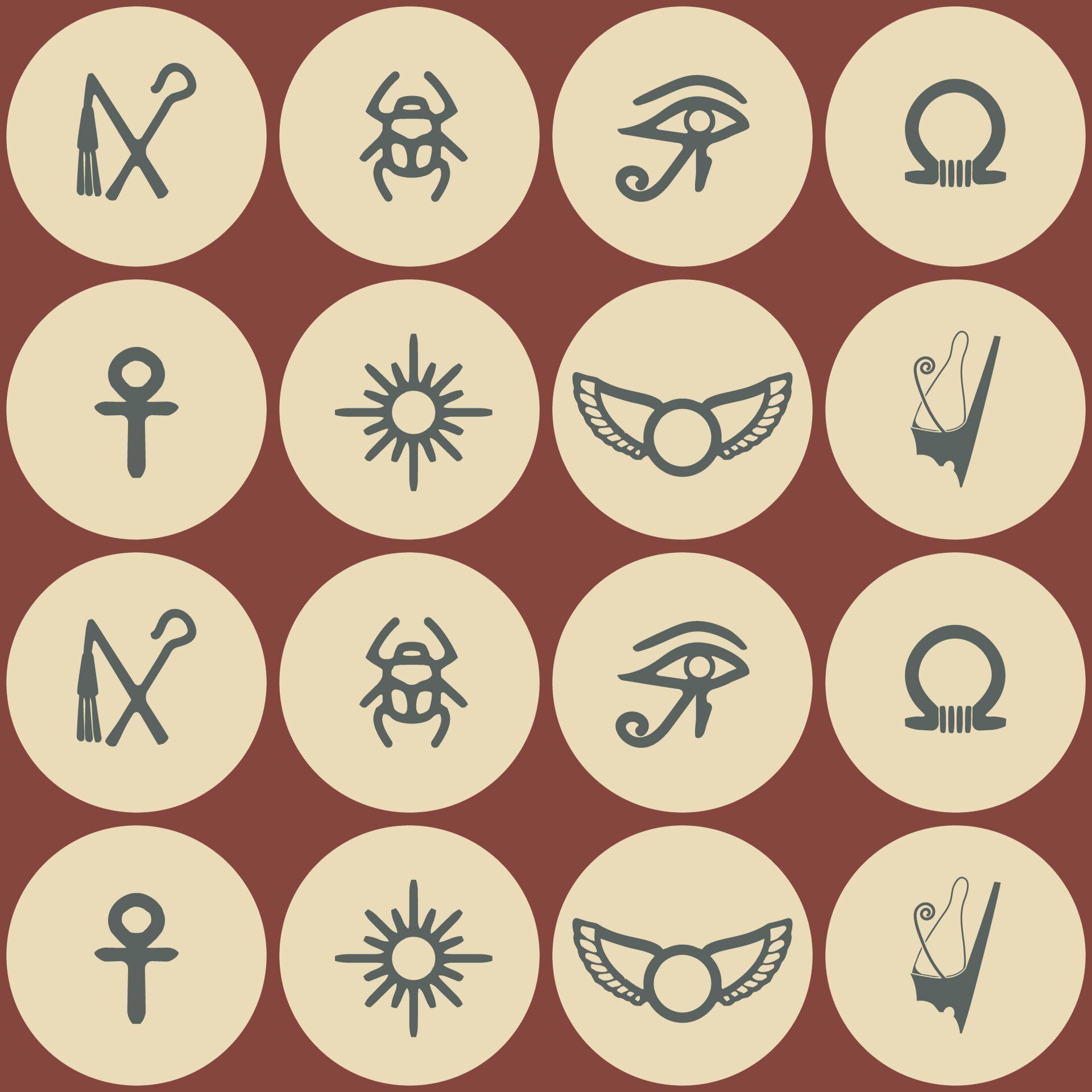
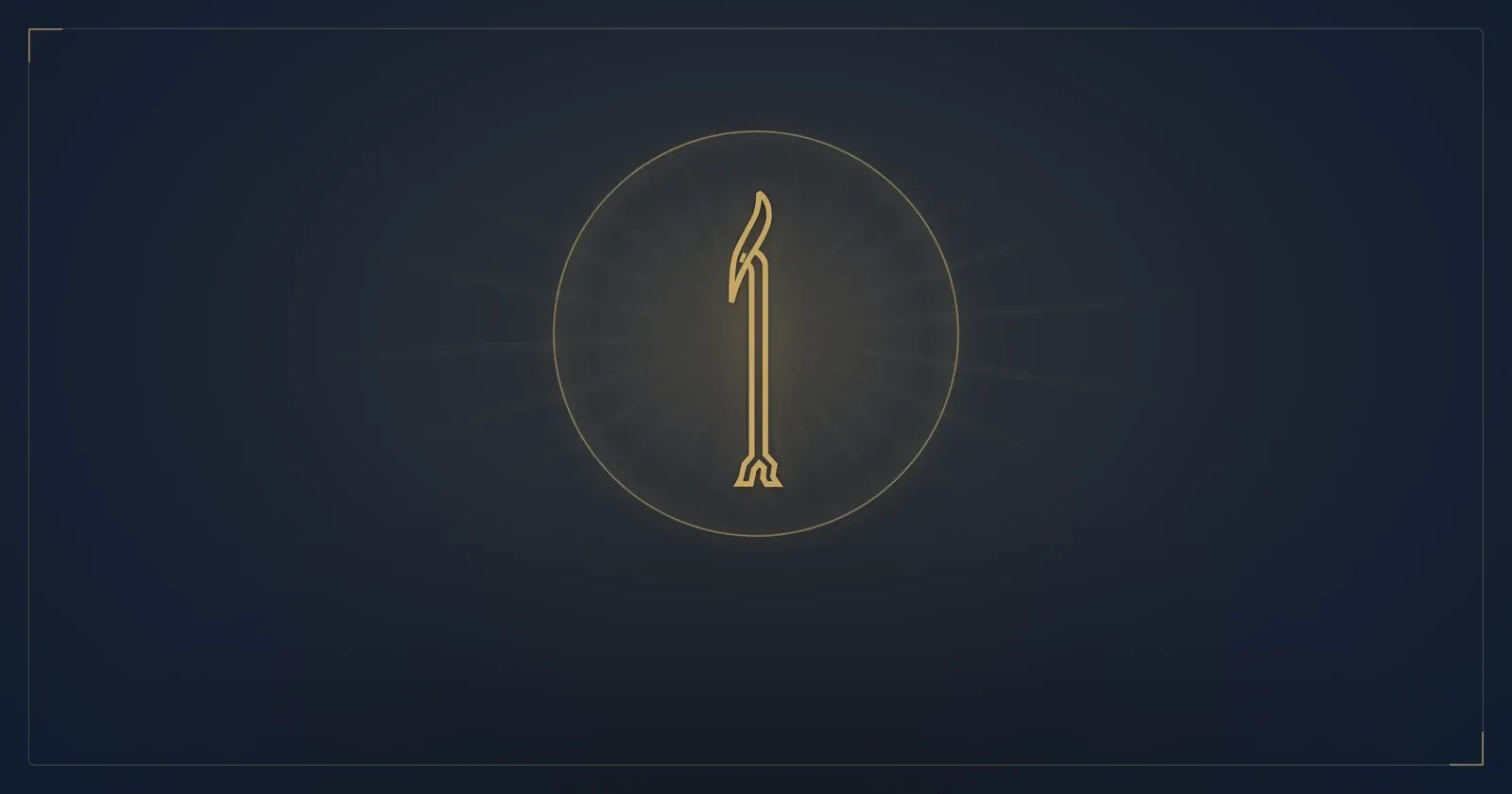
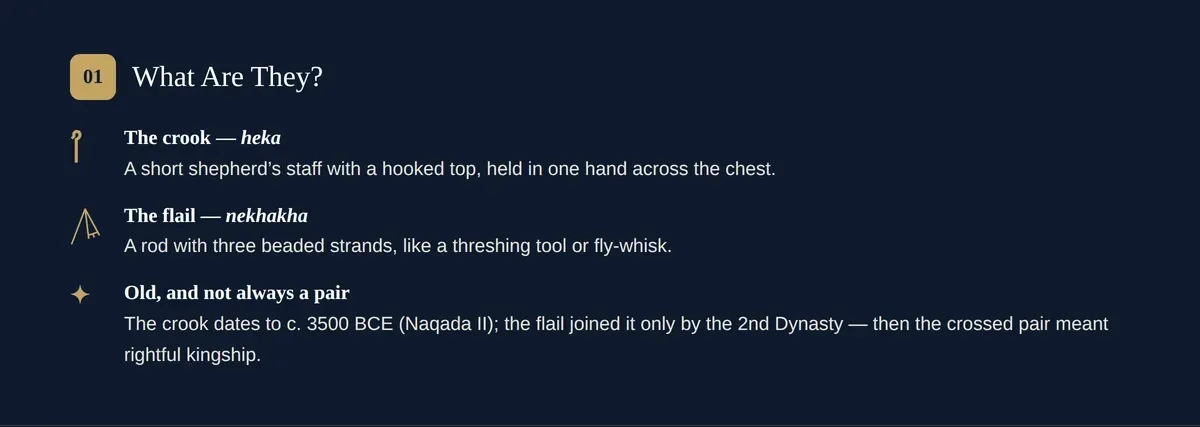
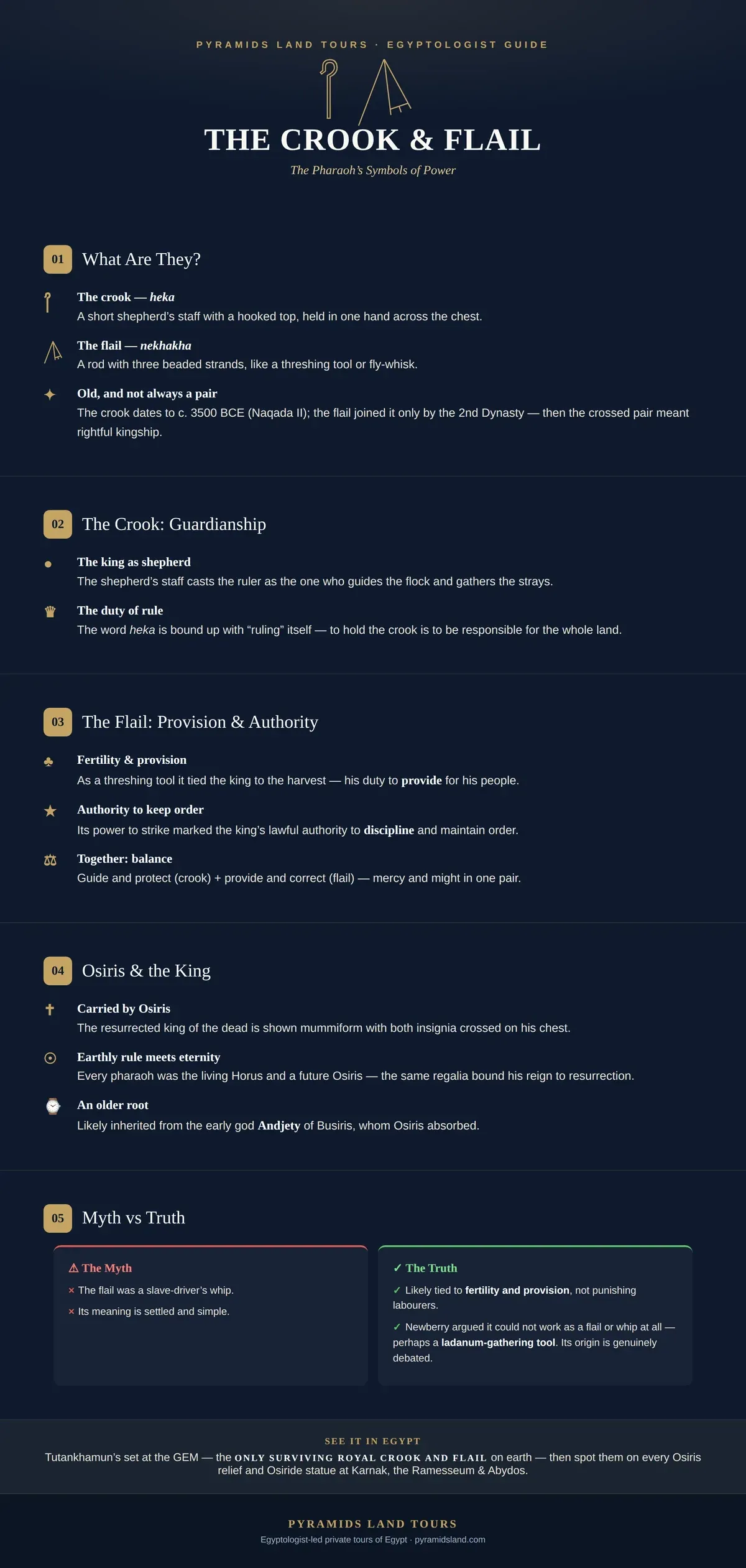
They are a pair of royal insignia, usually shown together and held crossed over the chest. The crook — Egyptian heka (ḥq3) — is a short staff with a hooked, curved top, the shape of a shepherd's crook. The flail — Egyptian nekhakha (nḫḫ) — is a rod with three hanging strands, usually beaded, resembling a threshing tool or a fly whisk.
They are astonishingly old, and they did not begin as a pair. The oldest known crook is Predynastic — from the Gerzeh culture, found in tomb U547 at Abydos, roughly 3500–3200 BCE — and by late Predynastic times it was already an established emblem of rule. The flail appears on its own in the earliest royal ceremonies; only around the Second Dynasty (about 2890–2686 BCE) were the two fused into the iconic crossed pair. From then on, held together, they became shorthand for legitimate rule itself: when a pharaoh wanted to be shown as the rightful, complete king — and when Osiris was shown as king of the dead — the crook and flail crossed on the chest made the statement instantly. A new king formally took them up at his coronation, and again at his thirty-year jubilee, the Heb-Sed — which is one reason so many statues freeze him with the pair crossed on his chest. So deep did the emblem run that even Khufu — builder of the Great Pyramid — grips a flail across the chest in the thumb-sized ivory figure that is his only surviving likeness, now in the Egyptian Museum.
What does the crook symbolize?
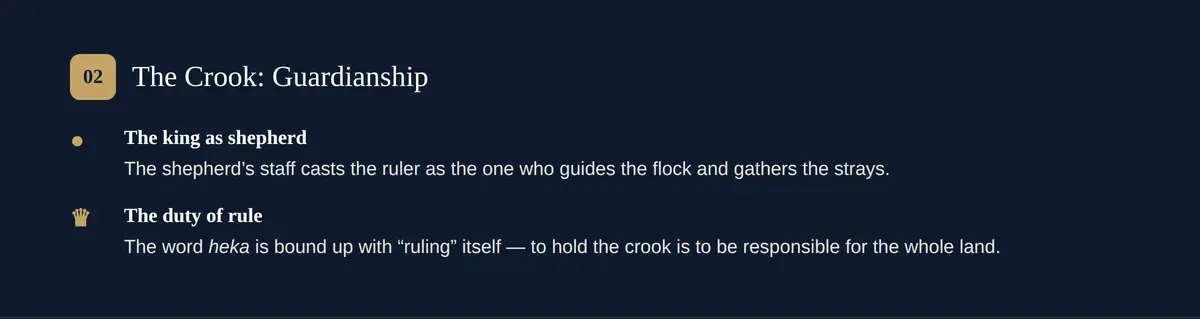
The crook symbolizes the pharaoh as shepherd — his duty to guide, gather and protect his people.
The crook is the shepherd's staff, and it carries the oldest idea of Egyptian kingship: the king as the shepherd of his people. A shepherd guides the flock, gathers the strays, and keeps them from harm — and that is how Egyptians imagined a good ruler. The hooked staff is the tool of care and guidance of a leader responsible for the well-being of everyone in his charge.
It is no accident that heka, the Egyptian word for the crook, was simply the word for "ruler." You may know it already without realizing: the foreign kings who seized the Delta were the Hyksos — a Greek rendering of heka-khasut, "rulers of foreign lands" — built on that very same shepherd's-hook word. To hold the crook was to claim the duty, not just the privilege, of leadership — to be the one who tends the whole land. The image proved so enduring that it outlived Egypt itself: the same shepherd's crook survives today as the Christian bishop's crosier, the pastor still tending a "flock."
What does the flail symbolize?
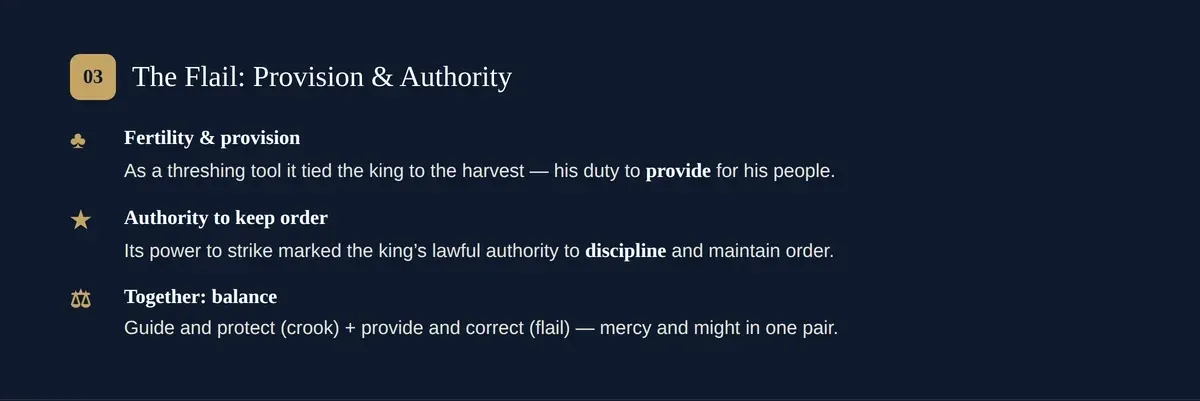
The flail symbolizes the pharaoh's power to provide for his people and to keep order — provision and authority in a single tool.
The flail is the richer and more debated of the two, and it carries a double meaning worth getting right. On one reading, it is a threshing tool or fly-whisk, tied to agriculture and to the fertility of the land — the king's role as the one who ensures the harvest and provides for his people. On another, its capacity to strike makes it a symbol of the king's authority to discipline and punish — the corrective power that keeps order.
Put the two insignia together, and you get a complete philosophy of rule: care in one hand, authority in the other — mercy and might held in balance across the royal chest. It is the pairing, not either piece alone, that carries the meaning.
The crook and flail were the headline pair, but not the whole cast. A pharaoh's regalia also included the Was scepter — the tall, forked staff of cosmic dominion — and the sekhem, a short scepter of raw power (one was tucked into Tutankhamun's tomb beside the crook and flail). Read as a set, the message resolves: the crook ruled the people, the flail fed them, the was held the ordered cosmos steady. Each is a word in the wider language of ancient Egyptian symbols.
Crook vs flail at a glance
| The crook (heka) | The flail (nekhakha) | |
|---|---|---|
| Hieroglyph | ḥqꜣ — Gardiner sign S38 | nḫꜣḫꜣ — Gardiner sign S45 |
| Origin | a shepherd's hooked staff | a threshing flail or fly-whisk (debated) |
| Symbolizes | the king as shepherd; guidance and protection | provision, and the authority to keep order |
| Earliest example | Predynastic — Abydos tomb U547, c. 3500 BCE | alone in early royal ceremonies |
| Tutankhamun's | bronze, striped with gold, blue glass and obsidian | bronze staff; gilded-wood beads |
Why does Osiris hold the crook and flail?
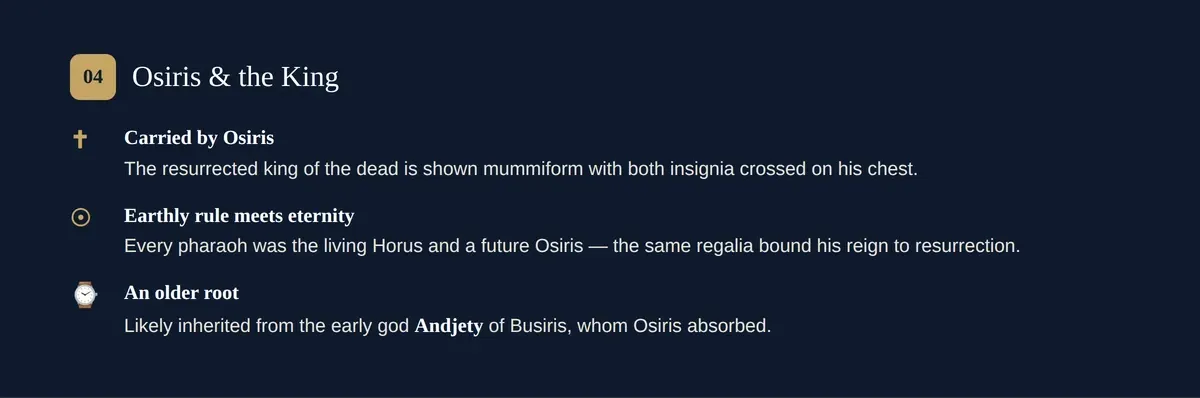
Because kingship and the afterlife were the same story. Osiris, the murdered and resurrected god, was the king of the dead and the model of divine rule, and he is almost always shown mummiform with the crook and flail crossed on his chest. Every living pharaoh was the earthly Horus and, in death, would become an Osiris — so carrying the same regalia bound the king's authority to the god's eternal kingship.
The flail, in particular, may reach even further back, to an early god named Andjety, worshipped at Busiris in the Delta, who carried the crook and flail and whose identity Osiris seems to have absorbed as his cult grew. Either way, when you see the crook and flail, you are looking at the point where a pharaoh's earthly rule meets the promise of resurrection — the same promise carried by the djed pillar, Osiris's own backbone.
Myth-check
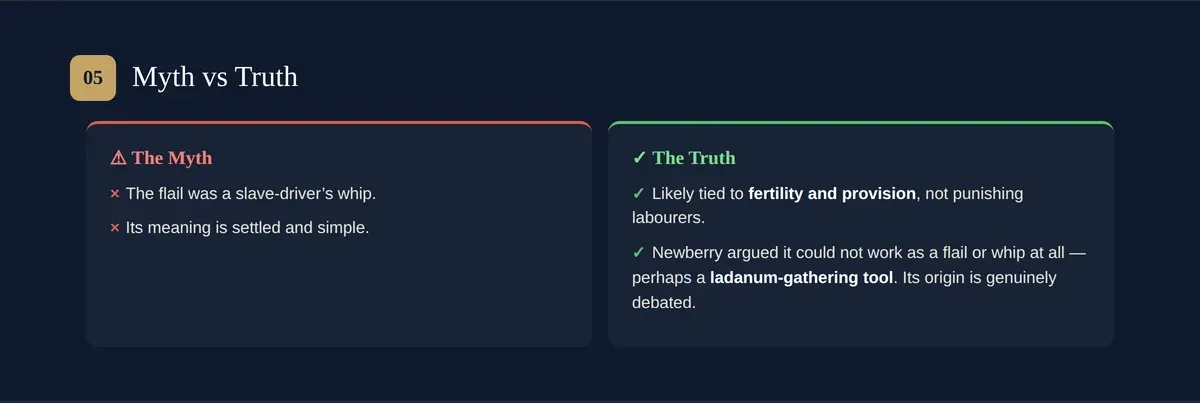
Two corrections. First, the flail is not a slave-driver's whip — a stubborn pop image. Its likeliest origin is an agricultural threshing implement or a fly-whisk, symbolizing provision and the land's fertility; the "instrument of discipline" reading is about a ruler's lawful authority, not a tool for beating laborers. In truth, its exact original function is genuinely uncertain. The Egyptologist Percy Newberry went further: after examining the actual objects, he argued they were mechanically incapable of working as a flail or a whip at all, and were more likely instruments for gathering fragrant ladanum resin, used by the same shepherds who carried the crook. Between the threshing-flail, fly-whisk, ladanum, and authority readings, anyone who states the flail's meaning flatly is overreaching.
Second, these are not only props for a living king. The crook and flail belong just as much to Osiris and the realm of the dead, which is why they turn up on coffins and in tombs as often as on thrones.
Where to see the crook and flail in Egypt
The most important pair belonged to Tutankhamun — and they are, remarkably, the only surviving royal examples of both the crook and flail together. His gold-and-blue striped set — heavy bronze staffs sheathed in alternating stripes of gold, blue glass and obsidian, the flail's beads of gilded wood — was found stored as a "kingship kit" in a small box in his tomb, and it is now on display at the Grand Egyptian Museum. Standing in front of the only royal crook and flail left on earth, the actual objects the boy king held, is the single best way to meet these symbols.
Beyond them, once you know the crossed pose, you will see it everywhere. Osiris holds the crook and flail in countless painted reliefs — in the tombs of the Valley of the Kings and across the walls of the temple of Seti I at Abydos, his great cult center. And the towering mummiform "Osiride" royal statues, where a king stands wrapped like Osiris with the insignia crossed on his chest and the uraeus rearing at his brow, line temples such as Karnak, the Ramesseum, Medinet Habu, and Hatshepsut's terraces at Deir el-Bahri. A guide need only point out the first one, and you begin to see them everywhere — on king after king, and on Osiris wherever he appears.
Did you know?
- The crook is older than the pyramids — the earliest one dates to around 3500 BCE, centuries before the Giza pyramids rose.
- Tutankhamun's are the only royal crook and flail to survive — every other set is known only from art.
- The crook's word, heka, simply meant "ruler" — the same root behind the Hyksos (heka-khasut, "rulers of foreign lands").
- Even Khufu, builder of the Great Pyramid, grips a flail in his only surviving likeness.
Frequently Asked Questions
What do the crook and flail symbolize?
Together they are the chief symbols of Egyptian kingship. The crook (heka) casts the king as the shepherd of his people, guiding and protecting them; the flail (nekhakha) stands for the fertility of the land and the provision the king ensures, and for his authority to keep order. Held crossed on the chest, they announce a rightful, complete ruler.
Why does Osiris hold the crook and flail?
Because kingship and the afterlife were one story. Osiris, the murdered and resurrected king of the dead, was the model of divine rule, so he is almost always shown mummiform with the crook and flail crossed on his chest. Every pharaoh was a living Horus who became an Osiris in death, and carrying the same regalia bound his rule to the god's eternal kingship.
What are Tutankhamun's crook and flail made of?
Heavy bronze staffs, sheathed in alternating stripes of gold, blue glass and obsidian, with the flail's beads of gilded wood. They are the only surviving royal examples of both together, and are now displayed at the Grand Egyptian Museum.
Which is older, the crook or the flail?
The crook. The oldest known example is Predynastic, from the Gerzeh culture, found in a tomb at Abydos around 3500-3200 BCE. The flail appears separately in early royal ceremonies, and the two were only fused into the familiar crossed pair around the Second Dynasty (about 2890-2686 BCE).
Were the crook and flail real tools, or only symbols?
As royal insignia they were purely ceremonial. Their origins are debated: a shepherd's crook and a threshing-flail or fly-whisk are the usual readings, but the Egyptologist Percy Newberry argued the flail could not have worked as a flail or whip at all, and was more likely a tool for gathering fragrant labdanum resin. Anyone who states the flail's original use flatly is overreaching.
Where can I see the crook and flail in Egypt?
Tutankhamun's own pair, the only royal set to survive, is at the Grand Egyptian Museum, where you also see them crossed on the arms of his golden coffins. Beyond that, Osiris holds them in the painted tombs of the Valley of the Kings and at Abydos, and the towering Osiride royal statues carry them at Karnak, the Ramesseum, Medinet Habu and Deir el-Bahri.
Why are the crook and flail crossed?
The crossed pose sums up the balance of a ruler's duties — the crook of guidance in one hand, the flail of authority in the other, mercy and might held together across the chest. It is also the pose of Osiris, shown mummiform with the pair crossed, so a living king who crossed them claimed the god's eternal kingship.
Did queens carry the crook and flail?
They were overwhelmingly a king's and Osiris's emblem, not general queen's regalia. But a woman who ruled as pharaoh took them up in that role: Hatshepsut is shown holding the crossed crook and flail in her statues at Deir el-Bahri, claiming full pharaonic authority.
Are replicas of Tutankhamun's crook and flail sold today?
Yes — reproductions turn up everywhere from museum shops to bazaar stalls, and quality varies wildly. Cheap "hand-carved stone" figurines are often resin, so if you plan to buy, the same real-stone-versus-resin rules apply — see our guide to buying real alabaster, not resin.
Want an Egyptologist to show you Tutankhamun's crook and flail and read the royal regalia off every statue and wall? Every Pyramids Land tour is private and guide-led, shaped around exactly what you want to see. Plan your private tour on WhatsApp →
Ashraf Fares