
Deir el-Medina: Private Specialist Tour
A private experience shaped around your time and interests.
★ 4.9 · 2,678 reviews on TripAdvisor · Licensed since 2001 · Free Cancellation
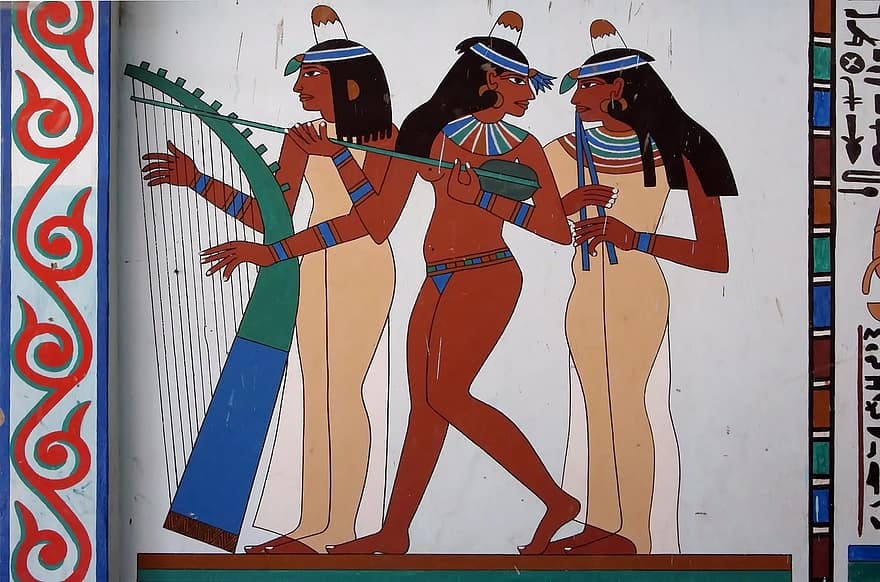
The Valley of the Kings is famous for its pharaohs. Deir el-Medina is famous for the people who built their tombs.
For 400 years — from approximately 1550 to 1080 BC — a community of craftsmen, painters, and scribes lived in this village specifically to construct and decorate the royal burials. They were paid in grain, given medical care. They left a documentary record of their daily lives so complete that historians can reconstruct individual arguments, illnesses, and love affairs from 3,200 years ago.
This tour focuses entirely on that community — the most humanly accessible ancient Egyptians we have.
What Makes Deir el-Medina Extraordinary
The documentary record
The ostraca (limestone flakes and pottery fragments) found here in the 1920s contain everything: work attendance records, village court proceedings, private letters, medical prescriptions, love poetry, and what appears to be the first recorded labor strike in history. Your guide translates selected passages and explains what they reveal about ancient Egyptian daily life — not the pharaohs' lives, but the lives of ordinary people with skills, grievances, and relationships.
The workers' own tombs
The craftsmen who painted the royal tombs also built their own — smaller, privately funded, but in many cases spectacularly decorated. The Tomb of Sennedjem contains painted scenes of daily life and the afterlife in colors so vivid they appear freshly painted. Your guide explains how the workers used their professional knowledge to create a personal vision of the afterlife — different in tone and imagery from the royal tombs, and in many ways more affecting.
The village ruins
The actual village — 68 houses arranged in a single street, surrounded by a mud-brick wall — is partially excavated and walkable. Your guide reconstructs the physical experience of living here: the narrow lanes, the shared ovens, the proximity of the tombs the workers were building visible on the hillside above.
The Ptolemaic Temple
A small but beautifully preserved temple to Hathor built in the Ptolemaic period at the edge of the village. Less visited than the tombs, but worth 20 minutes of careful attention for its quality of detail.
✦ The Turin Papyrus 1880 — now in the Egyptian Museum of Turin — contains what scholars believe is the first recorded account of a workers' strike. It was written at Deir el-Medina around 1159 BC, during the reign of Ramesses III. The workers had not been paid their grain rations for two months. They left the village, sat outside the mortuary temple of Thutmose III, and refused to return until the rations were delivered. The scribe who recorded the event wrote: "We have come out because of hunger and thirst; we have no clothing, no oil, no fish, no vegetables. Send word to pharaoh, our good lord, about it, and send word to the vizier, our superior, so that provisions may be made for us." They succeeded. Your guide will stand you at the place where this happened and read the passage. It is from 1159 BC. It sounds like a conversation you could hear tomorrow.
Common Questions
Is this tour suitable for travelers who are not specialist Egyptology enthusiasts?
Yes — the appeal of Deir el-Medina is precisely that it makes ancient Egyptians recognisably human. The workers' stories require no specialist knowledge to engage with. If anything, travelers who are not specialist Egyptologists often find this site more affecting than the Valley of the Kings, because the human scale is immediate.
Can this be combined with the Valley of the Queens on the same day?
Yes — Deir el-Medina is directly adjacent to the Valley of the Queens. Both sites together make a focused West Bank morning. Ask about the combined itinerary.
Can the pacing or order be adjusted?
Yes — all tours are private. The itinerary adapts to you, not the other way around. If you want more time at one site and less at another, tell your guide.
Will there be pressure to buy anything?
No. This is a private tour with no commission arrangements. Your guide will not redirect the itinerary for shopping stops.
Explore the tours above. Read the details. Ask questions if needed. Book only when it feels right.
How pricing works
Prices are based on:
- Group size
- Duration
- Inclusions listed on the tour page
You will always know what is included before booking. There are no surprise additions.