
Private Abu Simbel Day Tour from Aswan
A private experience shaped around your time and interests.
★ 4.9 · 2,678 reviews on TripAdvisor · Licensed since 2001 · Free Cancellation
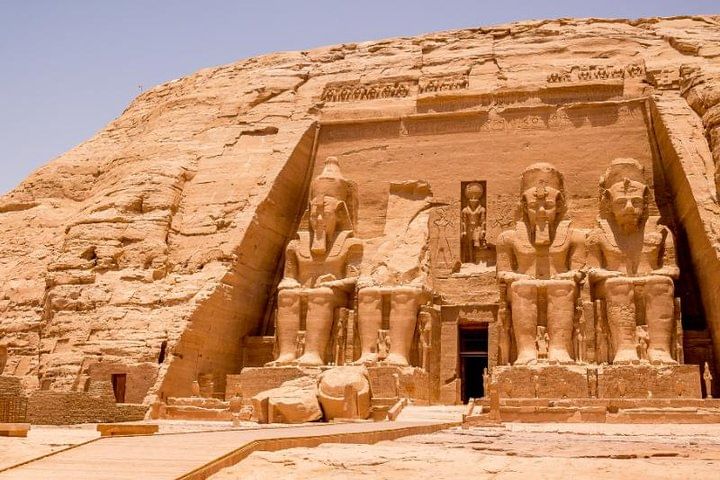
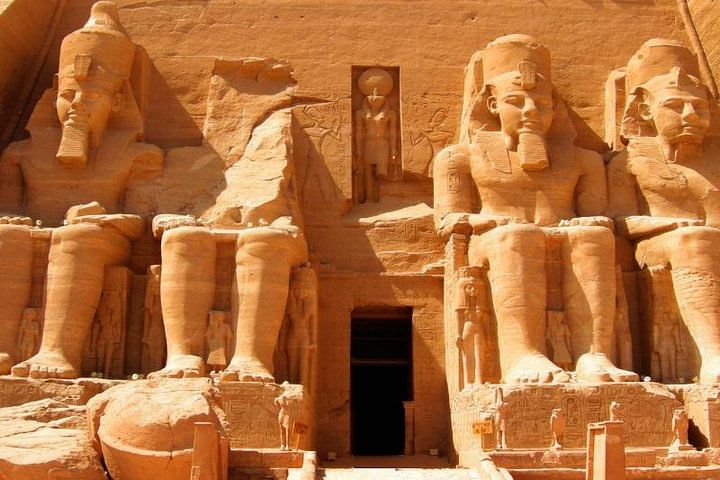
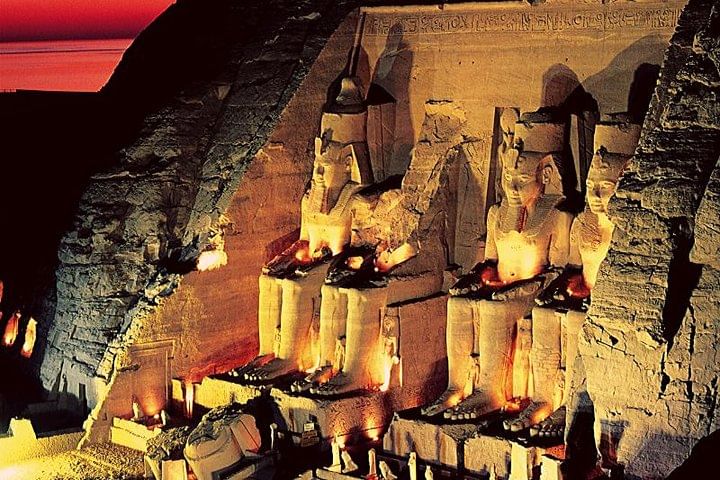
Abu Simbel is 280 kilometers south of Aswan, on the shore of Lake Nasser, three kilometers from the Sudanese border. Four colossal seated statues of Ramesses II, each 20 meters high, were carved directly into the sandstone cliff face around 1264 BC.
Almost every traveler who visits Abu Simbel says the same thing afterward: the photographs don't prepare you for the scale.
But the scale is only half the story. The other half is the rescue — one of the most remarkable engineering and diplomatic operations of the 20th century, undertaken because the construction of the Aswan High Dam would have submerged the temples permanently. The Abu Simbel you visit today is not where it was built. Your guide tells both stories.
The Two Temples
The Great Temple of Ramesses II
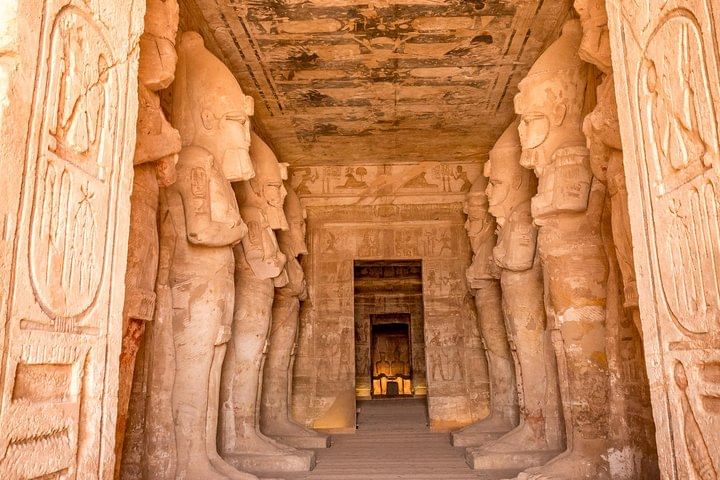
The four colossal façade statues are the entrance to a temple cut 63 meters deep into the cliff. The interior — three halls and a sanctuary — is completely covered with painted reliefs depicting Ramesses's military campaigns, particularly the Battle of Kadesh against the Hittites, the largest chariot battle in ancient history. At the sanctuary's innermost chamber, four statues sit in permanent darkness — except on two specific days each year (February 22 and October 22) when the rising sun penetrates the entire 63-meter length of the temple and illuminates the statues of Ramesses and two accompanying gods, leaving the statue of Ptah, god of darkness, unlit.
The Temple of Nefertari
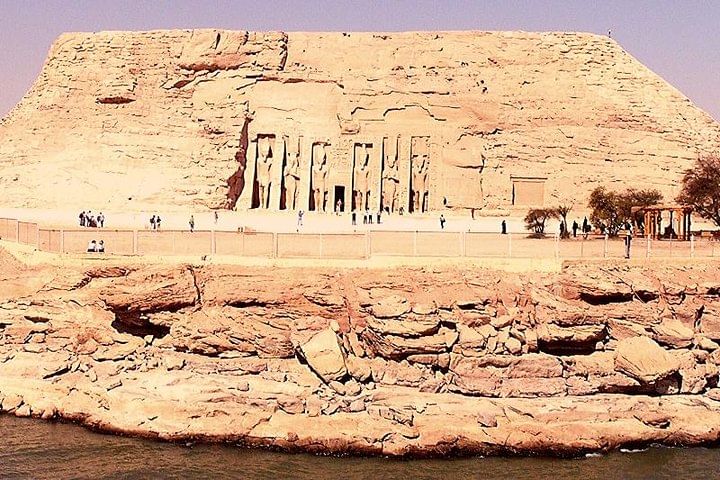
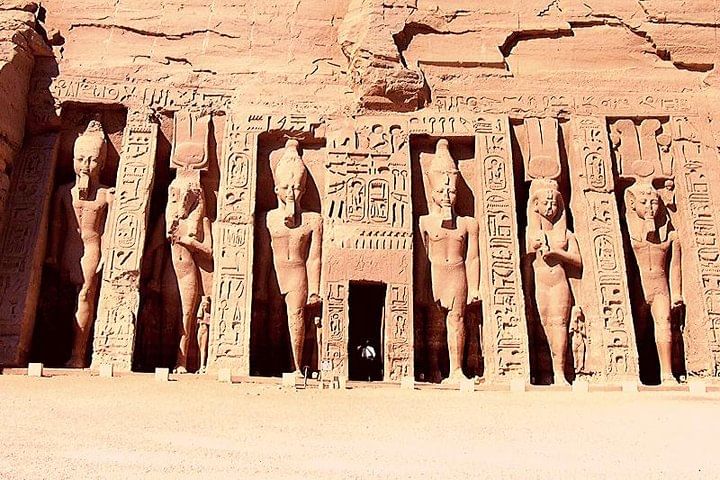
Built by Ramesses II for his principal wife Nefertari — the first temple in Egyptian history built by a pharaoh to honor his queen as a goddess rather than as a consort. Smaller than the Great Temple, but unusually intimate and beautifully painted. The façade statues of Nefertari at the entrance are the same height as the statues of Ramesses beside them — deliberately equal, architecturally unprecedented.
The Relocation
Between 1964 and 1968, an international team of engineers cut both temples into approximately 1,050 numbered blocks — the largest weighing 30 tonnes — and reassembled them on an artificial hill 65 meters above and 200 meters back from the original site. The project cost $40 million (roughly $350 million in today's terms) and involved engineers and archaeologists from 50 countries. The precision of the reassembly is such that the solar alignment still functions correctly. Your guide explains the decisions and the logistics.
✦ Inside the Great Temple, in the second pillared hall, there are reliefs showing Ramesses II at the Battle of Kadesh. In the Egyptian version, Ramesses fights alone against the Hittites and wins through personal heroism. At the same period, the Hittite king Muwatalli sent letters to his allies describing a victory for the Hittite forces. Both versions survive. The battle was probably a draw, followed by the world's first recorded peace treaty. Your guide will stand you in front of the Egyptian propaganda version and explain what the other side was saying at the same time. It is the oldest example of the relationship between truth and official history that we have.
By Road or by Plane
By road: three hours each way, departing Aswan at 4:00 am to arrive at the opening. The desert drive along Lake Nasser is part of the experience — the scale of the lake, the emptiness of the landscape, and the arrival at the temples from the road carries a sense of journeying that the flight does not.
By plane: 45 minutes from Aswan Airport. Practical for travelers with very limited time.
Common Questions
Is the early departure manageable?
4:00 am is early. But the payoff is arriving at Abu Simbel before the large tour groups from Aswan, spending 2–3 hours at the temples in relative quiet, and returning to Aswan by early afternoon with the day still available. Most travelers find the early start easier than they expected, and the return with a free afternoon a genuine advantage.
Are both temples open to enter?
Yes — both interiors are fully accessible. The Great Temple is the priority; Nefertari's temple requires less time but is worth 30 minutes. Your guide will manage the sequencing to avoid the period when other groups are concentrated inside.
Can the pacing or order be adjusted?
Yes — all tours are private. The itinerary adapts to you, not the other way around. If you want more time at one site and less at another, tell your guide.
Will there be pressure to buy anything?
No. This is a private tour with no commission arrangements. Your guide will not redirect the itinerary for shopping stops.
Explore the tours above. Read the details. Ask questions if needed. Book only when it feels right.
How pricing works
Prices are based on:
- Group size
- Duration
- Inclusions listed on the tour page
You will always know what is included before booking. There are no surprise additions.