
Private Cairo Photography Tour: Giza Pyramids at Sunrise
A private experience shaped around your time and interests.
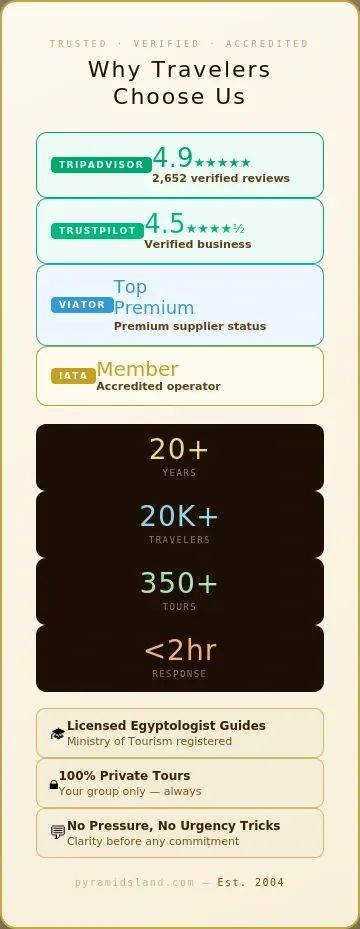
★ 4.9 · 2,678 reviews on TripAdvisor · Licensed since 2001 · Free Cancellation
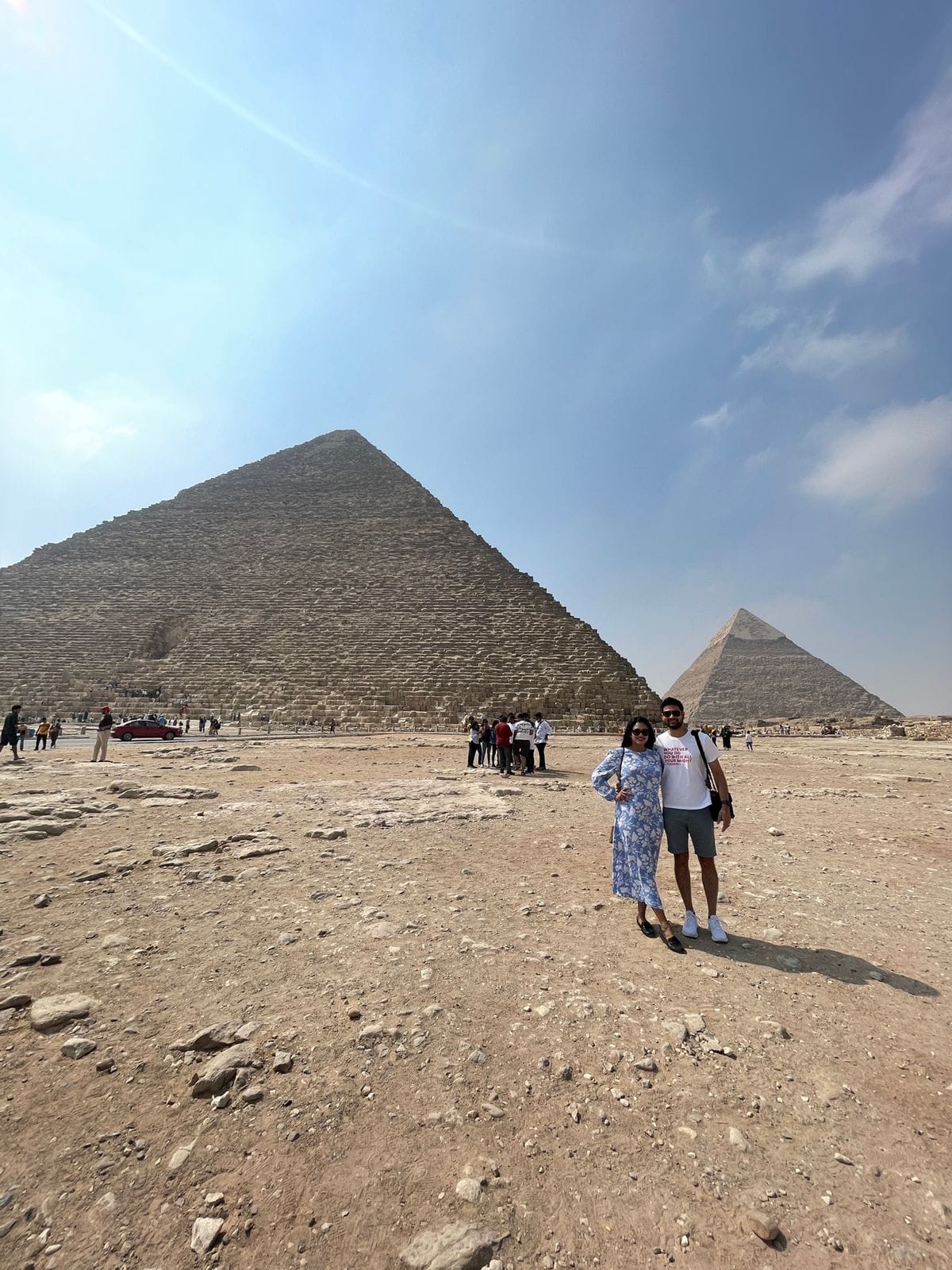
The most photographed monuments in the world look their best in the first 45 minutes of daylight — when the angle of the sun is low, the shadows are long, the sky is still transitioning, and the plateau is almost completely empty.
By 9 am, that window is closed. Tour buses arrive, the light flattens, the site fills. The photographs become identical to every photograph ever taken at Giza.
This tour exists to get you there first.
Highlights
- Arrive at the Giza Plateau at gate opening — 60–90 minutes before the tour buses, in the best light of the day
- Your guide sequences positions to match the moving light — the three-pyramid alignment, the Sphinx frontal shot, the eastern plateau edge, and the rarely photographed western approach
- The Great Pyramid's shadow at sunrise extends over a kilometer east — your guide knows the exact positions and seasonal angles
- No shopping stops, no commission detours, no crowds — a focused photography session on the empty plateau
- Works with any camera — DSLR, mirrorless, or current-generation smartphone
- Back at your hotel by 9:30 AM with the rest of the day free
Who This Tour Is For
- Photographers — professional, serious amateur, or enthusiastic traveler with a good camera
- Those who have already visited Giza during standard hours and want the experience that standard hours do not offer
- Travelers who understand that the best light is early and are willing to set an early alarm for it
- Anyone who has seen the sunrise photographs of the Pyramids and wants to know if it is actually like that — it is
How the Morning Works
Pre-dawn departure
Your guide picks you up between 4:30 and 5:00 am, depending on the time of year and sunrise schedule. The timing is set to arrive at the plateau as close to gate opening as possible.
The plateau before the crowds
For approximately 60–90 minutes after opening, the site has very few visitors. Your guide knows the specific vantage points that produce the distinctive Giza compositions — the classic three-pyramid view, the Sphinx alignment, the interior perspective from the eastern plateau edge, and the less photographed western approach.
The light sequence
The first light at Giza moves fast. Your guide sequences the positions to match the light — which angle is right for the first 15 minutes of sun, which is better at 30 minutes in, and where to be for the full morning light on the Sphinx. This sequencing is the difference between the photographs and the attempts.
Drone regulations
Drone photography at the Giza Plateau requires advanced permits that are difficult to obtain. We advise honestly on current regulations when you contact us — do not assume a drone is flyable here.
✦ The shadow cast by the Great Pyramid at sunrise extends east for over a kilometer. For approximately 12 minutes at the equinoxes, the shadow aligns perfectly with the causeway that connects the pyramid to its valley temple. Your guide knows the date range and the precise position to witness this — but even on an ordinary morning, the shadow itself is extraordinary. Most tourists never see it because they arrive after it has already shortened.
Photography Guidance — What Your Guide Provides
Your guide is not a photography instructor but knows the Giza Plateau in every lighting condition from decades of early-morning visits. They will position you at the right spots, at the right moments, and let you work.
Specific positioning advice: which lens focal length works at which location, where the western plateau viewpoint sits in relation to the rising sun, and how to time the Sphinx frontal shot for the light direction. Ask specific questions — the answers will be direct and useful.
Common First-Time Questions
What camera equipment should I bring?
A wide-angle lens (16–35mm equivalent) for the full panoramic views. A standard zoom (24–70mm) for the Sphinx and mid-range compositions. A tripod if you want to shoot the transition from dark to light in the first minutes. Your guide can advise further when you share your equipment list.
Is the tour worthwhile if I only have a smartphone?
Yes — the light and the empty plateau matter regardless of the camera. The most important element is being there at the right time and at the right position. Smartphones in the current generation photograph the Pyramids at sunrise extraordinarily well.
Can I return later in the same day for a different experience?
Yes — combine this sunrise tour with an afternoon visit to the Grand Egyptian Museum on the same day. By the time you finish at the plateau, the light will have moved past its best for photography, but the GEM opens at 9 am and provides a completely different experience for the rest of the morning.
Will I be pressured to buy anything?
No. This is a private tour. We do not include commission-based stops, and your guide will not redirect the itinerary for shopping. Can the pacing or order be adjusted? Yes. This is private — the schedule adapts to you. If you want to spend longer at one site or skip something, tell your guide.
Is this suitable for travelers arriving from a long flight?
We recommend scheduling your first full tour after at least one night of sleep in Egypt. If you are booking for the arrival day, we can discuss a gentler start time.
Explore the tours above. Read the details. Ask questions if needed. Book only when it feels right.
How pricing works
Prices are based on:
- Group size
- Duration
- Inclusions listed on the tour page
You will always know what is included before booking. There are no surprise additions.