
Anubis: The Egyptian God of Mummification — and Where to Meet Him in Egypt
***Edited June 16, 2026
Quick answer: Anubis (Egyptian Inpu) is the ancient Egyptian god of mummification and protection of the dead — depicted as a black canine or a man with a canine head. He embalmed the dead, guarded cemeteries, and operated the scales at the weighing of the heart. He was not an evil or death-dealing god; Egyptians saw him as a protector. The best place to see him today is Tutankhamun's Anubis Shrine at the Grand Egyptian Museum. Verified June 2026.
Anubis is among the oldest gods in the Egyptian record, appearing in royal tombs from the very beginning of Egyptian history, and is one of the most instantly recognized figures from the ancient world. He is also one of the most misunderstood. Pop culture cast him as Egypt's devil — a snarling underworld villain — and that version has almost nothing to do with the god Egyptians actually prayed to. The real Anubis was a protector: the embalmer who made eternal life possible, the guard at the cemetery gate, the steady hand on the scales when your heart was weighed. This is who he actually was, what his strange black form means, and exactly where you can stand in front of him in Egypt.
Who Is Anubis? A God Who Was Demoted — and Kept His Job
Anubis was originally the chief god of the dead in Old Kingdom Egypt, then became the specialist god of embalming after Osiris absorbed the role of lord of the underworld. His career is unusual among Egyptian gods because it went downward, and he survived it.
In the Old Kingdom — the age of the pyramid builders — Anubis was the god of the dead. The offering prayers in the earliest tombs are addressed to him directly, and one of his oldest titles, Khenty-Amentiu, "Foremost of the Westerners," names him chief of all the dead. Then Osiris rose. As the myth of the murdered and resurrected king swept Egyptian religion, Osiris absorbed the role of lord of the underworld along with that title. The theologians resolved the takeover the Egyptian way: they made Anubis part of Osiris's family and gave him the specialist portfolio he held for the next two and a half thousand years. Osiris ruled the afterlife; Anubis ran it — embalming the dead, protecting tombs, leading souls to judgment, and operating the scales.
What Does the Name Anubis Mean?
"Anubis" is the Greek form of the Egyptian name Inpu, whose exact meaning is uncertain — possibly related to words for "royal child" or "to decay." What we know with confidence are his epithets, which are job descriptions: Imy-ut, "He Who Is in the Place of Embalming"; Tepy-dju-ef, "He Who Is Upon His Mountain" — the watcher on the desert cliffs above the cemetery; and Neb-ta-djeser, "Lord of the Sacred Land," the necropolis itself.
One persistent error: Anubis did not "evolve from" Wepwawet, the standing wolf god of Asyut. They are distinct canine deities with separate cults who were sometimes paired — Wepwawet, the "Opener of the Ways," in front, and Anubis, the embalmer, behind.
The Symbols of Anubis
The symbols of Anubis are the black canine, the imiut fetish, and the scales of judgment — plus the ankh and the scepter he carries as a god. It is a set, not a single sign.
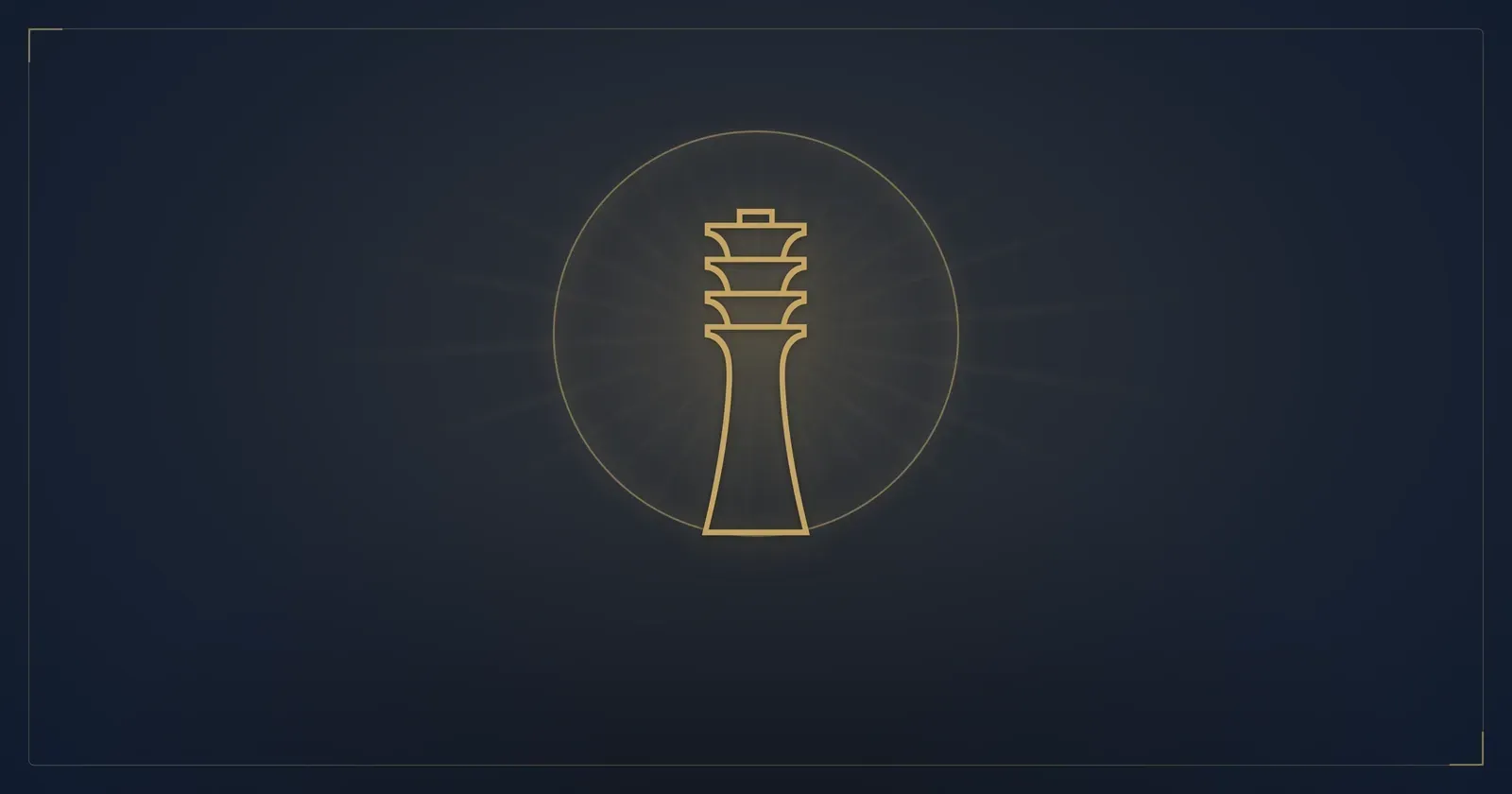
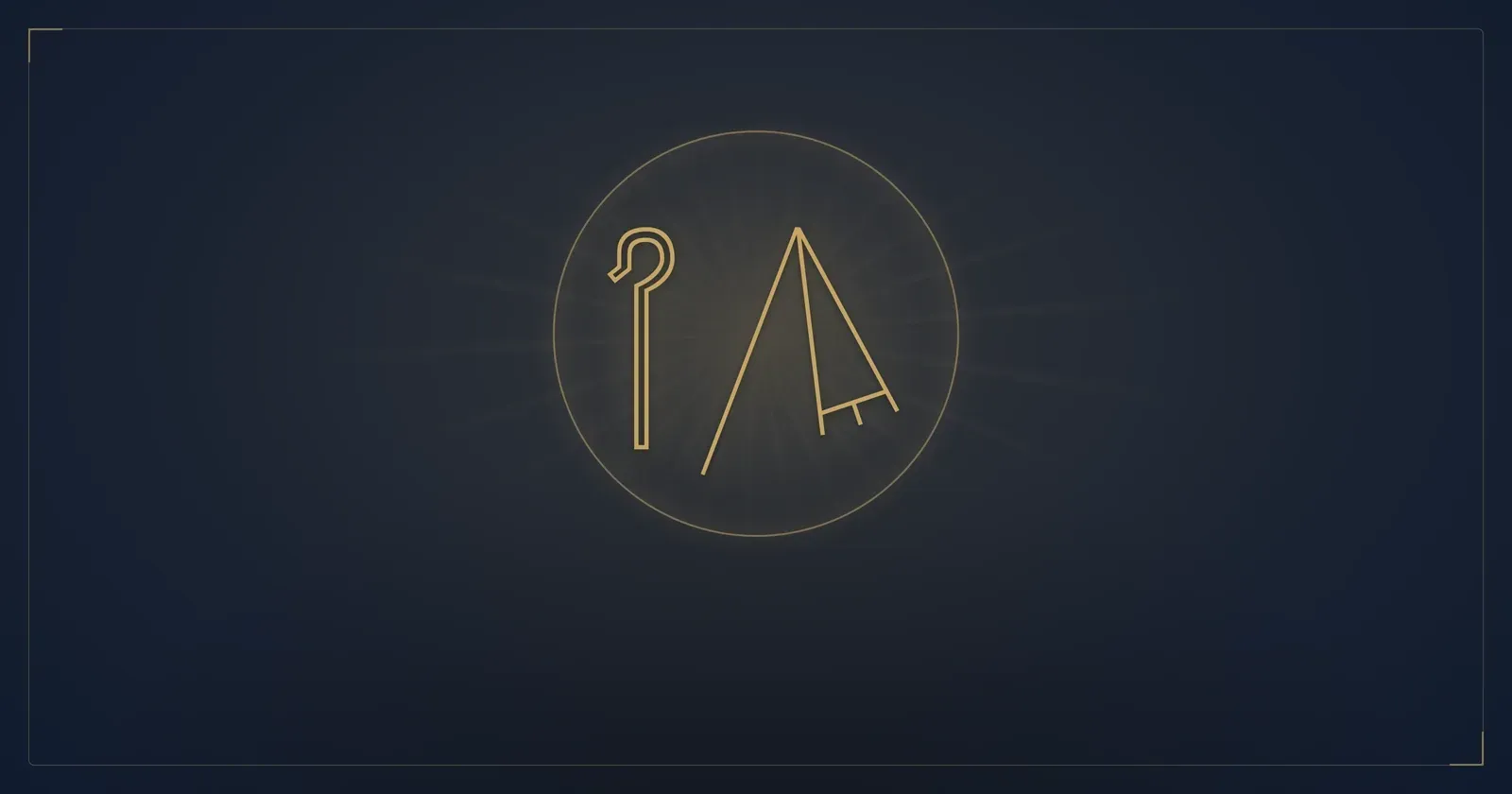
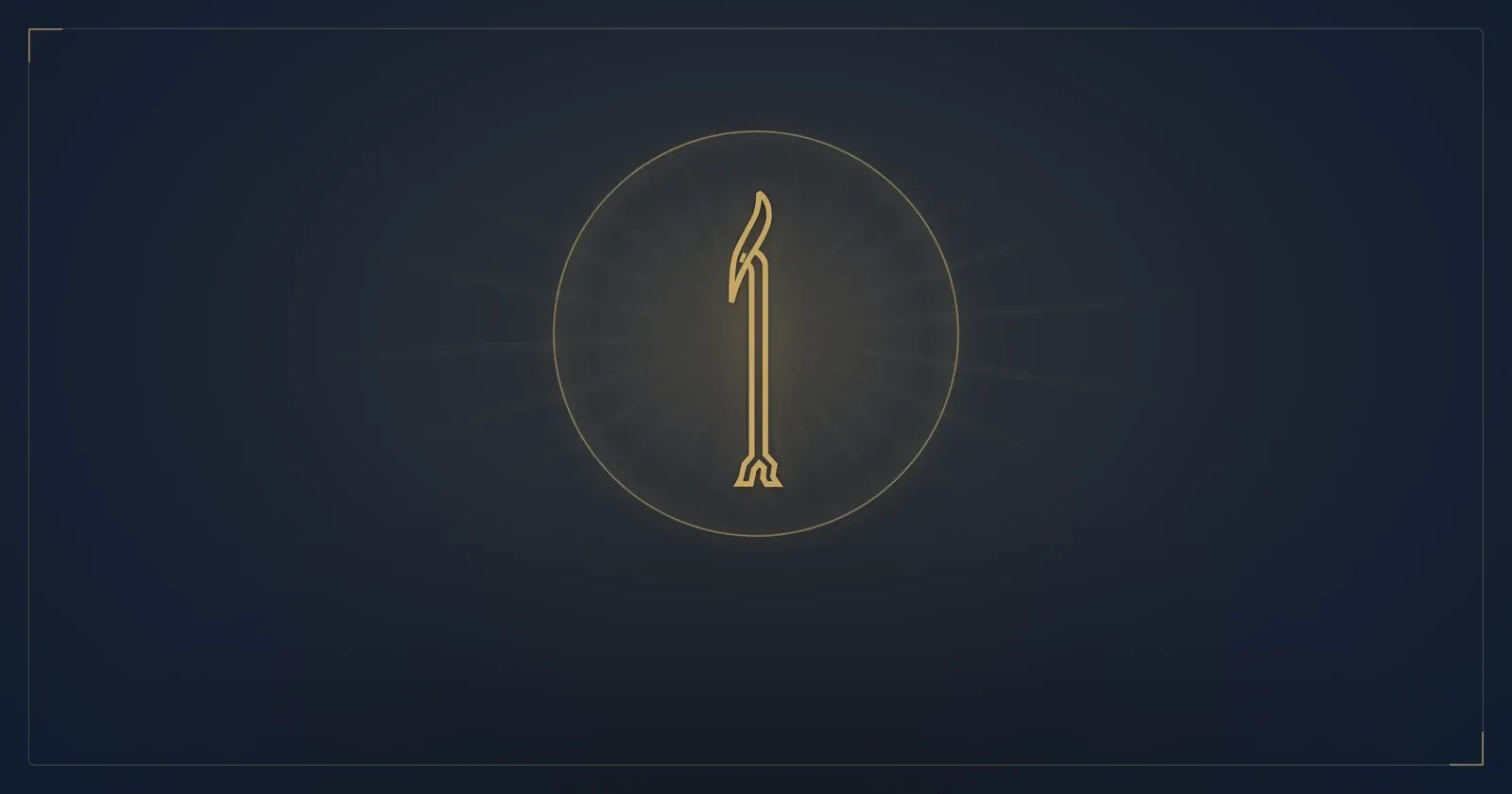
The black canine. His primary form — recumbent on a shrine, ears up, or as a canine-headed man — is carved in thousands of tombs. The imiut fetish. His oldest emblem: a headless animal skin tied to a pole in a pot, appearing beside embalming scenes from the earliest periods. Gilded imiut standards were found in Tutankhamun's tomb. The scales. As "He Who Counts Hearts," Anubis operates the balance in judgment scenes. The ankh was a scepter. Like all major gods, he carries → the ankh, the sign of life — a deliberate point in a funerary god's hands: his business was eternal life, not death.
The Jackal That Isn't a Jackal
Anubis is traditionally called a jackal, but a 2015 genetic study reclassified the canine of Egypt's deserts as the African golden wolf (Canis lupaster) — so the "jackal god" is, by modern taxonomy, a wolf. The animal Egyptians actually saw prowling their cemeteries was long cataloged as a jackal; it isn't one.
Why a desert canine at all? Because Egyptians watched them dig in shallow graves. The animal that threatened the dead became the god who protected them — the predator hired as the guard. It tells you the cult began in observed reality: real animals, real cemeteries, on the desert edge where Anubis "Upon His Mountain" kept watch.
Why Is Anubis Black?
Anubis is black not because black meant evil, but because it was the color of the resin-blackened mummified body and of the fertile Nile silt from which life regrew — making black the color of resurrection. No real canine is jet black; the color is symbolic, doing two jobs at once. It is the result of his own craft — the mummy darkened by resin and natron — and the black flood-silt the Egyptians called Kemet, "the Black Land," after which they named their country. On Anubis, black is the dark ground from which life returns. Hold that thought — it matters when you meet him in person.
Anubis's Family Tree, Untangled Honestly
Anubis's parentage depends on the source: early Egyptian texts name the cow goddess Hesat or cat goddess Bastet as his mother and Ra as his father, while the famous "son of Nephthys and Osiris" version comes from the Greek writer Plutarch, two millennia later. Ask "who are Anubis's parents?" and the internet will answer with confidence, only to contradict itself by the second paragraph.
The Plutarch version — conceived in deception, abandoned at birth, raised by Isis as her own — became standard because it is a good story and neatly explains why Anubis serves Osiris so loyally. But it is late, Greek, and one version among several. What he is not, in any Egyptian source, is the son of Osiris and Isis — that's Horus. The two get blended constantly online, including, until today, on this page. Consider it corrected.
The First Mummy: Anubis Invents Embalming
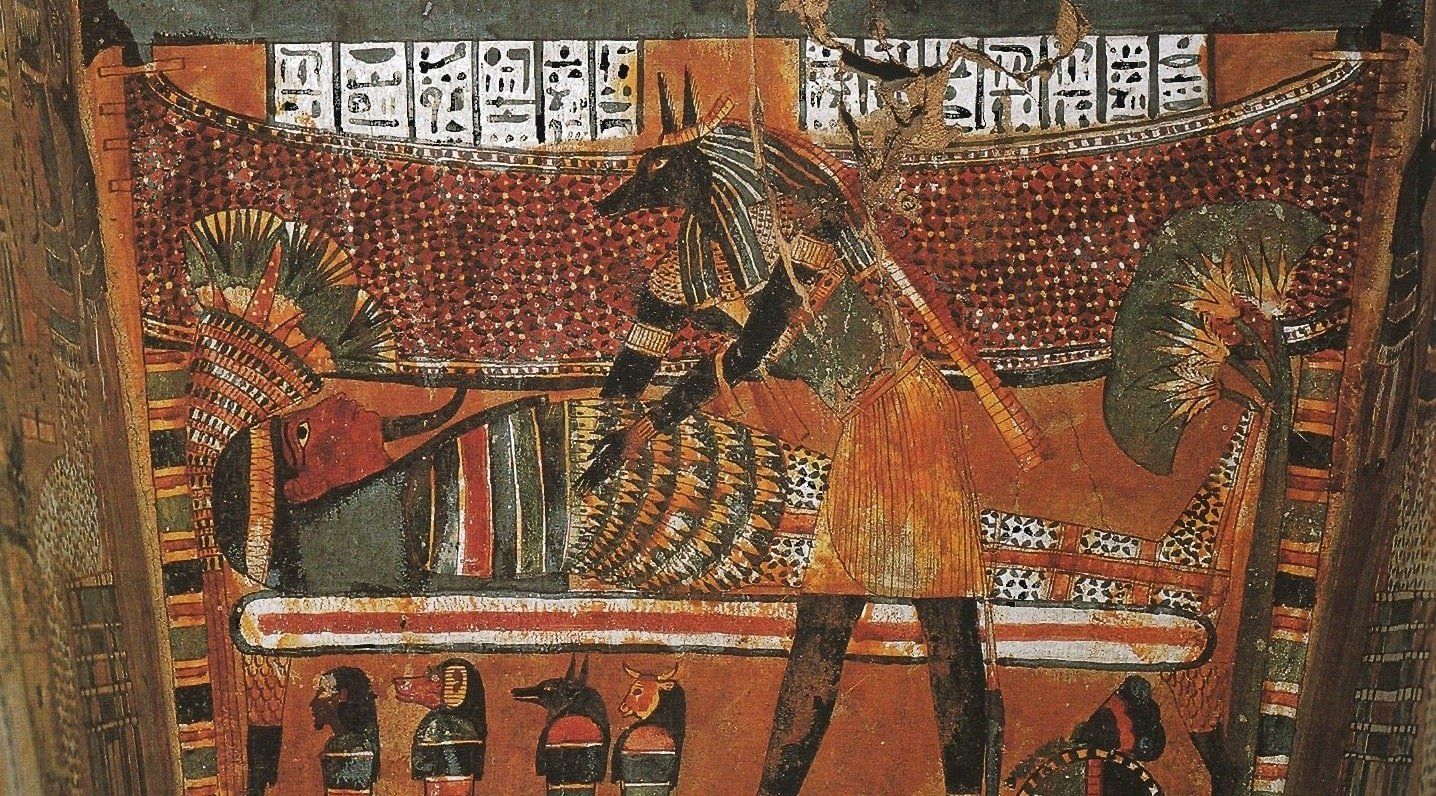
Anubis created the first mummy by embalming the murdered Osiris, establishing the rites every Egyptian embalmer afterward followed. This is why he is Imy-ut, and why he appears in tomb after tomb, bending over a mummy on a lion-shaped bed.
The myth had a living echo: during actual mummification, a priest wore a canine Anubis mask, becoming the god for the duration of the work. When tomb paintings show "Anubis" tending the deceased, you may be looking at a portrait of a man in the mask — god and priesthood deliberately indistinguishable.
The Weighing of the Heart
At the weighing of the heart — the Egyptian judgment of the dead — Anubis leads the deceased into the Hall of the Two Truths and weighs their heart against the feather of Maat, goddess of truth. A heart in balance meant eternal life; a heavy one was eaten by Ammit, the crocodile-lion-hippo "Devourer."
Thoth records the verdict; Anubis checks the plumb line for fairness. Note the theology: Egyptians were judged on conduct, not power or wealth — and the god who ensured nobody rigged the scales was Anubis. The supposed god of horror movies is, in the original text, the guarantor of a fair trial.
Most travelers see the weighing of the heart on a wall and walk past it in fifteen seconds. With an Egyptologist beside you, it becomes a courtroom drama with named characters — and you start finding Anubis everywhere for the rest of your trip. → Message us on WhatsApp · Browse private Egypt tours
Eight Million Dogs: The Cult of Anubis
Anubis's main cult centers were Cynopolis ("Dog City") in Middle Egypt and the Anubeion at Saqqara, whose catacombs held on the order of eight million mummified dogs offered to the god. Puppies were raised near the temple specifically to become offerings — devotion at an industrial scale that shows how seriously ordinary Egyptians took the god who would one day hold their heart on his scale.
Where to Meet Anubis in Egypt Today
The greatest Anubis object in the world is Tutankhamun's Anubis Shrine at the Grand Egyptian Museum — a life-size black canine on a gilded shrine, found in 1922 guarding the tomb's treasury. Beyond it, the best places to see him are Hatshepsut's temple, the Valley of the Kings, and Deir el-Medina.
The Grand Egyptian Museum, Giza. Tutankhamun's Anubis Shrine: a lean, alert black canine on a gilded shrine, found stationed at the entrance of the treasury, facing the doorway as a sentry. Today he guards the king's treasures again at the → Grand Egyptian Museum.
ASHRAF FARES · Egyptologist Clients always freeze in front of Tutankhamun's Anubis shrine at the GEM, expecting a sinister movie monster because pop culture spent decades turning the jackal into the Egyptian devil. I have them step close and look right at those gold-rimmed obsidian eyes and those massive ears pinned sharply forward, listening to the museum air. I tell them to forget the Hollywood horror; this isn't a demon waiting to damn your soul—it's a hyper-vigilant, 3,300-year-old royal guard dog stationed at the vault door, wrapped in the pitch-black color of fertile Nile mud to signal that life, not death, has the final word in this room.
The Chapel of Anubis, Hatshepsut's Temple, Deir el-Bahari. A dedicated Anubis sanctuary with painted ceilings and offering scenes still vivid after 3,500 years — the best-preserved Anubis chapel in Egypt.
The Valley of the Kings. In the royal tombs — Horemheb's and Seti I's above all — Anubis receives the king face to face, painted at full scale in color that looks weeks old. Our → Valley of the Kings guide covers which tombs are open.
Deir el-Medina — the tomb of Sennedjem. The famous scene of Anubis bending over Sennedjem's mummy on its lion bed, painted by the craftsmen who decorated the kings' tombs, for one of their own.
Saqqara. The Anubeion is ruined, but the desert edge where it stood — above the world's oldest pyramids, where wolves really patrolled the necropolis at night — is where the cult makes physical sense.
Want to stand in front of the Anubis Shrine with someone who can read the room? Tell us your dates, and we'll build a private, Egyptologist-led itinerary around the GEM, Saqqara, and the tombs where Anubis still works. → Message us on WhatsApp · Tell us your dates
Frequently Asked Questions
What is Anubis the god of?
Anubis is the ancient Egyptian god of mummification and the protection of the dead. He embalms, guards tombs, guides souls to judgment, and operates the scales at the weighing of the heart. In Egypt's earliest periods he was the chief god of the dead, a role later absorbed by Osiris.
Is Anubis evil?
No. Egyptians saw Anubis as a protector and a guarantor of fair judgment, not a villain. No ancient source treats him as a devil; the "evil" image is pop culture, not Egyptology.
What animal is Anubis?
Traditionally a jackal, but a 2015 genetic study reclassified Egypt's desert canine as the African golden wolf (Canis lupaster). By modern taxonomy the "jackal god" is a wolf.
Why is Anubis black?
Black was the color of the resin-treated mummified body and of the fertile Nile silt from which life regrew each year. On Anubis it signals resurrection — life having the final word — not evil.
Who are Anubis's parents?
It depends on the source. Early Egyptian texts name Hesat or Bastet as his mother and Ra as his father; the famous "son of Nephthys and Osiris, raised by Isis" version is from Plutarch, two millennia later. He is not the son of Osiris and Isis — that is Horus.
What is the weighing of the heart?
The Egyptian judgment of the dead: the heart is weighed against the feather of Maat. Anubis checks the scale, Thoth records the result, and Ammit devours the hearts of those who fail. A balanced heart meant eternal life.
Anubis vs Osiris — who is the god of the dead?
Both, at different times. Anubis held the role first, in the Old Kingdom; as the Osiris myth spread, Osiris became lord of the underworld and judge, while Anubis became the embalmer, guide, and operator of the scales.
Where can I see Anubis in Egypt?
Tutankhamun's Anubis Shrine at the Grand Egyptian Museum is the masterpiece. Also: the Chapel of Anubis at Hatshepsut's temple, the tombs of Horemheb and Seti I in the Valley of the Kings, Sennedjem's tomb at Deir el-Medina, and the site of the Anubeion at Saqqara.
What does the name Anubis mean?
Anubis is the Greek form of the Egyptian Inpu, of uncertain meaning — possibly linked to "royal child" or "to decay." His epithets are clearer: "He Who Is in the Place of Embalming" and "He Who Is Upon His Mountain."

Ashraf Fares