
What Egypt Does to People
After twenty years of guiding travelers through Egypt, the moment I wait for is always the same. It is not a particular site. It is a particular second — the exact second when the ancient world stops being "history" and becomes real to someone standing in front of it. That click. That shift in their eyes. The sudden stillness when something forty-six centuries old stops being a number and starts being a presence.
I still chase that every day.
What follows are the moments I carry with me. Not the monuments — the monuments are in every guidebook. The moments. The ones that happen to travelers who came to see old stones and left understanding something about themselves they did not expect.
The Stone Forest at 7 am
The Great Hypostyle Hall at Karnak contains 134 columns. The twelve tallest rise 23 meters — higher than a six-story building. The rest crowd around them in rows so dense that when you step inside, the hall feels less like a ruin and more like a forest made of stone.
At 7:00 a.m., the low morning light enters through the clerestory windows between the tallest columns at the angle the ancient architects intended three thousand years ago. The shadows fall in long diagonal stripes. The hieroglyphs carved into every surface seem to move as the light moves. The hall is nearly empty — the cruise ship buses are still an hour away.
This is the moment. Every group does the same thing. They stop talking mid-sentence. Somebody says "oh my god" very quietly. No one else says anything at all. The collective intake of breath when the scale finally registers — when 134 columns stop being a number and become a space you are standing inside — is the moment I live for.
It never gets old. Twenty years, and it never gets old.
Ramesses II — Face to Face
The Royal Mummies Hall at the National Museum of Egyptian Civilization in Fustat is quiet by design. Low light. Controlled temperature. The corridors are wide, and the ceilings are high. Visitors walk slowly — something about the space makes people lower their voices without being told.
The mummies lie in individual cases with their names and dates inscribed alongside. You pass Seti I, Thutmose III, Hatshepsut. Each case is a person. Each person ruled a civilization. The room holds more concentrated political power per square meter than any room on earth.
I had a big, tough American guy — ex-military, not emotional at all. He stood in front of Ramesses II and said nothing for maybe three full minutes. His hands were at his sides. He was not taking photographs. He was just looking.
Then he shook his head slowly and said in a low voice: "He looks like he could still give orders."
His wife told me later he had tears in his eyes in the car on the way back.
Ramesses II died approximately 3,200 years ago. He ruled for 66 years. He had over 100 children. He built Abu Simbel. His red hair is still visible. When you stand in front of him, the distance between you and a man who walked and breathed and gave orders and loved and fought collapses in a way no photograph, no documentary, no book can prepare you for.
This moment happens to almost everyone who visits the Royal Mummies Hall. I have watched it happen hundreds of times. It never diminishes.
"For Whom the Sun Shines"
Abu Simbel sits in the Nubian Desert, 280 kilometers south of Aswan. Most travelers arrive after a 3:30 a.m. departure from their Aswan hotel — three hours across a flat, featureless desert road in the dark. When the sun rises, it rises over nothing but sand and rock. You begin to wonder what could possibly be worth this drive.
Then the temples appear. First, as shapes against the cliff. Then, as a scale. Then as faces — four colossal seated figures of Ramesses II, each 20 meters tall, carved from the living rock of a Nubian sandstone cliff. The Great Temple is what most people come to see.
But it is the smaller temple next door that produces the moment I remember most.
The Small Temple was built for Nefertari, Ramesses II's Great Royal Wife. On its façade, her statues are carved the same height as the pharaoh's — virtually unprecedented in 3,000 years of Egyptian royal art. In every other temple in Egypt, the queen's statues reach the pharaoh's knee. Here, she stands beside him. Equal. The inscription reads: "She for whom the sun shines."
A young woman on her honeymoon stood in front of those statues and read that inscription aloud. She started crying quietly. She told me: "My husband never builds anything for me… and here this king built a whole mountain for his wife."
The love story across three thousand years just broke her open.
"This Looks Better Than Disney"
People expect the tombs in the Valley of the Kings to be brown and ruined. Dusty. Faded. Ancient in the crumbling sense.
Then they step inside.
The colors are still vivid — deep blues, bright yellows, clean whites, rich reds — painted on plaster that has survived 3,200 years inside the limestone of the Theban hills. The astronomical ceilings in Ramesses VI's tomb depict the complete journey of the sun through the twelve hours of the night. The sky goddess Nut stretches across the vault, swallowing the sun at dusk and giving birth to it at dawn. The figures of gods and pharaohs look as though they were finished last year.
One teenage boy on a family trip walked in, looked up, and said: "This looks better than Disney."
His father laughed. Then he got quiet. Because the boy was right — the preservation is extraordinary. And the fact that these paintings were created not for tourists but for the dead, to guide a pharaoh through the underworld and into eternity, gives them a weight that no theme park can touch.
"Daddy, Real People Built This"
At the Pyramids, early morning, when we are the first ones there.
A family with two young children. The little girl, maybe eight years old, walked to the base of the Great Pyramid of Khufu and put her hand flat against one of the limestone blocks. The block was warm from the first sun. She stood like that for a long moment — both palms on the stone, head tilted back, looking up at a structure that disappears into the sky.
Then she looked at her father and said, "Daddy, real people built this."
Something about touching the stone makes it click for children in a way nothing else does. Adults process the pyramids intellectually — the statistics, the engineering theories, the age. Children process them physically. The stone is warm. It is rough under their hands. It is enormous. And it is real. I have never found a better way to explain what the pyramids do to people than what that eight-year-old said.
"Small But Also Proud to Be Human"
Hatshepsut's mortuary temple at Deir el-Bahri sits against a sheer limestone cliff on the West Bank of Luxor. Three terraces rising from the desert floor. Clean white colonnades. The mountain behind it is like a wall — and above the mountain, the peak shaped like a natural pyramid — the reason the ancient Egyptians chose this valley for their dead.
After we had spent a morning there — the reliefs from her trade expedition to Punt, the story of how she became pharaoh, the scars where her successor tried to erase her name — one woman pulled me aside. She was not someone who had said much all morning. She looked at the mountain and then at me and said, "I came here thinking it was just old stones. But standing on that terrace looking at the mountain, I felt… small but also proud to be human."
That mix of awe and connection. I see it again and again at Deir el-Bahri. The temple does something to people's sense of scale. You feel the smallness of your own life against the rock face — and then you feel the largeness of what human beings can create when they commit to something beyond themselves.
The Silence at Abu Simbel
The inner sanctuary of the Great Temple holds four seated statues: Ra-Horakhty, Amun, Ptah, and Ramesses II himself — placed among the gods as an equal. On approximately 22 February and 22 October each year, the rising sun penetrates 60 meters into the temple, illuminating three of the four statues. Ptah, god of the underworld, remains in permanent darkness. This was engineered into the cliff thirty-two centuries ago with astronomical precision that took modern scientists years to fully document.
Even when it is not the exact alignment date, the way the morning light moves across Ramesses' face as the sun rises produces a silence I have never experienced anywhere else. People stop breathing for a second. Conversations die mid-word. The only sound is the desert outside — wind and heat and nothing human for hundreds of kilometers.
I still feel it too. After twenty years and hundreds of visits, I still feel it.
What Changes After Twenty-Five Years
The first ten years, it was pure excitement every single time. The history, the sites, the faces of travelers discovering something that shook them — I could not believe I got to do this for a living.
Now there are days when I am tired from the early starts and the heat. Waking at 4:30 am in July, when you know the Valley of the Kings will be 40 degrees by 11 am, is not romantic. The logistics are relentless. The responsibility of ensuring everything works for every group never ends.
But the moment I stand with a new group and see their faces change — the moment someone goes quiet in front of something extraordinary — the tiredness disappears. Every time. I have seen it in the eyes of eight-year-olds and eighty-year-olds. Americans, Japanese, Brazilians, Germans. People who expected to be bored. People who expected to be underwhelmed. People who said, "I've seen it all."
Egypt has not yet failed to change its mind.
One moment I still think about years later. An elderly British lady, almost 80, who insisted on seeing the Royal Mummies despite using a walker. Her family was worried about the distance. She was not.
When she stood in front of Hatshepsut's mummy, she started to cry. She said, "She was a woman who ruled as a king. I wish I had known her story when I was young."
She held my hand the whole way back to the car. That one stayed with me. Not because it was dramatic — because it was true. Hatshepsut's story is the kind of story that, if you hear it at the right moment, changes how you think about what is possible.
Egypt is full of those stories. Five thousand years of them. Carved into walls, painted on ceilings, preserved in the faces of people who lived and ruled and loved and died so long ago that most civilizations did not yet exist.
What I Want You to Know
The one thing I want every potential traveler to know before they decide whether to come to Egypt is this:
Egypt will ask a lot from you. The heat, the early mornings, the chaos, the constant sensory overload. It is not an easy destination. I will never pretend otherwise.
But if you say yes, it will give you something no other country can. It will make the past feel alive in your bones. It will remind you that human beings have been dreaming, building, loving, and struggling for five thousand years — and that you are part of that long, incredible story.
Most people leave Egypt a little more humble, a little more curious, and a little more alive than when they arrived.
That is what Egypt does to people.
When you are ready, tell us about your trip.
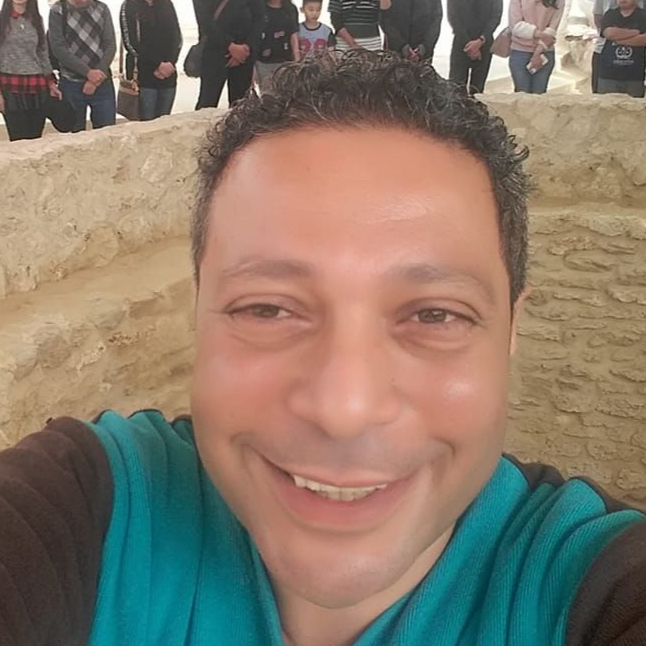
Ashraf Fares