
4-Day Dahabiya Nile Cruise: Aswan to Esna with Private Guide
A private experience shaped around your time and interests.
★ 4.9 · 2,678 reviews on TripAdvisor · Licensed since 2001 · Free Cancellation
Overview
A Dahabiya does not sail a route. It drifts through one.
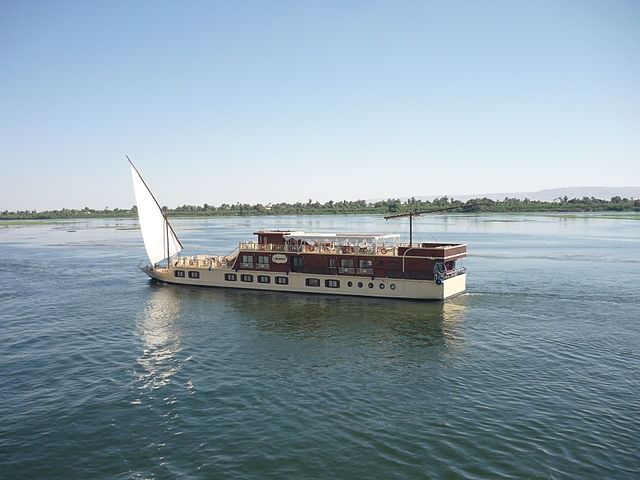
The 4-day Dahabiya cruise from Aswan to Esna covers the southern half of the Nile corridor on a traditional wooden sailing vessel — two masts, flat-bottomed, 8 to 16 passengers. The pace is set by the wind and the current, not by an engine schedule. You board a boat in Aswan after visiting the Philae Temple. The next days bring Kom Ombo from the water, Edfu by horse carriage, and the stretches of the Nile between them — smaller villages, riverside temples that large ships pass without stopping, and a quiet that the standard cruise fleet does not offer.
The cruise ends at Esna, approximately 55 km south of Luxor. [If transfer is included: A private transfer takes you from the Esna dock to your Luxor hotel or Luxor Airport.] [If not included: Onward travel from Esna to Luxor is not included — we can arrange it separately.]
This is the same river and many of the same temples as the standard 4-day cruise. The difference is the vessel. A Dahabiya is slower, smaller, and closer to the water. The dining is private-table, not buffet. The sundeck is intimate, not crowded. The Nile is not a backdrop — it is the medium.
Highlights
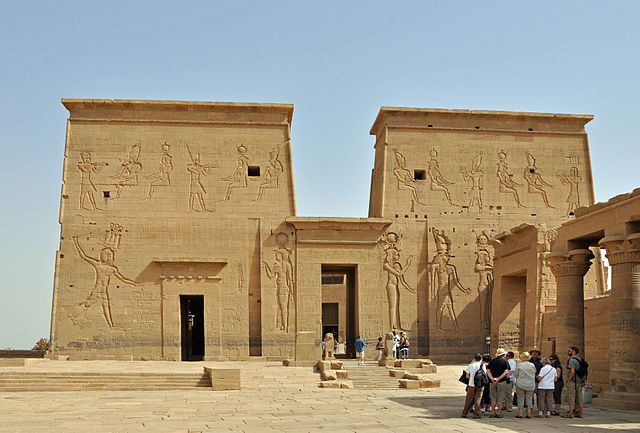
- Philae Temple — visited before boarding, by motorboat across the reservoir
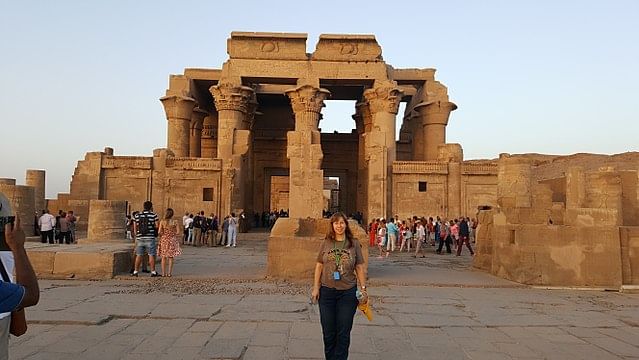
- Kom Ombo — the dual temple for Sobek and Horus, approached from the water at the Dahabiya's slower pace
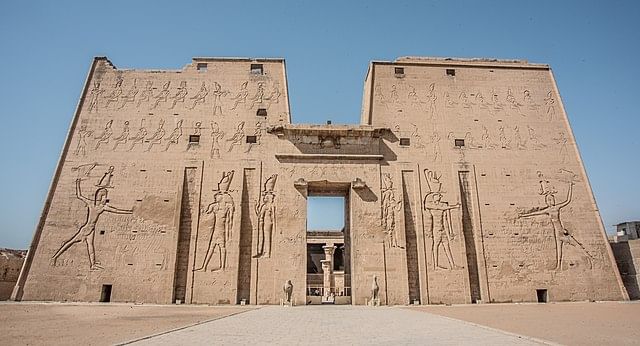
- Edfu Temple — the most intact religious building in Egypt, arrived at by horse carriage
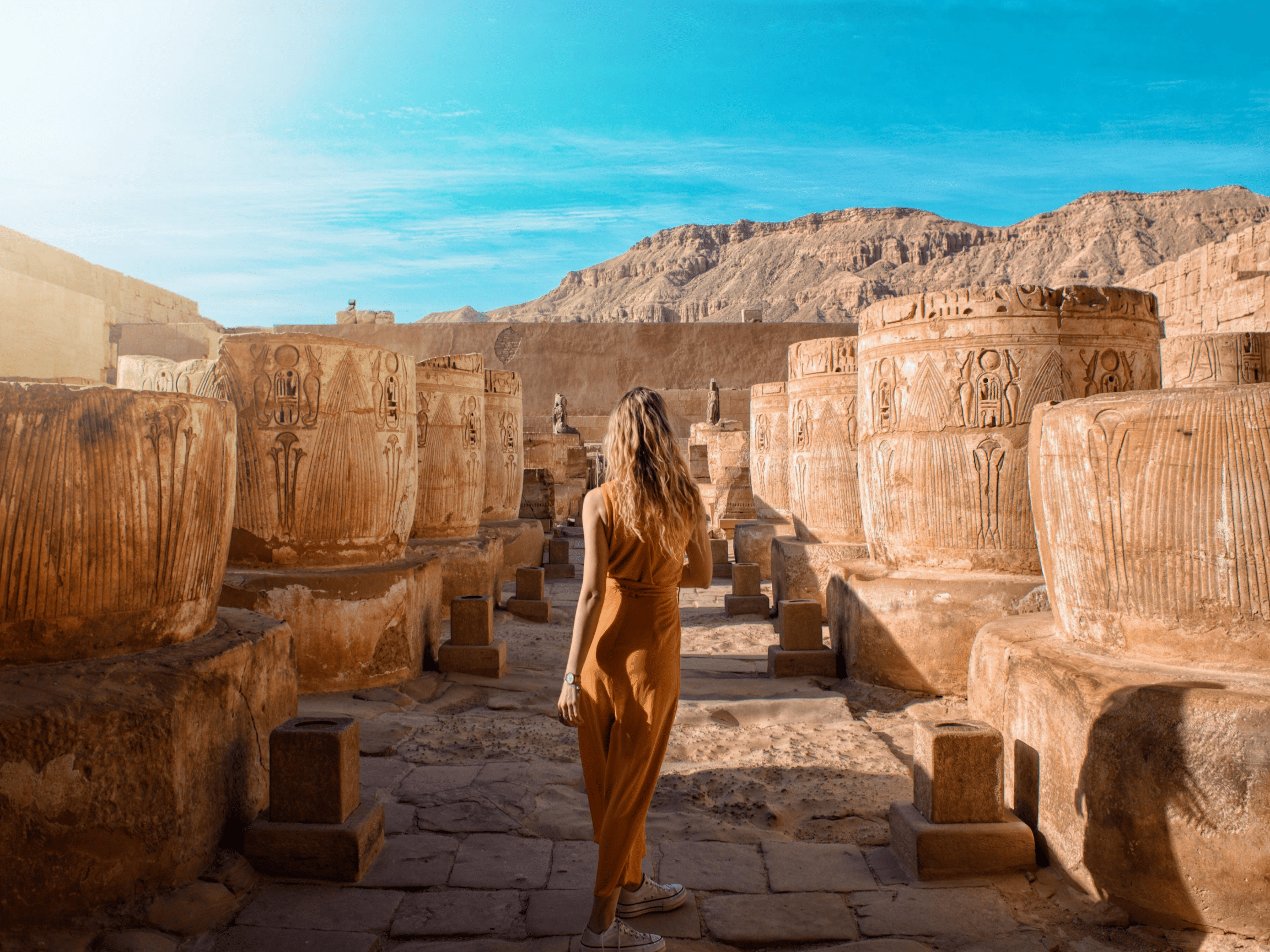
- Esna Temple — one of the most intact decorated ceilings in Egypt, and the Esna Lock navigated at deck level [VERIFY — does the Dahabiya visit Esna Temple or just pass through?]
- The Nile at sailing pace — wind-powered when conditions allow, with stops at riverside points that standard cruise ships pass entirely
- Dahabiya scale — 8–16 passengers, private-table meals, intimate sundeck, and the sound of water against wood instead of engine noise
Who This Tour Is For
- Travelers who want the Nile cruise experience without the large-ship format — fewer passengers, closer to the water, quieter
- Couples and honeymooners who want romance on the river without a resort.
- Return visitors to Egypt who have done the standard cruise and want something qualitatively different
- Small groups (2–8 people) who want a private cabin and private guiding within a shared vessel
- Anyone who values the sailing experience itself, not just the temples at each end
What Makes This Tour Different
- Dahabiya, not a cruise ship. 8–16 passengers compared to 40–150 on a standard ship. Private table dining instead of buffet. Sailing under wind when conditions allow — not motoring on a fixed schedule. The scale changes everything about the river experience.
- Stops that large ships skip. The Dahabiya's shallow draft and slower pace allow stops at riverside points that the standard cruise fleet passes. The specific stops vary with conditions, but the principle is consistent: you see a less curated version of the Nile.
- Private Egyptologist. Your guide accompanies you at every temple — separate from any vessel guide. Same standard as our standard cruise offerings.
- Esna endpoint with Luxor transfer included. The cruise covers the Aswan-to-Esna stretch — the most scenic and historically dense portion of the Nile corridor, where the Dahabiya format works best. We handle your onward transfer to Luxor by private car (approximately 1 hour). Luxor temples can be visited as a separate day tour before or after the cruise. What You'll Experience
More Options
- Opposite direction? The 5-Day Dahabiya: Luxor to Aswan sails the reverse route.
- Prefer a standard cruise ship? The 4-Day Nile Cruise: Aswan to Luxor covers the same corridor on a larger vessel with pool and buffet.
- More time on the Nile? The 7-Night Nile Cruise from Aswan includes Abu Simbe l and a full week.
What You Will Experience
Day 1 — Arrive Aswan · Philae Temple · Board the Dahabiya
Private transfer from Aswan Airport or hotel. Visit Philae Temple by motorboat with your Egyptologist — the island sanctuary of Isis, surrounded by water, is unusually complete. Transfer to the Dahabiya dock. Board, meet the captain and crew, and settle into your cabin. Lunch on board. The vessel begins sailing downstream in the afternoon. Dinner on deck or in the dining area. The first evening on the water — smaller, quieter, and closer to the surface than any hotel or cruise ship.
Day 2 — Kom Ombo Temple · Sail
Kom Ombo Temple — the dual temple for Sobek and Horus, approached from the water at the Dahabiya's pace. The temple is visible from the vessel as you round the bend in the river. Your Egyptologist walks you through both halves of the symmetrical layout and the crocodile mummy museum.
The vessel sails downstream through the afternoon. The Dahabiya moves differently from a cruise ship — lower, quieter, responsive to the current. The sundeck is intimate. The banks are closer. Dinner on board.
Day 3 — Edfu Temple · Sail toward Esna
Edfu Temple in the morning — arrived at by horse carriage from the riverside dock. The most intact religious building in Egypt. Your Egyptologist reads the Horus-and-Set mythological cycle carved in the inner sanctuary — one of the most legible temple interiors in the country.
The vessel sails downstream through the afternoon toward Esna. This is the stretch where the Dahabiya format earns its difference — the wind fills the sails when it comes, the engine is quiet or off, and the Nile is not a transit route but the experience itself.
Day 4 — Esna · Disembark
Morning at Esna. Visit Esna Temple — a Ptolemaic temple with one of the most intact decorated ceilings in Egypt. The astronomical calendar carved into the ceiling is traced in sequence by your Egyptologist.] Disembark at the Esna dock.
Private transfer from Esna to Luxor (approximately 1 hour by road) — to your Luxor hotel or Luxor Airport.
Frequently Asked Questions
Why does the Dahabiya end at Esna and not Luxor?
The Dahabiya format sails the Aswan-to-Esna stretch — the most scenic and historically rich portion of the Nile corridor. The Esna Lock marks a natural endpoint for sailing vessels. [If transfer included: We include a private transfer from Esna to Luxor (approximately 1 hour).] Luxor's temples (Karnak, Valley of the Kings) can be visited as separate day tours from Luxor.
How is a Dahabiya different from a standard cruise ship?
Scale and pace. 8–16 passengers vs. 40–150. Private-table dining vs. buffet. Wind-powered sailing (when conditions allow) vs. constant engine. The sundeck is intimate, not a pool deck. The sites visited largely overlap, but the journey between them is qualitatively different.
Is this the exclusive charter or a shared vessel?
Shared vessel — you book a private cabin, and other passengers occupy the remaining cabins. Your Egyptologist is private. For a completely private vessel, ask about our Exclusive Dahabiya Charter.
Can I add Luxor temples to this cruise?
We can arrange Luxor day tours(Karnak, Valley of the Kings) before or after the cruise. See our 2 Days in Luxor itinerary for what's possible. What is the best time of year?
Peak season (October–April) for comfortable temperatures and reliable winds. Low season is hotter but quieter on the river.
Explore the tours above. Read the details. Ask questions if needed. Book only when it feels right.
How pricing works
Prices are based on:
- Group size
- Duration
- Inclusions listed on the tour page
You will always know what is included before booking. There are no surprise additions.