
Marsa Alam: The Quiet Side of Egypt's Red Sea
Marsa Alam exists for people who hear "Red Sea resort" and want the opposite of what that phrase usually implies. No water parks. No nightclub strips. No 40-story hotel blocks lining a promenade. What Marsa Alam offers instead: some of the healthiest coral reefs remaining in the Red Sea, shore diving that starts from the beach, regular dolphin and sea turtle encounters, and the only reliable dugong sighting location in Egypt.
It is 270 km south of Hurghada on the Egyptian mainland coast. It has its own international airport (direct flights from several European cities), but it remains far less developed than Hurghada or Sharm El Sheikh. That is its appeal.
Why Marsa Alam
The southern Red Sea coast has two advantages over the north: less development and less boat traffic. The reefs here have not been subjected to decades of mass tourism, anchor damage, and overfishing. The coral is denser, the fish life is more abundant, and the encounters with larger marine animals are more frequent.
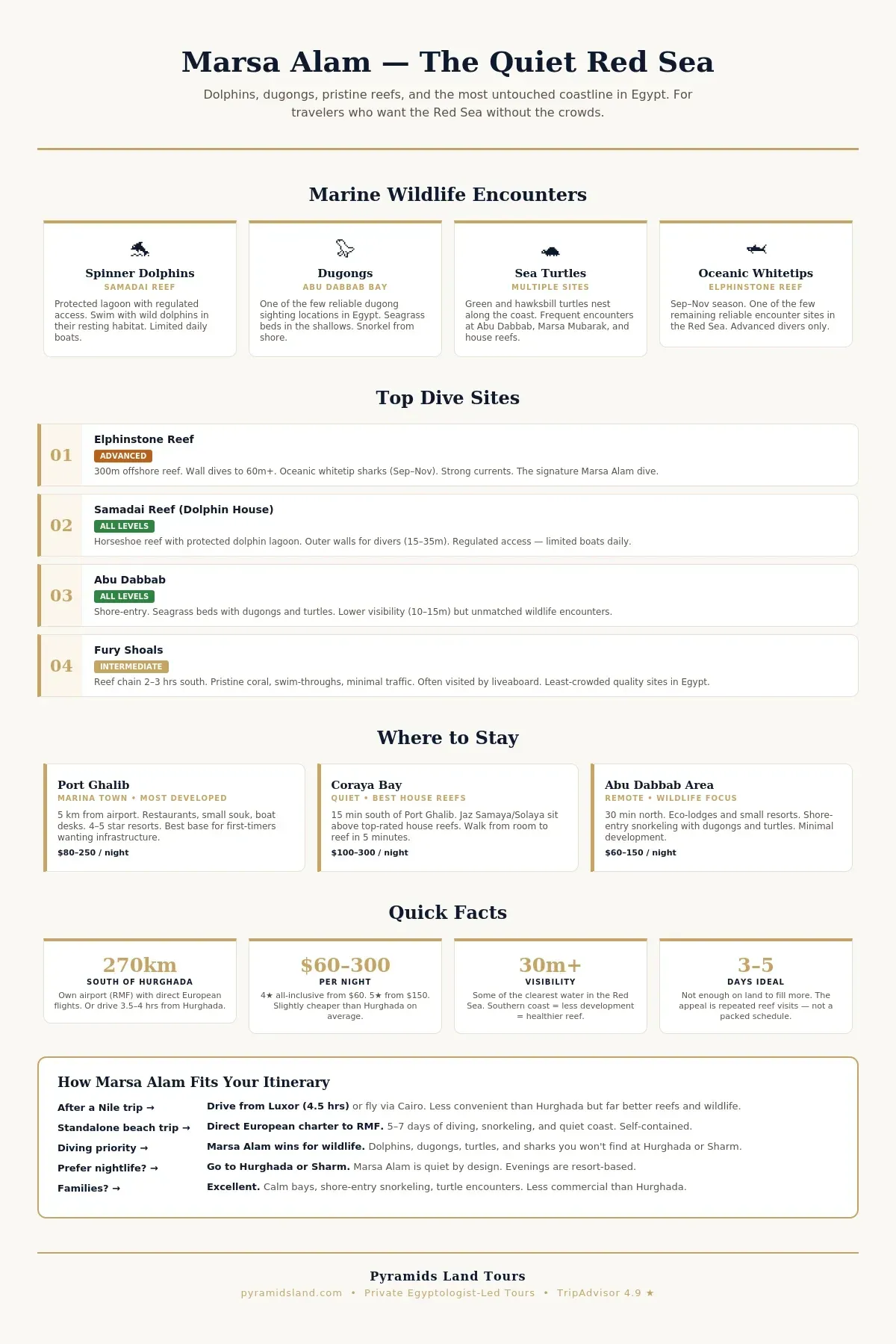
Dolphins. Spinner dolphins are regularly seen at Samadai Reef (Dolphin House), about 45 minutes south of Marsa Alam by boat. The site is protected — visitor numbers are limited, and boats must stay outside the inner lagoon. Swimming with wild dolphins here is one of the most reliably available marine encounters in the Red Sea.
Dugongs. Abu Dabbab Bay, 30 minutes north of Marsa Alam, is one of the few places in Egypt where dugongs (sea cows) are seen regularly. They feed on seagrass beds in the shallow bay. Sightings are not guaranteed, but they are common enough that Abu Dabbab has become a pilgrimage site for marine life photographers and wildlife travelers.
Sea turtles. Green and hawksbill turtles nest along the coast and are frequently encountered while snorkeling at Abu Dabbab, Marsa Mubarak, and several resort house reefs.
Reef quality. The coral gardens at Elphinstone Reef, Shaab Samadai, and the house reefs at Port Ghalib and Coraya Bay are among the healthiest in Egypt. Hard coral cover is high, soft coral diversity is exceptional, and the visibility routinely exceeds 30 meters.
Where to Stay
Marsa Alam's accommodation is spread along 60 km of coastline, with most resorts clustered in three areas.
Port Ghalib is a purpose-built marina town about 5 km from the airport. It is the most developed area — with restaurants, a small souk, boat excursion desks, and a cluster of 4- and 5-star resorts. The marina itself is attractive and walkable. Good base for first-time visitors who want some infrastructure without Hurghada-level noise.
Coraya Bay (15 minutes south of Port Ghalib) is smaller and quieter. The Jaz Samaya and Jaz Solaya resorts sit directly above a house reef that is consistently rated among the best in the region. You walk from your room to the jetty to the reef in five minutes.
Abu Dabbab / Marsa Mubarak area (30 minutes north) is the most remote option. Eco-lodges and smaller resorts. Abu Dabbab beach has shore-entry snorkeling with dugongs and turtles. This is the area for travelers who want minimal development and maximum marine life.
Hotel tiers:
Luxury: The Oberoi Sahl Hasheesh is technically between Hurghada and Marsa Alam but shares the southern Red Sea character. Closer to Marsa Alam proper: Steigenberger Coraya Beach, Kempinski Soma Bay (north).
Mid-range: Jaz Solaya (Coraya Bay), Three Corners Fayrouz Plaza, Brayka Bay Reef Resort.
Eco/boutique: Marsa Shagra Village (dive-focused eco-lodge with huts on the beach), Wadi Lahami (remote, basic, spectacular reef).
This is paragraph text. Click it or hit the Manage Text button to change the font, color, size, format, and more. To set up site-wide paragraph and title styles, go to Site Theme.
Beaches
Marsa Alam is not just a diving destination. The coastline south of town includes some of the most beautiful beaches in Egypt — uncrowded, undeveloped, and genuinely stunning.
Sharm El Luli. About 60 km south of Marsa Alam. A crescent of white sand dropping into turquoise water so clear you can see the reef from the shore. Frequently called "the Egyptian Maldives" — and for once, the comparison is not absurd. No facilities, no entrance fee, no development. Bring your own water, snorkel gear, and shade. The reef starts immediately from the beach in shallow water, making it excellent for non-divers and families. This is the most photographed beach in the Marsa Alam area.
Abu Dabbab Beach. The beach itself is a wide sandy bay with calm, shallow water — ideal for families with children. The snorkeling starts immediately from shore: seagrass beds with turtles and dugongs on one side, coral reef on the other. Small entrance fee (~$5). Sunbeds and a basic café are available.
Wadi El Gemal beaches. Inside the national park (see Land Excursions below). Completely undeveloped shoreline with mangrove forests backing onto white sand. The water is warm and shallow. Almost no visitors.
Gorgonia Beach. A resort beach south of Port Ghalib with an excellent house reef — coral formations start in chest-deep water. Available to day visitors for a small fee at some resorts.
Land Excursions
The article's honest truth: Marsa Alam is not a city, and evenings are resort-based. But "nothing to do on land" is wrong. There are three genuine day trips that reward the effort.
Wadi El Gemal National Park. A vast protected area south of Marsa Alam — desert mountains, dry wadis, Bedouin settlements, and a coastline that includes mangrove forests and pristine beaches. Guided jeep safaris run from most resorts ($60–90, full day). The park offers camel rides, Bedouin tea ceremonies, birdwatching (the mangroves attract herons and ospreys), and genuine desert silence. This is the land-based highlight of the Marsa Alam area — and most visitors never hear about it.
El Quseir. A historic port town 65 km north of Marsa Alam. Ottoman-era fortress, coral-block mosques, a small but authentic souk, and a waterfront that feels like stepping back 200 years. El Quseir was a major Red Sea trading port for centuries — spices, pilgrims, and gold passed through here. It is the only genuine cultural day trip available from Marsa Alam, and it takes about an hour to reach by car. A half-day trip is sufficient.
Desert stargazing. The Eastern Desert behind Marsa Alam has almost zero light pollution. On new-moon nights, the Milky Way is visible with the naked eye. Some resorts and local operators offer guided stargazing excursions into the desert ($30–50). Underrated and unforgettable.
Wildlife Calendar
Marsa Alam's marine encounters vary by season. Here is when to see what:
| Wildlife | Best Months | Where | Notes |
|---|---|---|---|
| Spinner dolphins | Year-round | Samadai Reef, Satayah Reef | Present daily. Samadai regulated; Satayah larger pods. |
| Dugongs | March–May (optimal) | Abu Dabbab Bay | Present year-round but most active in seagrass growth season. |
| Sea turtles | Year-round | Abu Dabbab, Marsa Mubarak, house reefs | Nesting season June–September on southern beaches. |
| Oceanic whitetip sharks | September–November | Elphinstone Reef | Advanced divers only. Not guaranteed but frequent in season. |
| Manta rays | October–December | Elphinstone, offshore sites | Less reliable than sharks. Sightings are a bonus. |
| Best visibility | October–November | All sites | 30–40m common. Clearest water of the year. |
| Warmest sea | July–September | All sites | 28–29°C. Best for extended snorkeling comfort. |
Practical Information
When to visit. Year-round. October–April is most comfortable (25–30°C air, 24–27°C water). Summer is hot, but the sea is warmest (28–29°C), and resorts offer significant discounts. For specific wildlife encounters — oceanic whitetips, dugong peak season, best visibility — see the Wildlife Calendar above.
How long. 3–5 days. There is not enough land to fill more than a few hours per day. The appeal is repeated reef visits, not a packed sightseeing schedule.
Getting there. Marsa Alam International Airport (RMF) has direct flights from several European cities (Germany, Italy, Poland, and the UK, seasonally). Domestic flights from Cairo are limited — most travelers fly to Hurghada and drive south (3.5–4 hours). Transfer services run from Hurghada airport.
Costs at a glance:
| Item | Typical Price (USD) |
|---|---|
| Two-dive day trip (boat) | $50–80 |
| Dolphin House (Samadai) boat trip | $40–60 |
| Satayah Dolphin Reef full day | $70–100 |
| Hamata Islands snorkeling full day | $60–90 |
| Abu Dabbab beach entry | ~$5 |
| Wadi El Gemal safari (full day) | $60–90 |
| Desert stargazing tour | $30–50 |
| Glass-bottom boat | $25–40 |
| 4★ all-inclusive hotel (per night) | $60–120 |
| 5★ all-inclusive hotel (per night) | $150–300 |
| Restaurant meal (Port Ghalib) | $10–25 / person |
Combining with an Egypt itinerary. Marsa Alam works as the final stop on a Cairo → Luxor → Aswan → Red Sea route, but requires more transfer time than Hurghada. From Aswan: 5–6 hours by road through the Eastern Desert (scenic but long). From Luxor: 4.5 hours. Best for travelers who specifically want the southern Red Sea experience and are willing to invest the extra travel time.
Who Should Choose Marsa Alam (and Who Shouldn't)
Choose Marsa Alam if you are: A diver who has already done Sharm and Hurghada and wants less-crowded, healthier reefs. A wildlife traveler specifically seeking dolphins, dugongs, and turtles. A couple who want a quiet beach without the resort-town atmosphere. An eco-conscious traveler who prefers smaller-footprint accommodation. A photographer, both underwater and coastal landscape. A family with children who love snorkeling and don't need water parks.
Choose Hurghada or Sharm instead if you want: Nightlife and evening entertainment (Marsa Alam has none — evenings are resort-based). A walkable town with restaurants, shopping, and variety (Marsa Alam is a coastline with resorts, not a city). A packed daily schedule with different activities each day (Marsa Alam's appeal is returning to the same reef and noticing different things each time). Day trips to temples without a long drive (Luxor is 4.5 hours from Marsa Alam vs 4 hours from Hurghada).
Marsa Alam is not the default Red Sea choice. It is the deliberate one.
→ Compare Hurghada vs Sharm El Sheikh → Hurghada Travel Guide → Red Sea Diving Guide → Contact us to add Marsa Alam to your trip
Frequently Asked Questions
s Marsa Alam worth visiting?
If you care about marine life, reef quality, or genuine quiet — yes. Marsa Alam has healthier coral, more wildlife encounters, and fewer crowds than Hurghada or Sharm. If you want nightlife, cultural attractions, or a packed activity schedule, Hurghada is the better choice.
Is Marsa Alam safe?
Yes. The resort areas are well-policed and the coastline is calm. Standard travel precautions apply: use licensed dive operators (PADI/SSI), stay hydrated, wear reef-safe sunscreen, and agree taxi/transfer fares before departure. The road from Luxor or Hurghada is long but well-maintained and patrolled.
Can you swim with dolphins in Marsa Alam?
Yes — at Samadai Reef (Dolphin House), where spinner dolphins rest in a protected lagoon, and at Satayah Reef near Hamata, where larger pods are found in open water. At Samadai, access is regulated: snorkelers enter the outer zone only, and daily boat numbers are limited. Dolphins are present year-round.
Is Marsa Alam better than Hurghada?
For reef quality and wildlife encounters, yes. Marsa Alam's reefs are less damaged, the water is clearer, and dolphins/dugongs/turtles are far more common. For nightlife, restaurants, affordability, and ease of access from Luxor, Hurghada wins. They serve different purposes — Hurghada is a resort town, Marsa Alam is a coastline.
How far is Marsa Alam from Luxor?
Approximately 4.5 hours by road through the Eastern Desert. From Aswan: 5–6 hours. From Hurghada: 3.5–4 hours. Marsa Alam has its own airport (RMF) with direct European charter flights, which is the easiest way to arrive if you're not combining with a Nile trip.
Ashraf Fares